Where you play pickleball matters as much as how you play it. The court surface beneath your feet affects every movement you make how fast you accelerate laterally, how hard each step lands on your joints, and how your body feels after two hours of competitive play. Yet most players never consider the surface when choosing where to play, focusing instead on scheduling, location, and cost.
At Village Glen in Williamsville and South Towns in Orchard Park, we have invested in cushioned indoor pickleball courts because we understand this connection directly. We work with players who log significant weekly court hours, and the surface they play on matters to their joint health, their longevity in the sport, and the quality of every session they put in. This article explains exactly why cushioned courts make a genuine difference and why it should be a factor in where you choose to play.
What a Cushioned Court Surface Actually Is
Not all indoor pickleball courts are built the same way. A standard hard court whether concrete, asphalt, or basic hardwood provides a rigid, unyielding surface that returns the full force of every step and every push-off directly back through the foot, ankle, knee, and hip. It is functional, durable, and inexpensive, which is why it is the default surface at the majority of recreational facilities.
A cushioned court surface adds a layer of engineered shock absorption beneath the playing surface. This layer compresses slightly with each step and then returns energy upward, reducing the peak impact force transmitted to the joints without removing the firm, responsive feel that competitive play requires. The result is a surface that feels noticeably different to play on softer underfoot, more forgiving on sudden stops and direction changes, and significantly less punishing over the course of a long session.
The difference is subtle in the first 20 minutes of play and increasingly significant in the final 40 minutes of a 90-minute session.
The Joint Health Case for Cushioned Courts
Pickleball is a high-repetition lateral movement sport. A single 90-minute session involves hundreds of lateral pushes, sudden stops, split steps, and direction changes each one sending an impact force through the ankle, knee, and hip joint. On a hard surface, that force is absorbed entirely by the player’s body. On a cushioned surface, a meaningful percentage of that force is absorbed by the court itself before it reaches the joint.
Over a single session the difference is noticeable but modest. Over a full season of two to three sessions per week, the cumulative difference in joint load is significant. We have seen firsthand how players who transition from hard court facilities to cushioned indoor courts report reduced knee discomfort, less ankle fatigue after longer sessions, and a faster recovery between playing days. These are not marginal improvements they are the kind of changes that determine whether a player can sustain their current volume of court time through a full season or whether they are forced to reduce it due to accumulated joint stress.
For players over 40, for anyone managing existing knee or hip discomfort, and for players who are logging high weekly court hours, the court surface is not a minor convenience factor. It is a health consideration that directly affects how long and how comfortably they can continue playing the sport they enjoy.
How Court Surface Affects Your Game Performance
Beyond joint health, cushioned court surfaces produce performance benefits that are less obvious but equally real. The slightly softer underfoot feel allows players to push off laterally with more confidence during aggressive direction changes because the surface provides a degree of give that reduces the risk of slipping or jarring on sudden stops.
Balance during kitchen line exchanges is also affected by court surface. A surface that absorbs micro-vibrations from footsteps and paddle impacts provides a more stable platform for the precise weight transfers and small adjustments that consistent dinking requires. Players who move from a hard court to a cushioned surface typically report improved stability during extended kitchen rallies within a few sessions of adjustment.
The ball bounce on a cushioned surface is also more consistent than on an aged or worn hard court. A predictable, even bounce removes one variable from the game and allows players to focus on execution rather than adjusting for surface irregularities on every shot.
Why Indoor Courts Add an Additional Layer of Consistency
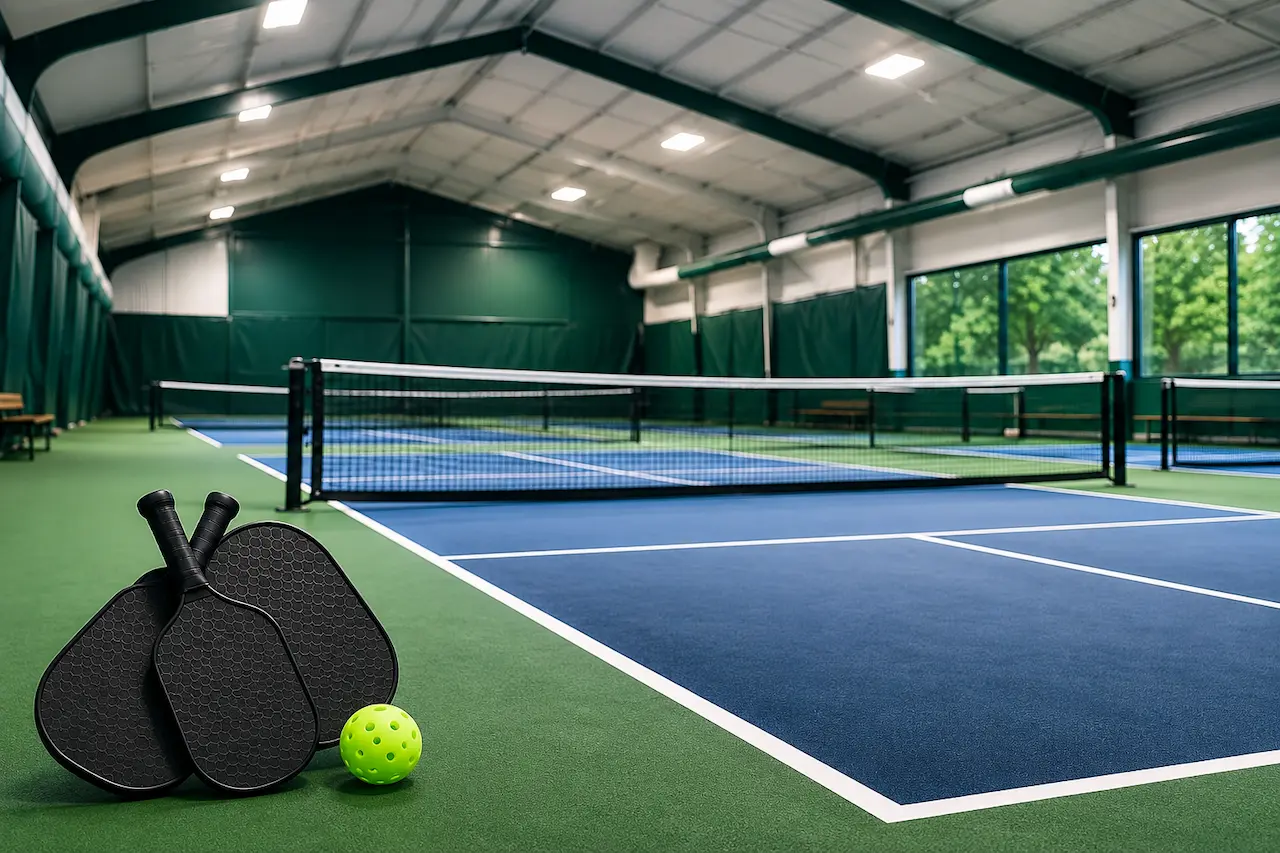
Cushioned surfaces and indoor courts deliver their greatest combined benefit together. An outdoor cushioned court is still subject to temperature variation, wind, sun glare, and moisture that introduce variables no surface quality can eliminate. An indoor cushioned court removes all of those environmental variables simultaneously, giving players the most consistent and controlled playing environment available.
Consistent court conditions matter for development as much as they matter for comfort. A player who practices on a surface that behaves identically every session builds muscle memory and movement habits against a reliable baseline. A player whose outdoor court varies with temperature, moisture, and surface wear is building habits against a moving target that complicates the consistency their technique is working toward.
Our Village Glen pickleball open play sessions give players direct access to our indoor cushioned courts in a social, rotating format that makes it easy to experience the surface difference firsthand before committing to a membership or program.
What to Expect When You First Play on a Cushioned Court
Players transitioning from hard courts to cushioned surfaces typically notice two things in their first session. The first is the underfoot feel a slight give on each step that is unfamiliar if you have only played on rigid surfaces but becomes immediately comfortable within 10 to 15 minutes of play. The second is reduced fatigue in the lower body during the second half of a long session compared to what the same duration produces on a hard court.
The adjustment period is short. Most players feel fully comfortable on a cushioned surface within one to two sessions and begin noticing the joint and fatigue benefits from the third or fourth session onward. Players who play both surfaces in the same week cushioned indoors and hard court outdoors typically report that the cushioned sessions feel noticeably more comfortable and that recovery between sessions is faster on weeks where their indoor session falls closer to their outdoor one.
There is no technical adjustment required to play on a cushioned surface. Your footwork, your shot mechanics, and your court positioning all transfer directly. The court simply makes the same movements more comfortable and less physically demanding over time.
A Real-World Example: What the Surface Difference Looks Like in Practice
We worked with a regular pickleball player at South Towns who had been managing mild knee discomfort for several months before joining the club. He had been playing on a hard gym floor at a local recreational facility and had accepted the knee soreness as a normal consequence of playing three times per week at his age.
After switching his sessions to our cushioned indoor courts, he reported that the knee discomfort after play had reduced noticeably within four weeks. He attributed part of the improvement to the surface and part to better footwear, which we had also advised on during his first visit. Six months later he was playing the same three sessions per week with no significant post-play discomfort and had extended his average session length from 60 minutes to 90 minutes as a result.
The surface change did not fix a medical issue. It reduced the cumulative physical load of each session enough that his body could manage the volume he wanted to maintain. Our South Towns pickleball open play sessions are the simplest starting point for players who want to experience this difference without any long-term commitment before deciding whether the facility is the right fit for their game and their body.
Membership Access to Cushioned Courts Year-Round
Playing on a cushioned indoor court occasionally is beneficial. Playing on one consistently throughout the year including through the Western New York winter when outdoor courts are unavailable is where the cumulative joint health and development benefits become most significant.
Membership at Village Glen gives players year-round access to our indoor cushioned pickleball courts across open play, clinic, and private lesson formats without the unpredictability of pay-per-session availability during busy periods. Our Village Glen membership covers the full range of pickleball and tennis programs at the Williamsville location and ensures consistent court access throughout the full indoor and outdoor seasons.
Choosing the Right Facility for Long-Term Pickleball Development
Court surface is one of several factors worth evaluating when choosing a pickleball facility for regular play. Coaching quality, program variety, session scheduling, and community atmosphere all contribute to the overall experience. But surface quality is the one factor that affects your physical wellbeing on every single visit, regardless of what program or format you are playing in.
A facility that invests in cushioned court surfaces is signalling something about how it values its players’ long-term health and playing experience not just their immediate court access. That signal is worth paying attention to when choosing where to spend your playing hours consistently over a full season or a full year.
Our South Towns membership provides players in the Orchard Park area with the same commitment to quality facility standards, coaching programs, and consistent court access that we deliver at Village Glen making both clubs the most complete pickleball environment available across the Buffalo area.
Conclusion
Cushioned pickleball courts are not a luxury feature. They are a practical investment in the joint health, playing comfort, and long-term sustainability of every player who uses them regularly. The difference is felt within the first session and compounds meaningfully across a full season of consistent play. At Village Glen and South Towns Tennis and Pickleball, we have made that investment because we believe the quality of the surface our players train and compete on matters as much as the quality of the coaching and programs we provide around it.
Why Choose Us
At Village Glen and South Towns Tennis and Pickleball, we provide the most complete indoor pickleball environment in Western New York quality courts, expert coaching, and structured programs designed to support every player’s game and physical wellbeing year-round.
- Two full-service indoor pickleball facilities in Williamsville and Orchard Park, each with cushioned court surfaces designed to protect joint health across high-volume play
- Year-round indoor access through membership, open play, and structured programs that keep players on the court through the full Western New York winter season
- Certified pickleball coaches across both clubs who combine surface-appropriate movement coaching with technical and tactical development
- A welcoming and active pickleball community across the Buffalo area that makes every open play session and clinic genuinely enjoyable alongside being productive
- Membership options at both clubs that provide consistent, prioritised court access and the full range of pickleball programs throughout the year
Frequently Asked Questions
What type of cushioned surface do Village Glen and South Towns use for their pickleball courts?
Both clubs use engineered indoor court surfaces specifically designed for racquet sports that provide controlled shock absorption without compromising the firm, responsive feel that competitive pickleball requires. The surface is maintained to a consistent standard at both locations and provides a reliable, predictable playing experience across all sessions and formats.
Are cushioned courts better for all ages or mainly for older players?
Cushioned courts benefit players of all ages, though the benefits are most immediately noticeable for players over 40 and for anyone playing at a high weekly volume regardless of age. Younger players benefit from reduced cumulative joint load over a longer playing career rather than immediate discomfort relief.
Will playing on a cushioned court change how I play on hard outdoor courts?
There is no meaningful technical adjustment required when moving between cushioned indoor courts and hard outdoor courts. The movement patterns, footwork habits, and shot mechanics developed on a cushioned surface transfer directly to outdoor play.
How does a cushioned court affect the ball bounce compared to a standard hard court?
A cushioned court produces a slightly lower and softer ball bounce than a standard hard court, particularly on hard-driven balls that generate significant pace. The difference is small enough that most players adjust within the first few games of a session, and the increased bounce consistency of a well-maintained cushioned surface typically outweighs the minor adjustment in bounce height for players transitioning from outdoor hard courts.
Is indoor cushioned court pickleball available year-round at both clubs?
Yes. Both Village Glen and South Towns offer indoor pickleball throughout the full year, including the Western New York winter season when outdoor play is unavailable. Membership at either club provides consistent year-round access to indoor cushioned courts across open play, clinic, and private lesson formats.