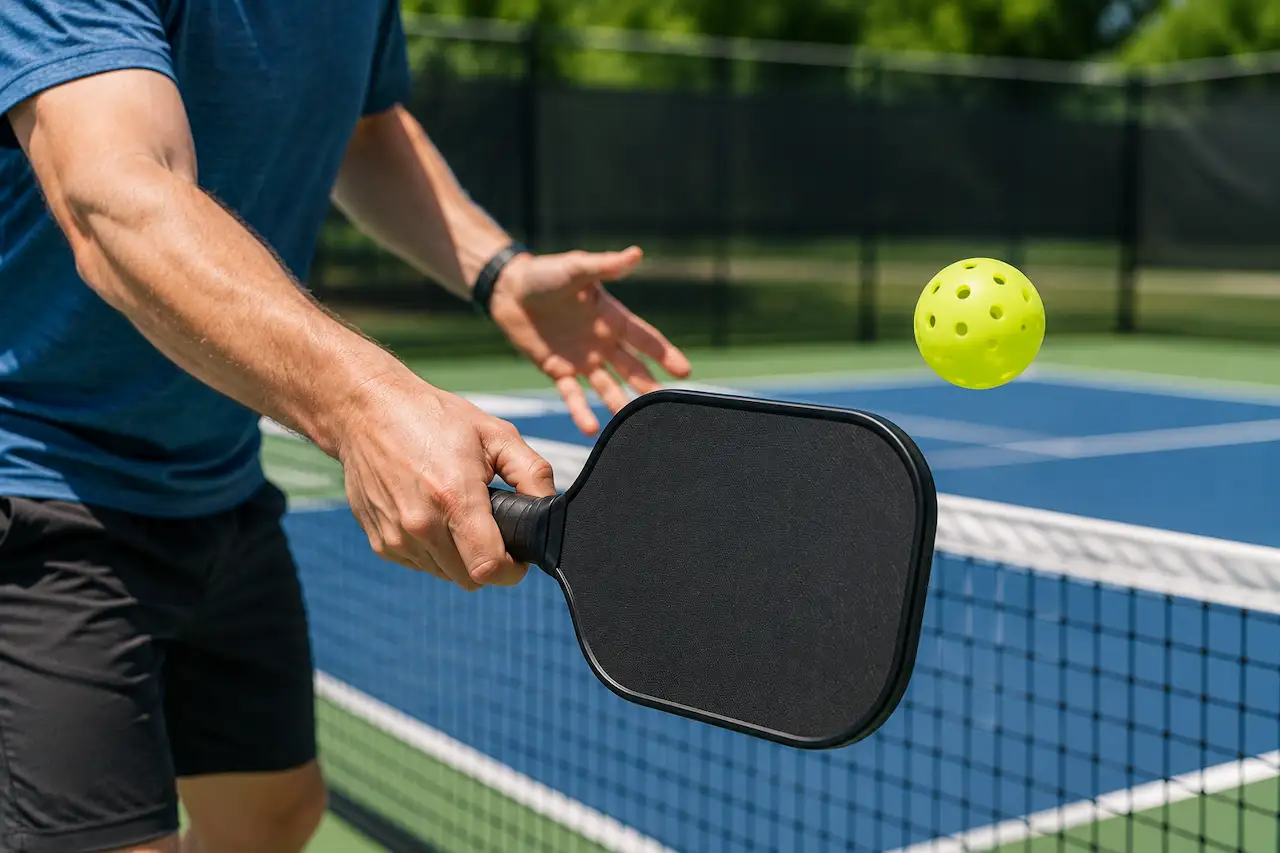
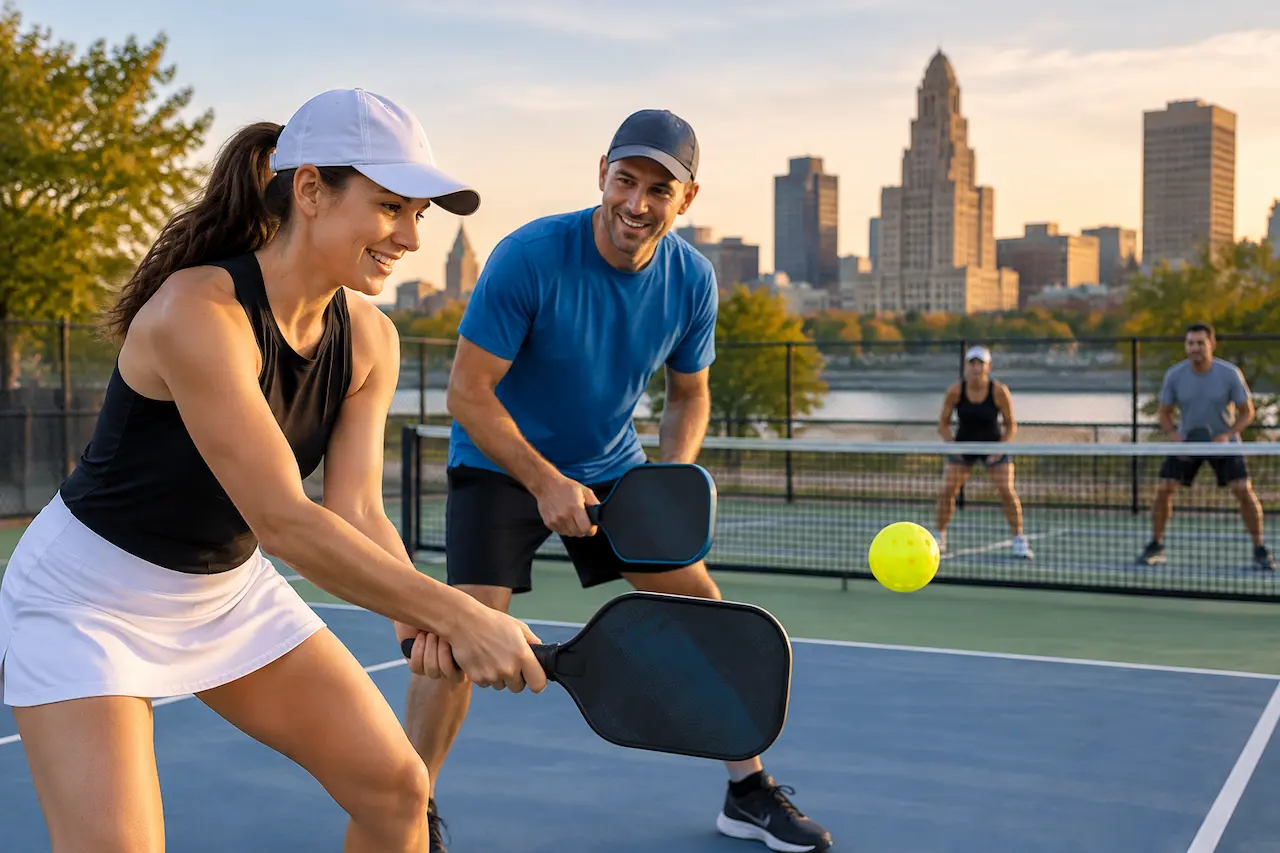
Starting pickleball is easy, but developing good habits early can make a big difference in how quickly you improve. Beginners often struggle with serving too hard, staying too far from the kitchen line, inconsistent positioning and trying to win points before learning control.
These beginner pickleball tips cover the fundamentals that matter most, including serving, the two-bounce rule, kitchen positioning, dinking, footwork and doubles communication. For new players around Buffalo, Williamsville and Orchard Park, they also provide a practical starting point before joining lessons, clinics or open play.
What Should a Beginner Learn First in Pickleball?
A beginner should first understand how serving works, the two-bounce rule, the non-volley zone or “kitchen,” basic court positioning and how to keep the ball in play consistently. Power can come later. Early improvement usually comes from control, placement and making fewer unforced errors.
Once those fundamentals feel comfortable, beginners can start developing dinks, returns, third-shot skills and doubles strategy through regular practice and structured play.
The two-bounce rule is one of the fundamental rules recognized by USA Pickleball: both sides must play one groundstroke after the serve before volleys are allowed.
Why Pickleball Is So Popular in Western New York
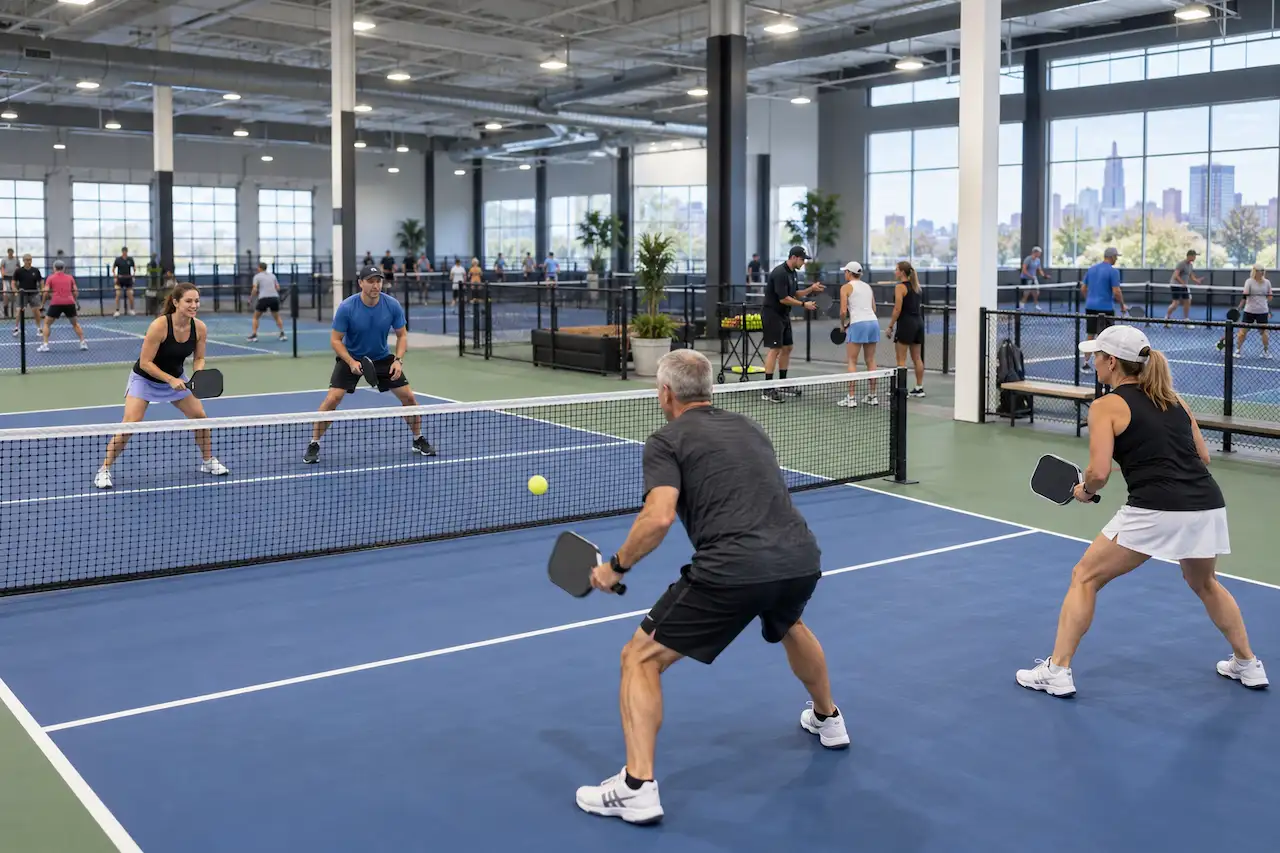
Pickleball has become popular across Western New York because beginners can start playing relatively quickly while still having plenty to learn as their skills develop. The smaller court, doubles format and social nature of the game make it approachable for players of different ages and experience levels.
Indoor pickleball is also particularly useful around Buffalo because players can continue practicing during colder months rather than depending entirely on outdoor conditions.
1. Focus on Consistency Before Power
One of the biggest mistakes beginners make is trying to hit every shot as hard as possible.
In pickleball, consistency often wins more points than power. Keeping the ball in play forces opponents to make mistakes and helps you develop better control.
When practicing:
- Prioritize accurate placement.
- Aim for steady rallies.
- Focus on clean paddle contact.
- Reduce unnecessary risk.
Better paddle control starts with a comfortable grip and consistent contact. Learn how pickleball paddle grip and control can help you place shots more accurately and reduce unnecessary errors.
2. Learn the Rules of the Kitchen
The non-volley zone, commonly called the “kitchen,” is one of the most unique aspects of pickleball.
Players cannot volley the ball while standing inside the kitchen or touching its boundary line. Understanding this rule early helps prevent avoidable faults and improves strategic play.
Spend time learning:
- Kitchen boundaries
- Volley restrictions
- Dinking techniques
- Transition zone positioning
Mastering kitchen play is essential for long-term success.
3. Develop a Reliable Serve
A strong serve doesn’t need to be powerful.
Instead, focus on creating a serve that consistently lands deep in your opponent’s court. Deep serves make returns more difficult and help establish an early advantage.
Practice serving:
- Deep toward the baseline
- With consistent placement
- To different areas of the court
- Without rushing your motion
Reliable serves create a solid foundation for beginners.
4. Move to the Non-Volley Zone Line
After serving and returning, many new players stay near the baseline.
However, experienced pickleball players understand the importance of moving toward the kitchen line whenever possible.
The non-volley zone line allows players to:
- Control rallies
- React faster
- Hit more effective dinks
- Reduce defensive positioning
Learning proper court positioning can dramatically improve your performance.
5. Communicate During Doubles Play
Most pickleball games are played in doubles format.
Effective communication prevents confusion and helps partners work together. Calling shots, discussing strategy, and supporting each other creates a stronger team dynamic.
Simple communication habits include:
- Calling “mine” or “yours”
- Discussing serve targets
- Identifying opponent weaknesses
- Encouraging your partner
Strong teamwork often outweighs individual skill.
6. Practice the Dink Shot
The dink is a soft shot that lands in your opponent’s kitchen.
While it may not seem exciting at first, the dink is one of the most important shots in pickleball. It helps control the pace of play and creates opportunities to force errors.
Benefits of effective dinking include:
- Better court control
- Longer rallies
- Strategic point construction
- Reduced unforced errors
Once you understand the basic dink, regular practice will help improve touch and consistency. Try these beginner pickleball drills to build better control, movement, and confidence on the court.
7. Watch Your Footwork
Good footwork improves every aspect of your game.
Instead of reaching for the ball, focus on moving your feet into proper position before making contact.
Key footwork fundamentals include:
- Staying balanced
- Keeping knees slightly bent
- Taking small adjustment steps
- Recovering quickly after each shot
Efficient movement helps beginners gain confidence and consistency.
8. Learn Basic Pickleball Strategy
Winning in pickleball isn’t just about hitting good shots.
Begin learning strategic concepts such as:
- Keeping opponents back
- Targeting the middle in doubles
- Forcing weaker returns
- Maintaining kitchen line control
- Using patience during rallies
A strategic approach often produces better results than relying solely on athletic ability.
9. Take Advantage of Clinics and Lessons
One of the fastest ways to improve is by learning from experienced instructors.
Professional coaching helps beginners:
- Correct mistakes early
- Build proper technique
- Learn game strategy
- Improve shot selection
- Gain confidence on the court
Group clinics also provide opportunities to meet other players and practice in a structured environment.
For players in Orchard Park and Williamsville, joining organized lessons can significantly accelerate skill development.
10. Play Regularly Through Open Play or Court Time
The best way to improve at pickleball is simple: play consistently.
Regular court time helps reinforce skills, improve decision-making, and build confidence. Even a few sessions each week can lead to noticeable progress.
Remember that every experienced player started as a beginner. Focus on learning, enjoying the game, and celebrating small improvements along the way.
Common Pickleball Mistakes Beginners Should Avoid
Knowing what not to do can be just as useful as learning proper technique. These mistakes commonly slow down new players:
- Trying to hit every ball hard
- Forgetting the two-bounce rule
- Staying too far behind the kitchen line
- Volleying from the non-volley zone
- Reaching instead of moving the feet
- Trying advanced shots before developing control
Recognizing these habits early can speed up your development.
What Does a Beginner Need to Start Playing Pickleball?
You do not need a large amount of equipment to begin playing pickleball. Start with a comfortable paddle, appropriate court shoes, pickleballs designed for the type of court you are using and comfortable athletic clothing.
Beginners should choose a paddle they can control comfortably rather than simply buying the heaviest or most powerful option. As your technique develops, factors such as grip size, paddle shape and playing style become more important.
Frequently Asked Questions
What should I learn first as a pickleball beginner?
Start with serving, the two-bounce rule, kitchen rules, basic court positioning and consistently keeping the ball in play.
How long does it take to learn pickleball?
Many beginners can begin playing simple games quickly, but developing consistent serves, returns, dinks and positioning takes regular practice.
What is the two-bounce rule in pickleball?
After the serve, the receiving team must let the ball bounce before returning it. The serving team must then let the return bounce before playing the next shot. After that, volleys are allowed.
Can a beginner step into the kitchen in pickleball?
Yes. Players can enter the non-volley zone, but they cannot volley the ball while touching that area or its boundary line.
Should beginners take pickleball lessons?
Lessons can help beginners learn correct technique, positioning and rules more efficiently, especially if they are completely new to racket or paddle sports.
Where can beginners learn pickleball near Buffalo?
Players around Buffalo can find beginner programming, clinics and court-time opportunities in Williamsville and Orchard Park through WNY Tennis.
Ready to Start Playing Pickleball?
Improving at pickleball does not require mastering every shot at once. Start with the rules, consistency, positioning and control, then add more advanced skills as you become comfortable on the court.
If you’re learning around Buffalo, Williamsville or Orchard Park, regular practice combined with clinics, lessons or open play can help turn those fundamentals into real match confidence.