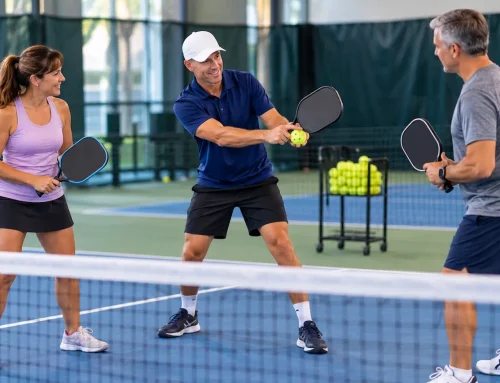
If there is one shot that separates developing pickleball players from genuinely competitive ones, it is the third shot drop. It is the most discussed, most practiced, and most misunderstood shot in the game and in our experience working with players across the Buffalo NY area, it is the single technical skill that unlocks the next level of play faster than any other when it is understood and executed correctly.
At Village Glen in Williamsville and South Towns in Orchard Park, we coach the third shot drop as a foundational competitive skill rather than an advanced technique reserved for experienced players. This guide breaks down exactly what the shot is, why it matters, how to build it, and how to practice it so it holds up in real match situations.
What the Third Shot Drop Is and Why It Changes Everything
The third shot drop is the shot hit by the serving team on the third ball of every rally after the serve and the return. Its purpose is to transition the serving team from the baseline, where they are at a significant positional disadvantage, to the kitchen line, where both teams compete on equal terms.
Without a reliable third shot drop, the serving team is permanently pinned at the baseline against opponents who are already at the net. Every ball they hit from the baseline gives the kitchen team an opportunity to attack, and every attack they absorb keeps them further from the position they need to be in to compete effectively. The third shot drop solves this problem by forcing the kitchen team to hit upward from below net height a shot that cannot be attacked which gives the serving team time to move forward and establish position at the kitchen line.
Understanding why the shot exists changes how you practice it. It is not a defensive shot. It is a transition tool, and every element of its technique is designed to serve that specific tactical function.
The Four Technical Elements of a Reliable Third Shot Drop
Most players who struggle with the third shot drop are failing on one or two specific technical elements rather than the shot as a whole. Identifying which element is breaking down is the fastest path to correction.
Paddle face angle
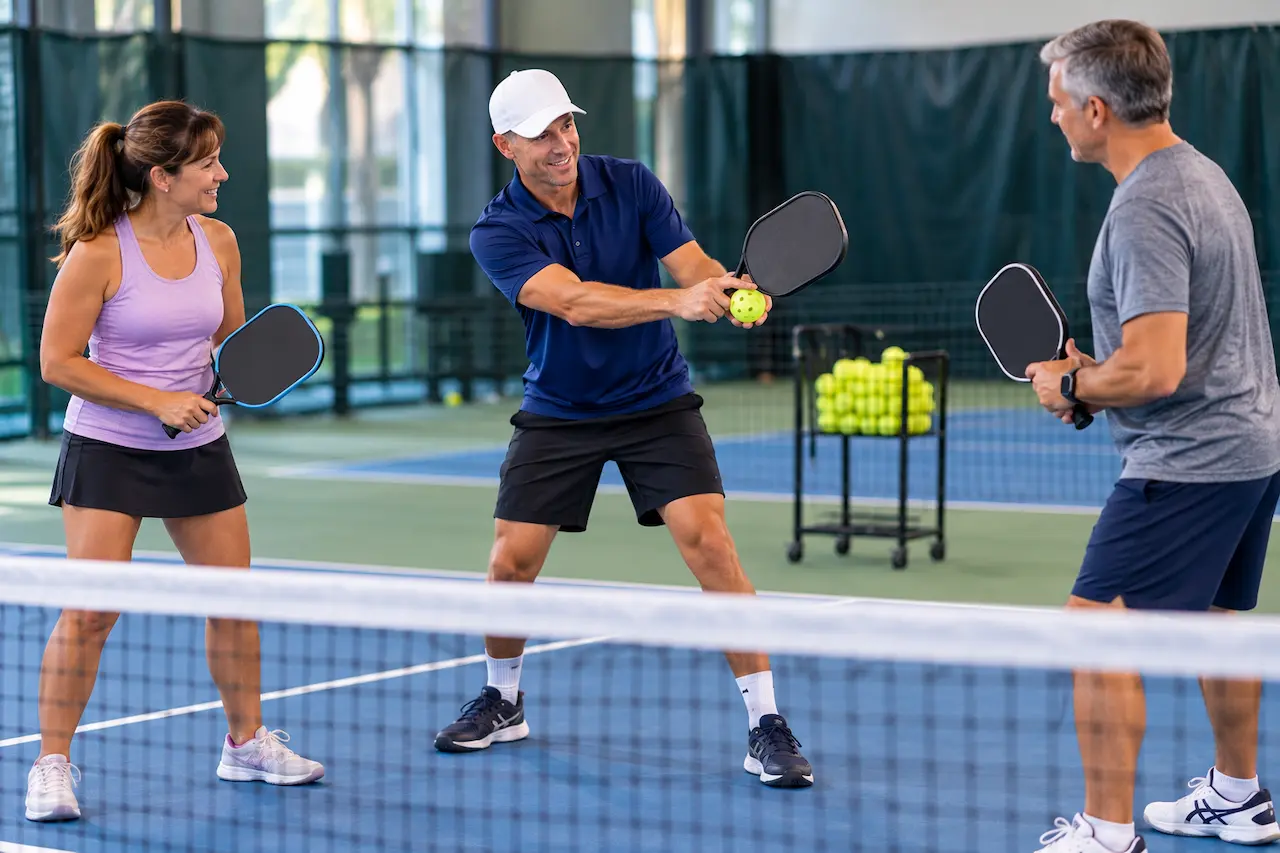
The paddle face must be open tilted slightly back from vertical throughout the entire swing. A closed face sends the ball into the net. A face that opens too late produces a ball that floats high and sits up for an easy attack. The open face must be established before the swing begins and maintained through contact and follow-through.
Contact point
The ball should be contacted in front of the body with the paddle moving upward through the strike. Players who let the ball get beside or behind them at contact lose control of the face angle and the trajectory simultaneously. Moving your feet to the ball rather than reaching for it is the most reliable way to maintain the correct contact point consistently.
Swing length
The third shot drop is a compact, controlled swing not a full groundstroke. Most errors we see from intermediate players come from using a backswing that is too long for the precision the shot requires. A shorter backswing with a smooth, accelerating forward motion produces significantly more consistent depth and arc than a full swing with a decelerating finish.
Arc and depth
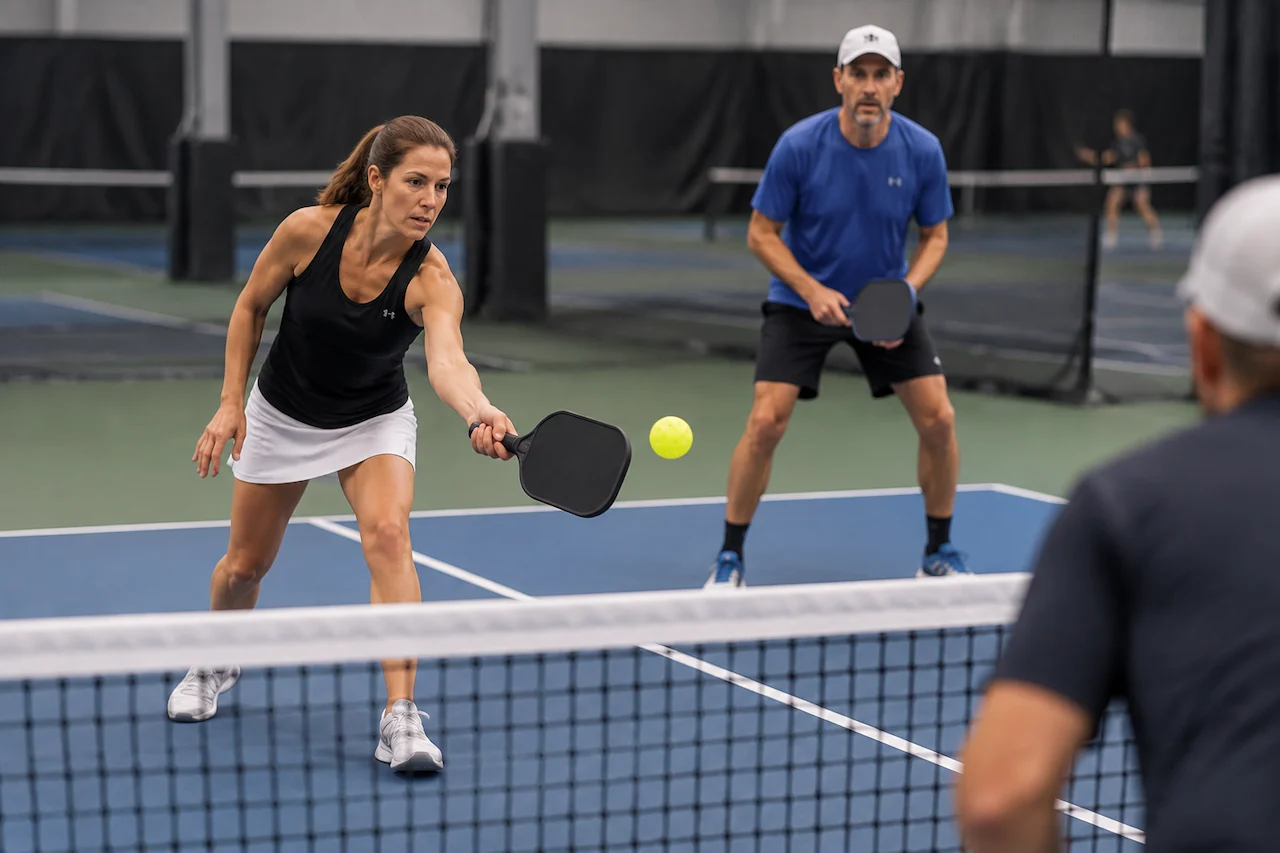
The ball must travel in a high enough arc to clear the net comfortably and land softly in the kitchen zone not just clear the net with minimal margin. A flat trajectory leaves no room for error and produces net faults under pressure. Aim to peak the ball approximately two to three feet above net height and let gravity bring it down into the kitchen. Depth within the kitchen matters less than the arc a ball landing anywhere in the kitchen from a high arc is more difficult to attack than a flat ball landing at the back of the kitchen.
The Most Common Third Shot Drop Mistakes We See in Buffalo Players
We work with players across all levels at both clubs and the same errors appear consistently regardless of how long a player has been working on this shot. Knowing these errors before you drill saves significant practice time.
Before we cover each one, here is a quick summary of the mistakes that account for the majority of third shot drop failures at the intermediate level:
- Hitting the ball flat rather than with an upward brushing motion that creates the arc needed to clear the net and drop into the kitchen
- Using too long a backswing that generates more pace than the shot requires and removes the fine control needed for consistent depth and arc
- Failing to move to the ball before contact reaching for a wide ball with an extended arm produces closed face angle and inconsistent trajectory on every attempt
- Hitting from a static position rather than beginning to move forward toward the kitchen immediately after contact the shot is a transition tool and the forward movement is part of the execution
- Targeting the back of the kitchen rather than accepting any landing zone within the kitchen that arrives from a high arc depth precision anxiety causes players to flatten the trajectory in an attempt to control placement
How to Practice the Third Shot Drop Effectively
Understanding the shot is the first step. Building it into a reliable competitive skill requires structured practice that progresses from isolated drilling through live competitive application.
Stage one — isolation drilling
Stand at the baseline with a partner feeding soft balls from the kitchen line. Focus entirely on paddle face angle and arc with no concern for where in the kitchen the ball lands. Hit 20 consecutive drops before evaluating consistency. If more than three or four per set are hitting the net or floating high, focus on the swing length before anything else a shorter backswing alone resolves the majority of contact errors at this stage.
Stage two — movement integration
Add a lateral shuffle before each drop. Your partner feeds the ball slightly wide so you must move two steps laterally before contacting the ball. This replicates the match condition where the third shot drop is almost never hit from a perfectly set position and forces you to maintain face angle and arc while in motion the specific skill that breaks down most frequently under match pressure.
Stage three — rally integration
Play full points starting from the serve. After the return comes back, execute your third shot drop and move forward. Your partner plays the fourth ball normally. Score the rally and track specifically how many third shot drops land in the kitchen versus how many produce attackable responses. A reliable third shot drop should be producing a non-attackable response on at least six or seven out of every ten attempts before it is considered match-ready.
Our pickleball clinics at Village Glen work through all three practice stages in a structured group environment with real-time coaching feedback, giving players the external perspective that makes stage progression significantly faster than solo drilling alone.
How the Third Shot Drop Connects to Your Full Competitive Game
The third shot drop does not exist in isolation. It is one element of a broader transition strategy that includes the fourth shot dink, the fifth shot reset, and the kitchen line battle that follows. Understanding how the shot connects to everything that comes after it changes how you execute it under match pressure.
When your third shot drop lands correctly soft, high arc, landing in the kitchen your opponent must hit upward from below net height. That response is your cue to accelerate your transition to the kitchen line. A player who hits a good third shot drop and then hesitates at mid-court wastes the positional advantage the shot was designed to create. The drop and the forward movement are a single connected action, not two separate decisions.
Equally, when your third shot drop does not land as intended and produces an attackable response, you need a reset strategy a defensive block that absorbs the pace and resets the rally to a dinking exchange rather than attempting to counter a hard-driven ball with another offensive shot. Building the reset alongside the drop is part of a complete transition game, not an afterthought. Our adult pickleball development programs at Village Glen develop the full transition sequence third shot drop, forward movement, reset, and kitchen play as a connected tactical system rather than isolated skills.
A Real-World Example: From Baseline Liability to Kitchen Threat
We worked with an intermediate pickleball player at South Towns who had been playing competitively for two years but was consistently losing matches against players at his skill level. After reviewing his match patterns, the issue was clear he had no reliable third shot drop and was hitting flat groundstrokes on the third ball that opponents at the kitchen line were attacking with ease.
We introduced a six-week focused drilling program through our pickleball lessons at South Towns that progressed through all three practice stages. In the first two weeks his net fault rate dropped significantly as he shortened his backswing. By week four his drops were landing consistently in the kitchen on six to seven out of ten attempts in isolation drilling. By week six he was executing the shot reliably in live point play and transitioning to the kitchen line successfully after each one.
His match results changed noticeably within the same period. The physical skills he had developed over two years his dinking, his volley, his kitchen play had always been there. The third shot drop was the missing transition that prevented him from ever using them in competitive situations.
When to Seek Coaching for Your Third Shot Drop
The third shot drop is one of the most difficult shots in pickleball to self-correct because the errors are subtle and the feedback from the shot itself net or long does not always reveal which specific element caused the problem. A ball that hits the net might be caused by a closed face angle, a contact point that is too far behind the body, or insufficient upward brushing through the strike. Without an external perspective, a player is guessing which of those to fix.
A single coaching session focused specifically on the third shot drop typically produces faster and more accurate correction than weeks of unsupported drilling, because the coach identifies the root cause immediately and provides a correction the player can feel rather than only read about. Our pickleball open play at South Towns gives players the live competitive environment to test third shot drop improvements immediately after coaching sessions the combination of coached correction and immediate competitive application is the fastest route to a shot that holds up under real match pressure.
Why Choose Us
At Village Glen and South Towns Tennis and Pickleball, we provide the coaching expertise, the structured drilling environment, and the competitive match play sessions that help Buffalo NY pickleball players build a reliable third shot drop and the complete transition game that surrounds it.
- Two full-service indoor pickleball facilities in Williamsville and Orchard Park with certified coaches who deliver structured third shot drop coaching as part of every intermediate player development program
- Private lessons, group clinics, and adult development programs that progress players through isolation drilling, movement integration, and live competitive application in a structured sequence
- Match play sessions that give players the live competitive environment to test and consolidate third shot drop improvements immediately after coached correction
- Open play sessions across multiple days of the week at both clubs providing consistent court time to apply and reinforce the shot under varied match conditions
- A competitive pickleball community across Western New York where intermediate players develop the tactical skills and match play confidence that open play alone cannot build
Conclusion
The third shot drop is not an advanced luxury it is the foundational transition shot that every competitive pickleball player in Buffalo NY needs to develop to move beyond the baseline and compete effectively at the kitchen line. Get the paddle face angle right, shorten the backswing, brush upward through contact, and move forward immediately after the ball leaves your paddle. Practice it in stages from isolation through live competition and combine that drilling with structured coaching feedback that identifies which specific element needs attention. At Village Glen and South Towns Tennis and Pickleball, we are here to help you build this shot into a reliable competitive weapon.
Frequently Asked Questions
What is the third shot drop in pickleball?
It is the shot hit by the serving team on the third ball of the rally, designed to arc softly into the kitchen and force opponents to hit upward, giving the serving team time to advance to the net.
Why do I keep hitting my third shot drop into the net?
The most common causes are a closed paddle face at contact, a backswing that is too long, or contacting the ball too far behind the body. Shortening the backswing and ensuring the face is open before the swing begins resolves the majority of net errors.
How long does it take to develop a reliable third shot drop?
Most players develop a consistent drop in isolation drilling within four to six weeks of structured practice. Making it reliable under competitive match pressure typically takes a full two to three month cycle of regular drilling combined with live point application.
Should I always hit a third shot drop or are there other options?
The third shot drop is the highest-percentage transition option for most players at the recreational and intermediate competitive level. A third shot drive is an alternative when the return sits high and short, but it requires more precise execution and leaves less margin for error than a well-placed drop from the baseline.
Can a beginner learn the third shot drop?
Yes. We recommend introducing the shot to players once they have consistent groundstroke contact and basic kitchen dinking ability typically after two to three months of regular play. Learning the shot earlier than that often produces frustration because the foundational contact mechanics it builds on are not yet reliable enough to support the additional precision the drop requires.