Your three year old loves chasing balls and copying your swing. You wonder whether it is time for tennis lessons, or whether you should wait.
A child can explore tennis at three through simple play. Tennis lessons for a three year old, however, need to be designed for that age. WNY Tennis currently lists its structured junior programs from age four, so the best next step at three may be playful movement rather than enrollment in a class.
Is Three Too Young to Learn Tennis?
Three is not too young to enjoy activities that introduce tennis. A child can roll, toss, catch, and tap a soft ball. They can learn that a racquet is for guiding a ball and that a court is a place to move and play.
Three may be too young for a particular lesson format. A class designed for older children may involve instructions, waiting turns, and controlled hitting that do not suit a younger child. The right question is less about whether tennis is possible at three and more about what kind of experience the child will have.
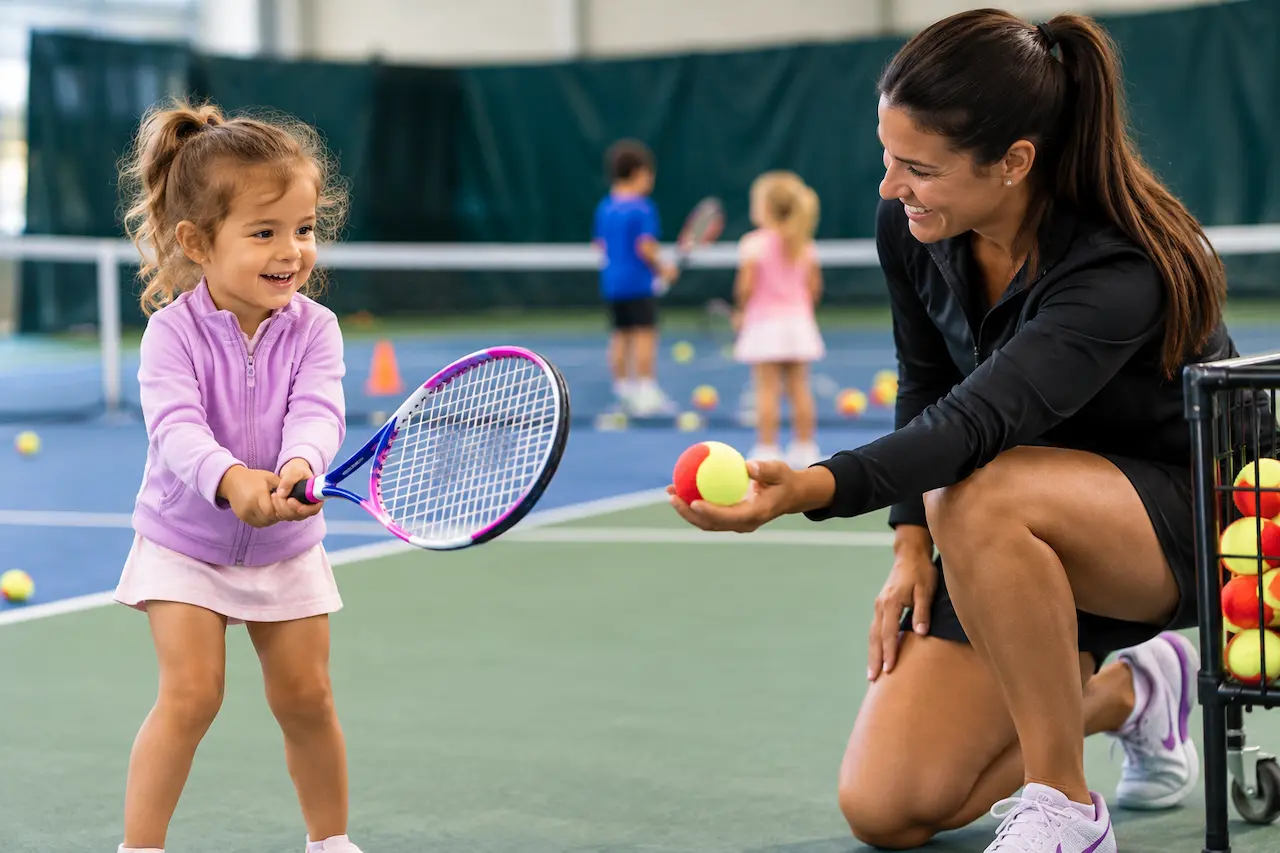
Some tennis providers offer activities specifically for children ages three and four, often with a parent participating. Those programs use modified equipment and games instead of expecting children to play standard tennis. That shows how much the format matters. It does not mean every club offers enrollment at age three.
At Village Glen and South Towns Tennis & Pickleball, we want a child’s first experience to feel achievable and enjoyable. Our published junior pathway begins at age four. Parents of three year olds can use the months before that to build comfort with balls, movement, and taking part in simple games.
What Should a Three Year Old Actually Learn?
A three year old does not need a polished forehand or a serve. The useful foundations are much simpler: noticing a moving ball, moving toward it, stopping safely, and enjoying another turn.
Think of tennis as a reason to play together. Roll a soft ball across the floor and let your child send it back. Toss a ball gently for a catch. Invite them to tap a balloon or soft ball with their hand before introducing a child sized racquet.
These activities give a child chances to coordinate what they see with how they move. They also allow you to observe what interests them. One child may love chasing and throwing. Another may enjoy balancing a ball on a racquet for a moment. Both are participating in useful ways.
Avoid measuring a three year old’s progress by the number of successful hits. The better signs are curiosity, willingness to try again, and enjoyment of the activity. If a game becomes frustrating, simplify it or finish while your child still wants to play.
The goal at this stage is an invitation: “This is fun. I can come back and try it again.”
Why Standard Tennis Is a Poor Starting Point
An adult racquet, a full size court, and a standard ball can make a simple game unnecessarily difficult for a small child. The equipment is harder to handle, the space is too large, and the ball may move too quickly for the activity you intended.
A child sized setup changes the task. A soft or low bounce ball moves more slowly. A smaller space gives the child a reachable target. A lightweight racquet is easier to hold and move.
This is why junior programs often use modified equipment and age appropriate activities. WNY Tennis describes its introductory junior pathway in terms of games, coordination, and early skill discovery, rather than expecting the youngest children to play an adult match.
You do not need to buy a court’s worth of equipment to try tennis at home. Begin with something soft that you can roll or toss safely and a little space to move. If your child remains interested, ask a junior coach what equipment suits their size and the program they may eventually join.
Starting with the right task matters more than starting with advanced gear.
How Can You Tell If Your Child Is Interested?
Interest can look different from one child to another. A child may ask to play again, pick up the ball without being prompted, or watch other people hit. Another may enjoy two minutes of play and then move on.
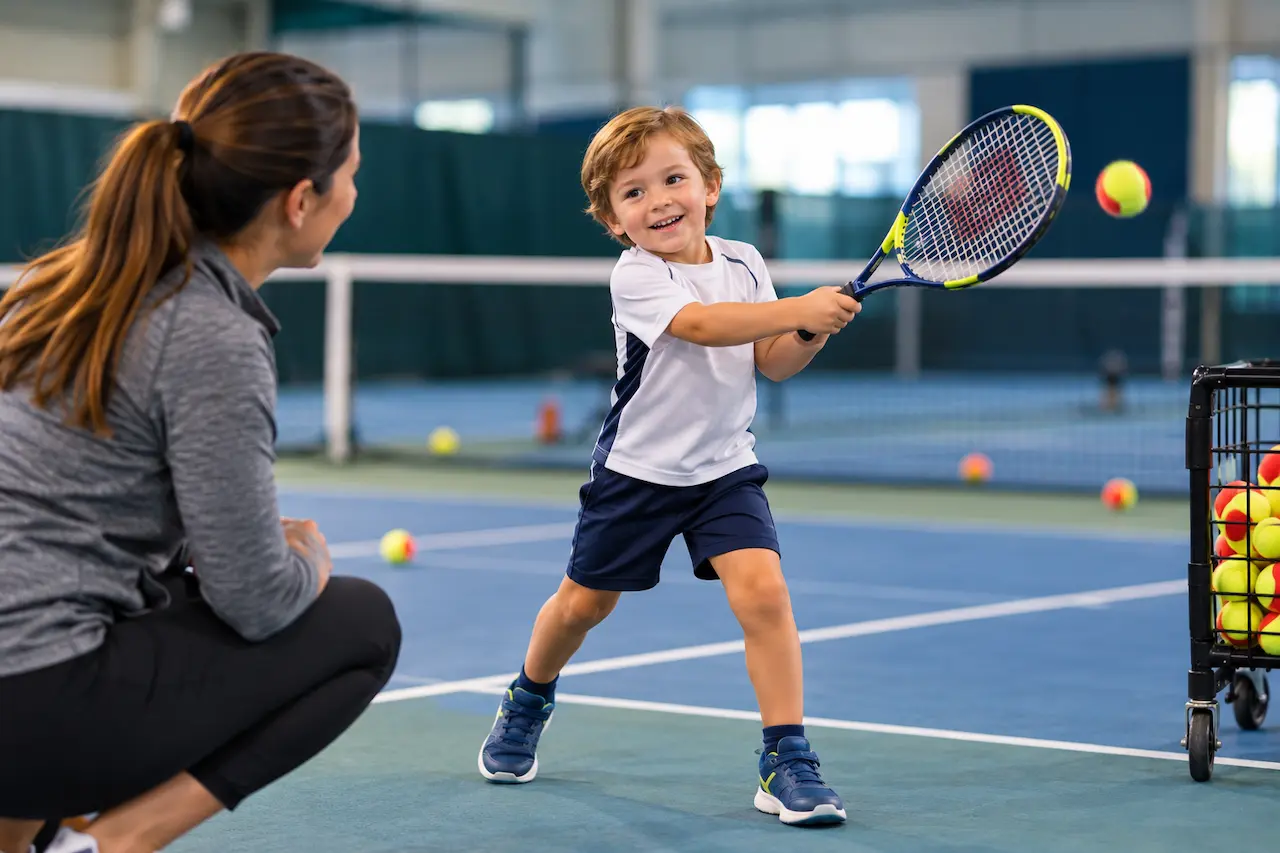
Both responses are normal for an early introduction. Do not treat a short period of attention as failure. Young children are exploring, and tennis is one of many things they can try.
Offer simple activities on different days without making each attempt a test. A child who ignores the racquet one afternoon may love rolling balls the next. Let their response guide how long you continue.
It also helps to notice whether they enjoy playing with you or prefer watching first. A parent’s enthusiasm can make the activity welcoming, but pressure to perform can quickly change its tone. Keep the invitation open and the expectations small.
If your child regularly seeks out the activity and enjoys following a simple game, that is useful information when you begin considering an age appropriate junior program.
What Does Readiness for a Class Look Like?
A birthday alone cannot tell you everything about class readiness. The program must accept your child’s age, and its activities must suit their stage of development. Within that setting, you can look at how your child responds to a group.
Can they take part in a simple game with an adult’s help? Are they becoming comfortable waiting briefly for a turn? Do they enjoy being around other children? Can they return to an activity after becoming distracted?
These are observations, not entrance tests. A well designed introductory program should allow young children to learn through play. Parents should ask what participation looks like rather than assuming children must already know how to hit.
At age three, you can practice the experience of taking turns at home. Roll a ball and say, “My turn, your turn.” Keep it light. If your child changes the game, follow their interest when it is safe to do so.
As they approach the age accepted by a local program, talk to the club about the current entry requirements. Our Village Glen junior tennis programs list Mini Explorers from age four. Checking the program details prevents disappointment and helps you plan for the right starting point.
Should You Choose a Class or a Private Lesson?
For a young child, start by asking whether the instruction is designed for their age. A private lesson is not automatically suitable just because it offers individual attention. The coach, activities, equipment, and session expectations still need to fit the child.
An introductory group can give children games and social interaction. Individual instruction may give a coach more freedom to adapt the pace. The best option depends on what the club offers and what your child enjoys.
At WNY Tennis, the published structured junior starting age is four. Do not assume that a private lesson is an exception for a three year old. Ask the club directly about current age policies before making a booking.
When comparing options, ask what children do during a typical session. Are they moving and playing, or waiting for long periods? Does the instructor use equipment suited to them? Is the goal to introduce tennis, or does the program expect existing skills?
The answers tell you much more than the words “junior lesson.” If there is no suitable option yet, waiting while you play simple ball games together is a sound choice.
Easy Tennis Activities to Try at Home
You can introduce tennis without teaching formal strokes. Choose a safe space, a soft ball, and a game that gives your child frequent opportunities to participate.
Try activities such as:
- Roll and return: Sit a short distance apart and roll a ball back and forth.
- Catch after one bounce: Use a soft ball and celebrate the attempt as well as the catch.
- Tap a balloon: Let your child guide it upward with a hand or lightweight racquet.
- Aim for a large target: Place an easy target nearby and roll or toss a ball toward it.
- Follow the ball: Move together to collect a ball, then return to your starting place.
Keep instructions short and show the game once. A long explanation usually adds little. Your child can learn what to do by joining you.
Choose an activity they can succeed at sometimes. If every attempt is too difficult, bring the target closer or use a slower ball. If they lose interest, change the activity or stop. There is no need to finish a prescribed set of repetitions.
These games are introductions, not a substitute for a junior program later. Their value is that they make movement and ball play familiar.
What Should Parents Avoid?
The first mistake is expecting a young child to learn in the same way as an older beginner. A three year old is unlikely to benefit from repeated technical corrections about grip or swing path. Let the activity stay playful.
The second is making every hit a result to judge. If you praise only the balls that reach a target, your child may become reluctant to try when a game is difficult. Notice effort, curiosity, and willingness to participate.
Also avoid comparing children. One child may enjoy throwing and catching while another wants to swing a racquet. Their different interests do not determine who could enjoy tennis later.
Finally, do not promise a class place based on an article, an older schedule, or another club’s age policy. Confirm the current program details directly. Age ranges and registration availability are practical requirements, not judgments about your child.
The best early experience leaves a child willing to play again. Protecting that interest gives future instruction a better starting point.
A Real World Scenario: A Child Who Loves Balls but Not Lessons
Imagine a parent whose three year old asks to bring a ball outside every afternoon. The parent sees that interest and begins searching for formal tennis lessons.
At home, the child happily rolls and throws a soft ball. When asked to stand still, listen to several instructions, and repeat the same racquet movement, they walk away. The parent worries that the child may not be ready for tennis after all.
That conclusion would be too broad. The child has shown a clear interest in ball play. What did not fit was the structure of that particular activity.
A better approach would be to return to short, enjoyable games. The parent could introduce a racquet briefly, then put it aside when interest fades. As the child grows, they can inquire about a program designed for the accepted age range.
This is a hypothetical example, not a description of a particular student. It illustrates a useful distinction: a child can be interested in tennis before they are ready for a formal lesson.
What Changes When Your Child Turns Four?
Turning four does not suddenly make every child ready for identical instruction. It does, however, bring them into the published starting age for WNY Tennis’s introductory junior options.
Our junior programs describe early instruction through games and coordination based activities. The broader junior tennis program guide explains how the experience changes as children grow, so parents can see where an introductory class fits within the longer pathway.
If your child has spent time rolling, tossing, and tapping a ball, those activities may help the setting feel familiar. If they have never held a racquet, they can still begin at the appropriate introductory level. The purpose of a beginner program is to introduce the sport.
Before enrolling, check the current program description, location, and schedule. Tell the club your child’s age and whether they have taken part in a group activity before. This helps you understand what the first session will involve.
You can also ask about summer opportunities. The junior summer camp page lists programs beginning at age four, subject to the current program details and registration.
How to Choose an Introductory Tennis Program
When your child meets a program’s age requirement, look beyond its name. “Beginner” can describe very different experiences.
Ask whether the coach uses age appropriate equipment and activities. Find out how children take turns and how much of the session involves active participation. Ask what a child is expected to know before arriving.
A useful introductory program should make the first steps understandable. Children need opportunities to move, explore the ball, and try again. Parents need clear information about age eligibility, session expectations, and what to bring.
Consider the practical fit too. A suitable program at an inconvenient time may be difficult to attend consistently. Choose a schedule your family can manage without turning each lesson into a rush.
Then give your child time. The first session may be spent becoming comfortable with the space and coach. Enjoyment and familiarity are meaningful outcomes at the beginning. More formal skills can develop as the child continues.
Why Choose Us
At Village Glen and South Towns Tennis & Pickleball, we aim to give young players an appropriate and welcoming introduction when they reach program age.
- Introductory junior tennis options from age four.
- Activities designed around early movement and coordination.
- A junior pathway that changes as children develop.
- Program information parents can review before enrolling.
- Opportunities to continue learning as interest grows.
Frequently Asked Questions
Can a three year old play tennis?
Yes. A three year old can enjoy simple, supervised ball and movement games that introduce tennis. Formal program eligibility depends on the club and the specific class.
Does WNY Tennis offer junior classes for three year olds?
The currently published structured junior programs begin at age four. Contact the club for current information rather than assuming an exception or a younger class is available.
What should I teach my three year old first?
Start with playful activities such as rolling, tossing, catching, and tapping a soft ball. Keep the task easy enough to enjoy and avoid demanding formal technique.
Does my child need to hit a ball before joining a beginner program at four?
An introductory program is designed to teach early skills. Check the current program requirements, but do not assume your child must already know how to play.
Should I buy a tennis racquet now?
You can begin with a soft ball and simple games. If your child remains interested, ask a junior coach about equipment suited to their size and the program they plan to join.
Conclusion
Three is a good age to make ball play familiar and enjoyable. For structured lessons at WNY Tennis, the published junior starting age is four. If you want help planning your child’s first program, contact us with their age and interests.