
Your racquet has been sitting in a cupboard for years. You remember enjoying tennis, but you wonder whether your timing, movement, and confidence will return when you step onto the court.
Returning to tennis starts with finding a comfortable way to play again. At Village Glen and South Towns Tennis & Pickleball, we encourage you to choose your next step around your current abilities and goals.
Do You Need to Start Again as a Beginner?
You may remember how to serve, keep score, and move through a rally. That knowledge gives you a useful foundation, even if your shots feel unfamiliar at first.
However, remembering a skill and performing it consistently are different things. You might recognize an approaching forehand but prepare too late. You may know where a serve should land while struggling to control the toss. Those gaps help you identify what needs practice.
Start by describing your experience accurately. Tell a coach when you last played, whether you took lessons, and what kind of games you enjoyed. “I played recreational doubles ten years ago” gives more useful information than simply calling yourself an intermediate player.
We recommend treating your first session as an assessment. Find out what feels comfortable, what needs attention, and which pace lets you participate. Your previous experience matters, but your current game should guide your placement.
You do not need to erase what you learned. You need an opportunity to reconnect that knowledge with what you can do today.
Choose a Clear Reason to Come Back
A specific reason makes it easier to choose an appropriate session. Perhaps you want a regular activity after work, a chance to play with friends, or enough confidence to join recreational doubles.
Each goal suggests a different starting point. Someone seeking social games may benefit from a suitable group program. Someone worried about an unreliable serve may prefer individual instruction before joining other players.
Avoid making your first goal too large. “I want to compete at my old level immediately” places several demands on your opening session. “I want to rally comfortably and understand what to practice next” gives you a useful task you can complete.
Your goal can change as you play. An enjoyable first month may lead you toward regular matches. You may also discover that coached practice is what you enjoy most. Both are worthwhile outcomes.
I always advise players to choose a goal that helps them book the next session. A clear reason turns an intention to return into an actual appointment with the court.
What Should Your First Session Look Like?
Keep the opening session manageable. Choose a partner or coach who understands that you have been away and agrees to begin at a comfortable pace.
Start with simple exchanges rather than immediately playing a competitive set. Give yourself time to judge the ball, find your contact point, and move between shots. You are learning how your current game behaves.
As you hit, notice patterns without trying to correct everything. Does your forehand feel familiar while your backhand needs more preparation? Can you rally comfortably but struggle when the ball lands short? These observations create a direction for future practice.
You can finish with a few points if you feel comfortable. A complete match is optional. The session has already served its purpose if you leave knowing what works and what you want to improve.
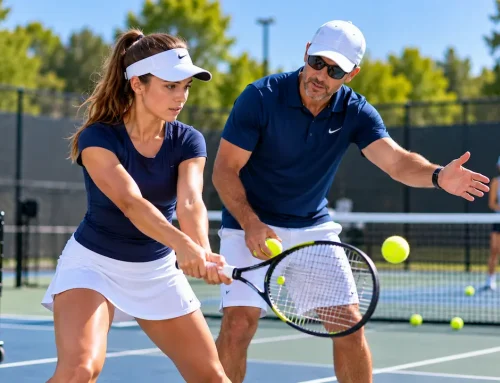
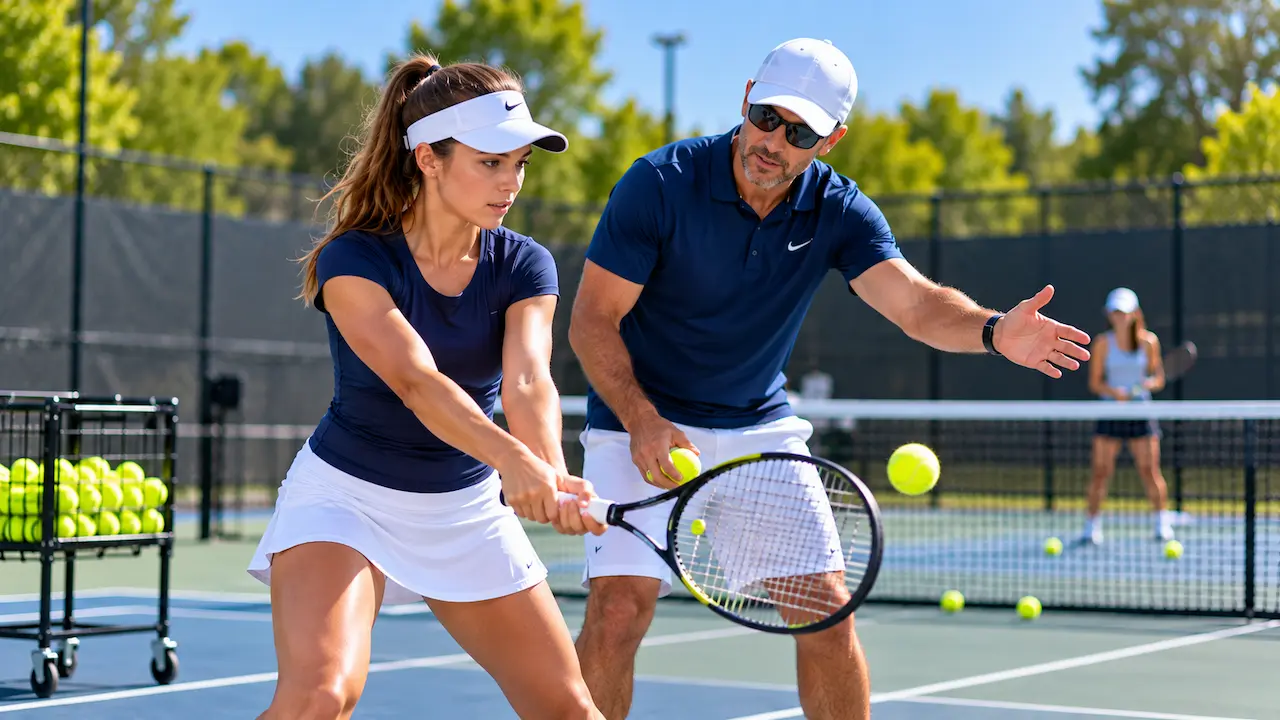
For players who want a coach to guide that first assessment, our private tennis lessons provide an option for focused instruction. Explain your playing history when you inquire so the session can begin with an appropriate goal.
Check Your Equipment Before Buying Something New
Finding an old racquet can make the return feel familiar. Before using it, examine its condition and consider whether it still feels comfortable in your hand.
Look at the grip, strings, and frame. A grip that slips or crumbles needs attention. If you are unsure about the racquet’s condition, ask someone qualified to inspect it before you rely on it during play.
You do not need to replace everything because you have been away. Equally, you do not need to keep using equipment that makes the game unnecessarily difficult. Try to identify a real problem before choosing a purchase as the solution.
Footwear deserves attention too. Check that your shoes fit, remain in good condition, and are suitable for court movement. Old shoes that look barely used may still have deteriorated during storage.
Before your first visit, check the club’s current requirements. Ask about equipment if you are uncertain. Making those arrangements beforehand gives you more time to concentrate on playing when you arrive.
Rebuild Timing Before Adding Pace
Your memory may invite you to swing as hard as you once did. Your first sessions give you a chance to establish whether you can prepare, make contact, and recover consistently at that speed.
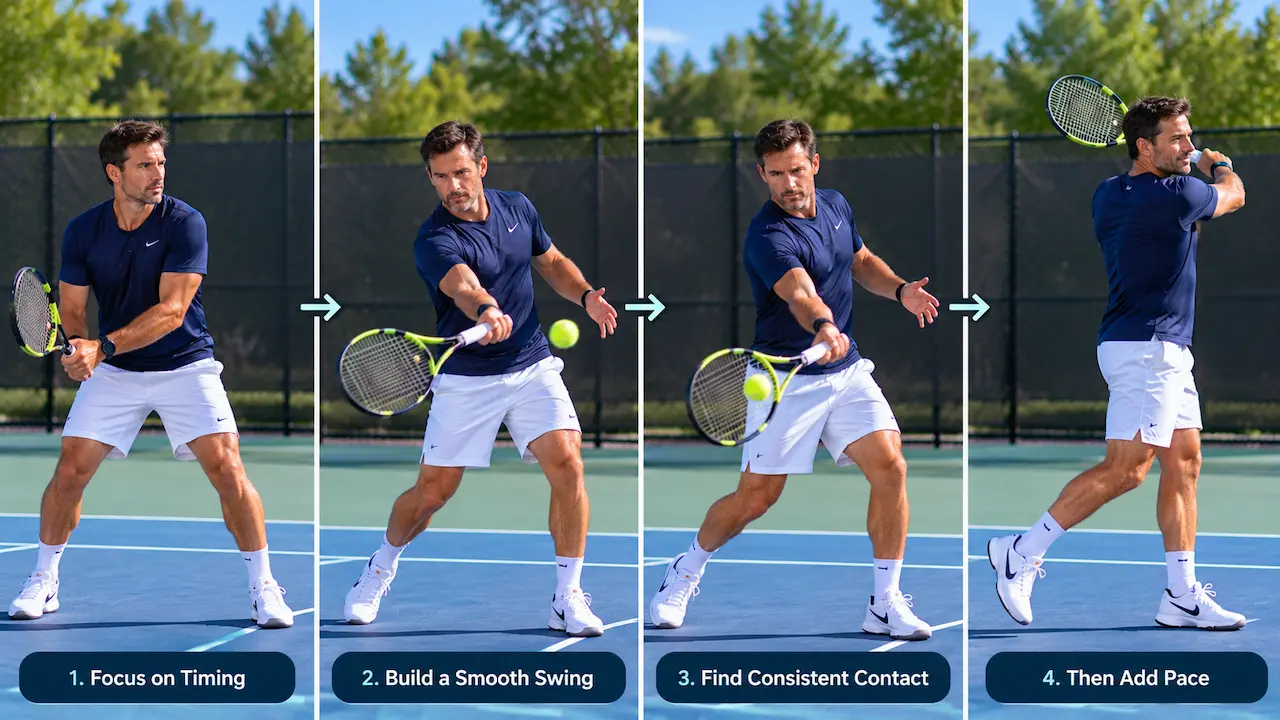
Begin with a pace that allows you to recognize the incoming ball. Aim for a generous area of the court and try to repeat a comfortable shot. Once that becomes reliable, you can gradually make the task more demanding.
This approach also makes errors easier to understand. If you attempt every ball at maximum pace, several problems can appear together. A controlled exchange helps you notice whether you are late, standing too close, or changing your swing unexpectedly.
Give Yourself Time to Prepare
A returning player may recognize a shot early but delay getting ready for it. Try to notice the ball as it leaves the other player’s racquet and prepare before it reaches you.
Use one simple cue, such as “prepare early.” Avoid filling your head with instructions about every part of your body. One useful adjustment is easier to repeat and evaluate.
Recover After the Shot
Watching a successful shot can leave you unprepared for the next ball. Make recovery part of the action: hit, move toward a useful position, then prepare again.
Our guide to tennis footwork explores movement and recovery in more detail. It can help you identify practical habits to work on once you have seen what happens in your first session.
How Should You Approach Serving Again?
Serving can feel less familiar than rallying because you control every part of its beginning. Your setup, toss, and timing all need to work together.
Start with controlled attempts toward a large target inside the correct service box. Pay attention to whether your setup and toss remain repeatable. Adding power can wait until you understand what your current motion produces.
Practice from both sides of the court. Include a few sequences where you call the score, hit a first serve, and take a second serve when needed. That connects your practice with the routine of playing a game.
If you repeatedly miss in the same way, make a note rather than changing several things at once. A coach can help determine whether the issue comes from your preparation, contact, target, or another part of the movement.
Do not judge the entire comeback by the first serving session. A serve that needs work gives your next practice a purpose. You can continue rebuilding other parts of your game while addressing it.
Should You Book Private Lessons or Join a Group?
Choose according to what currently limits your participation. Individual instruction is useful when you want a coach to examine a particular difficulty. A suitable group gives you opportunities to practice with others and experience different shots.
If your strokes feel reasonably comfortable but you lack playing partners, a group program may be a practical starting point. If one problem prevents you from taking part, a private lesson can provide more focused attention.
When you contact a club, explain your current situation rather than choosing a level solely from your past. Mention whether you can serve, rally, and follow a game, along with how long you have been away.
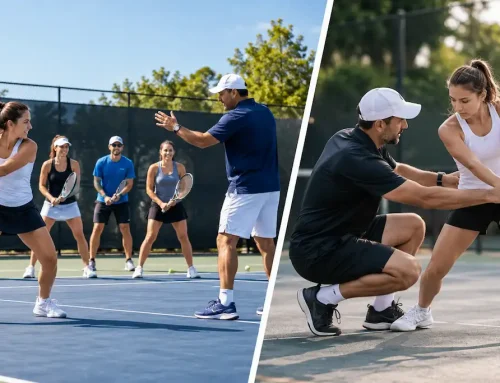
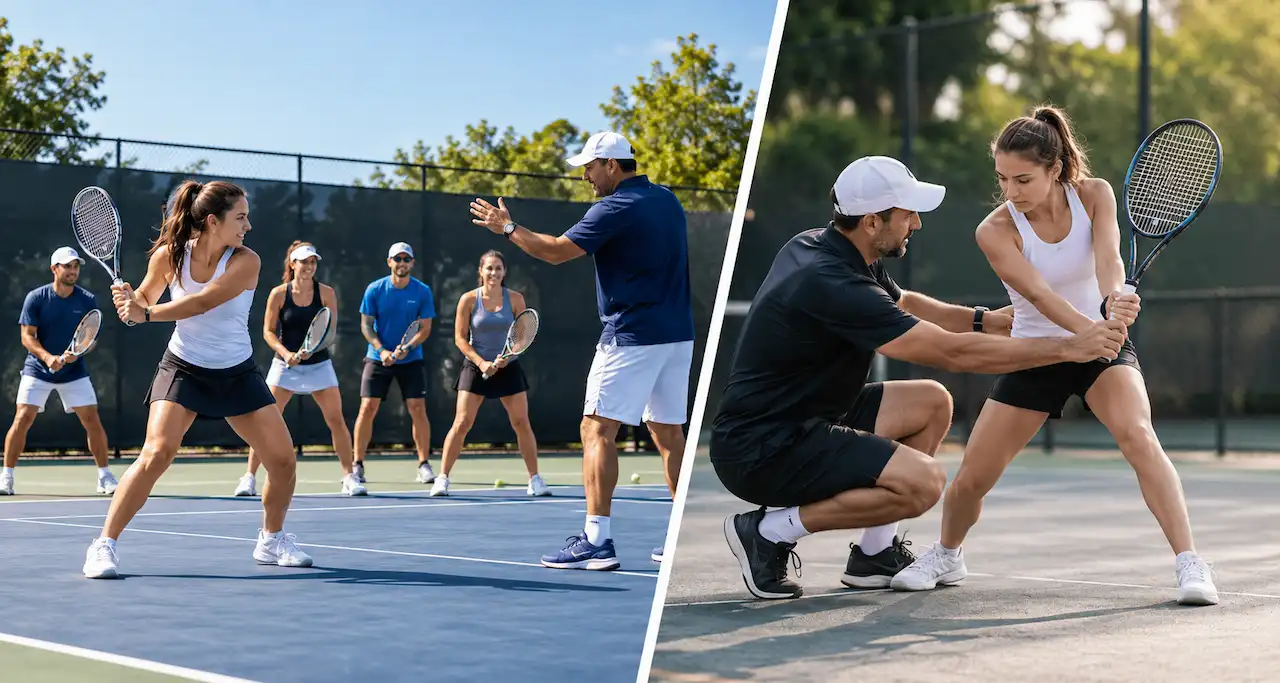
Our adult tennis development programs offer a route to structured practice. Check the current program descriptions and ask which option fits a returning recreational player.
You can also combine formats. Use a lesson to understand an adjustment, then practice it in an appropriate group. The important connection is that both sessions support the same immediate goal.
How to Choose Your First Playing Partner
A suitable partner makes the opening sessions more useful. Look for someone who is comfortable exchanging controlled balls and understands that you are rebuilding your game.
You want enough challenge to stay engaged and enough time to participate. A large difference in playing level can make it difficult to distinguish ordinary rust from a pace that is simply too demanding.
Before you begin, agree on what you will do. Perhaps you will rally first, practice serves, and finish with a few games. This prevents one person expecting an intense match while the other expects gentle practice.
It also helps to agree that either player can pause to clarify the score or discuss an exercise. A shared purpose makes the session more productive.
As your confidence grows, play different people. A familiar partner helps you settle in; varied partners show whether your renewed skills work when the ball arrives differently. You can build both experiences into your return.
A Practical Plan for Your First Few Visits
You do not need a rigid timetable. Use each session to decide what the next one should include.
A straightforward progression is:
- First visit: Rally at a comfortable pace and identify what feels unfamiliar.
- Next practice: Work on one clear difficulty, such as preparation or serving.
- First games: Play a short format against someone near your current level.
- Follow up: Review what changed when points began.
- Ongoing play: Choose a schedule that leaves room for practice and recovery.
These are stages rather than deadlines. You may move through several during one visit or spend more time on a particular step.
Keep the plan flexible. If a session reveals that your serve needs individual attention, arrange instruction. If you are playing comfortably but struggling to organize partners, prioritize a suitable group.
The purpose is to give returning to tennis a manageable structure. Each visit should help you understand your game better and make the next decision easier.
A Real Scenario: Familiar Shots, Unfamiliar Pace
Imagine a player who enjoyed club doubles before taking several years away. They return expecting their old forehand to feel natural.
During the first rally, the stroke does feel familiar. Once the partner begins moving the ball around, however, the returning player prepares late and reaches for contact. They become frustrated because they remember handling those situations comfortably.
A useful response is to simplify the task. They slow the rally, focus on preparing earlier, and practice recovering after each shot. In a coached session, they ask for feedback on positioning.
During the next visit, they play a few games with a suitable partner. They still make mistakes, but they recognize more of them and know what to practice.
This is an illustrative scenario, not a claim about a particular member. It shows why previous experience and present consistency can differ. The player has useful knowledge; structured practice helps make it available during points again.
Measure Progress Without Comparing Every Shot With the Past
Your strongest memories may come from the best matches you played. Comparing an opening session with those moments creates an unfair measure.
Track what is happening now. Are more rallies becoming playable? Can you prepare earlier? Does serving feel less rushed? Are you making clearer decisions when a point begins?
Choose one or two observations after each session. Record something that improved and one question to bring to your next practice. Specific notes create a clearer picture than deciding whether you played “well” or “badly.”
Our article on tracking tennis and pickleball progress offers more ideas for noticing useful changes. Those observations can also help a coach understand what happens when you practice independently.
Results matter if competitive play is your goal, but early progress has other forms. Completing an enjoyable session, finding an appropriate partner, and knowing what to work on are meaningful steps toward regular tennis.
What If You Feel Embarrassed About Being Rusty?
Tell your partner or coach that you are returning after a break. A clear explanation removes the pressure to make your first session look like your old game.
You also have a practical advantage: you can describe experiences that a complete beginner has not had. You may recognize that your preparation feels late or that match scoring makes you rush. Bring those observations into the conversation.
Avoid apologizing after every missed shot. Acknowledge the point, reset, and continue. Constant self criticism uses attention you could give to the next ball.
Choose an environment where your current level is appropriate. Confidence is easier to rebuild when you can participate, ask questions, and experience some success. If the session is consistently too demanding, ask about another option.
Your task is to learn what works today and develop it. That gives you something useful to do each time you step on court.
Make Your Schedule Easy to Maintain
A comeback becomes regular tennis through a schedule you can actually follow. Begin with a commitment that fits your work, family, and other activities.
Confirm the location and travel time before choosing a program. Decide whether you prefer a recurring group session or arranging practice with a partner. Removing these practical obstacles makes attendance easier.
Leave flexibility to adjust how much you do. A first week does not need to contain every lesson, clinic, and match you hope to play eventually. Build a routine you can evaluate and maintain.
Before adding more sessions, ask whether the current ones are useful. Do you have a goal? Are you getting opportunities to practice? Do you want to return?
Those answers help you build a lasting habit. Enjoyment gives you a reason to attend, and a clear practice purpose gives each visit direction.
Why Choose Us
At Village Glen and South Towns Tennis & Pickleball, we offer several ways to reconnect with the game at your current level.
- Individual tennis lessons for focused feedback.
- Adult development options for structured learning.
- Clinics and match play for applying skills.
- Opportunities to practice alongside other players.
- Two locations serving the Buffalo area.
Frequently Asked Questions
Do I need beginner lessons after several years away?
It depends on your current skills. Explain your playing history and try an appropriate assessment session. You may need help with a few skills rather than a complete beginner introduction.
How long does it take to feel comfortable again?
There is no fixed timeline. Your previous experience, time away, practice opportunities, and current goals all matter. Look for changes across several sessions rather than judging the first visit.
Can I use my old tennis racquet?
Have its condition checked if you are unsure. Inspect the grip, strings, and frame, and consider whether it feels comfortable. You do not automatically need a new racquet to return.
Should I play a full match straight away?
You can begin with rallies and short games first. A full match makes more sense when you can participate comfortably with a suitable opponent and understand what you want to practice.
What should I tell the coach before booking?
Explain when you last played, your previous experience, and what you want to do now. Mention any specific skill that feels uncertain so the coach can suggest an appropriate starting point.
Conclusion
Returning to tennis begins with an honest look at your current game and a session you can enjoy. Start at a manageable pace, rebuild one skill at a time, and use practice to guide your next step. To find an appropriate starting option, contact us and tell us about your playing background.