You have started learning tennis and want to play a real match. But when is the right time? After two lessons, ten lessons, or only when your shots feel reliable?
There is no required number. How many tennis lessons you need before a match depends on what you can do on court, the kind of match you plan to play, and whether the other players are at a suitable level.
There Is No Magic Lesson Number
Tennis lessons are opportunities to learn, not a countdown to permission to play. One beginner may understand scoring and keep a short rally going after a few sessions. Another may want more time practicing a serve before playing points.
Your starting experience matters. Someone who has played other racquet sports may feel comfortable tracking a ball and moving around a court. Someone entirely new may need longer to make those movements familiar. Neither path is better.
The match format matters too. An informal set with a patient friend has different demands from a scheduled competitive match. You can begin playing simple points before you feel ready for a full match with unfamiliar opponents.
I always advise beginners to ask a more useful question: Can I participate in the kind of match I am planning? If you can start points, follow the score with some help, and enjoy rallies with players near your level, you have a place to begin.
You do not have to wait until you stop making mistakes. Experienced players miss shots as well. Your first match is another part of learning.
What Do You Need to Know Before Playing?
You need enough of the game’s structure to keep play moving. That does not mean memorizing every unusual rule before you step on court.
Begin with serving from the appropriate side, aiming into the correct service box, and knowing whose turn it is to serve. Learn how a point ends and the basic way to call the score. Practice returning a serve and recovering so you are ready for the next shot.
You also need to communicate with the person you are playing. If you lose track of the score, ask. If you are playing doubles and are unsure who should take a ball, talk to your partner. A beginner match does not need to run with the speed of a tournament.
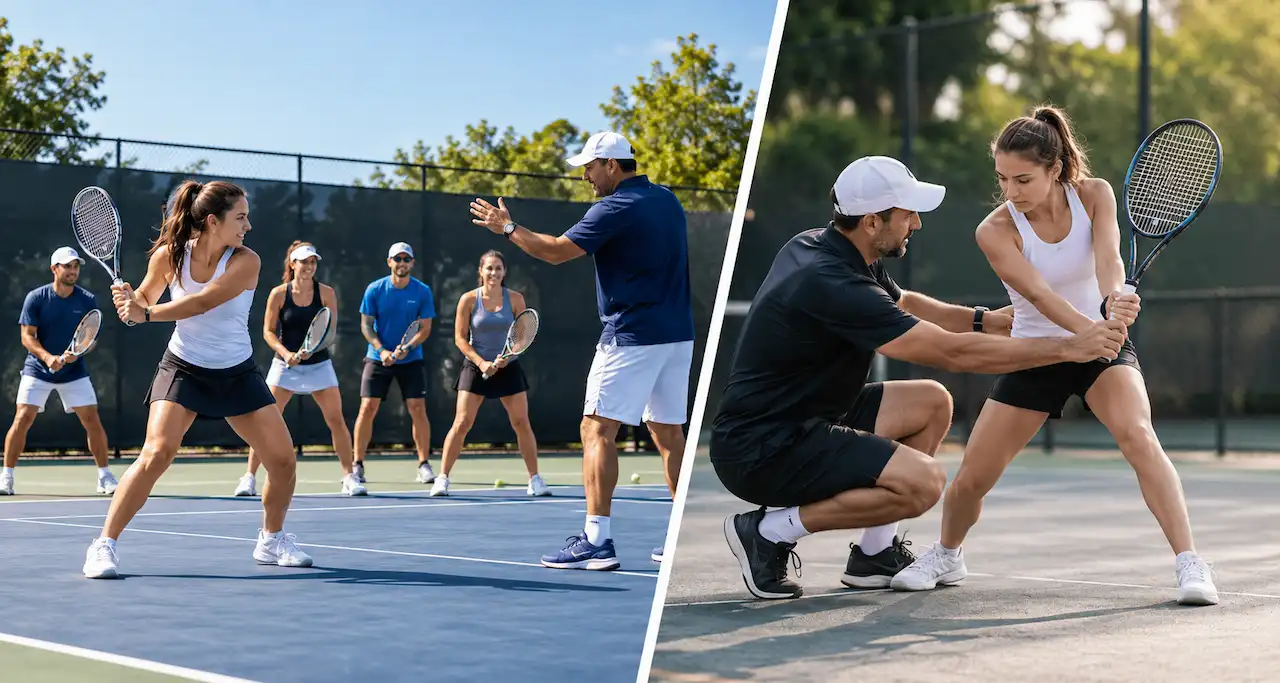
A coach can help you learn these parts while you practice. At Village Glen, our adult tennis development programs include instruction and game based learning for players at different levels. Ask which current session is appropriate for someone preparing for their first points or match.
The aim is not to know everything. It is to have enough familiarity that the match feels like tennis rather than a continuous rules discussion.
Serving Is Often the Biggest Hurdle
Many beginners can exchange balls during a lesson but become concerned when it is their turn to serve. In a match, the serve must begin every point, and everyone waits while you attempt it.
You do not need a fast first serve. You need a serving motion you understand and a reasonable chance of starting a rally. A controlled serve into a generous target is more useful at this stage than a powerful serve that rarely lands in.
Practice the whole sequence: stand in the correct place, call the score, choose a target, and serve. If the first serve is a fault, take the second serve without treating the miss as a crisis. Repeat this process until it becomes more familiar.
If serving remains difficult, you can still play modified points with a friend while you practice. Agree beforehand how you will start each point. Just be clear that a modified practice game is different from a match played under standard rules.
The more you rehearse the beginning of a point, the less attention it will demand later. That frees you to think about the return and rally.
Can You Keep a Rally Going?
A match becomes more enjoyable when both players can send some balls back and forth. You do not need long rallies on every point. You need enough control to take part rather than watching each point end immediately.
Try rallying with a player of a similar level. Can you prepare for the ball and send it back into a playable area? Do you understand where to move after hitting? Can you adjust when the ball arrives shorter or deeper than expected?
Do not judge yourself by one excellent rally. Look at what happens over several minutes. If you can make contact and keep some balls in play, playing points can help you improve. If almost every ball is too difficult to reach or return, a lesson or suitable group session may be a better next step.
A first match should give you a challenge you can engage with. Choosing a patient partner or another beginner makes that possible. Playing someone far more experienced can make your readiness difficult to judge because the difference in pace overwhelms the skills you already have.
Start With Points Before a Full Match
You do not have to move directly from drills to a complete match. There is a useful middle step: play points, then a short game, then a set when you are comfortable.
For example, you and a partner can practice serving and playing out one point at a time. Pause to confirm the score and your positions. Once that feels manageable, play a service game. You can later put several games together.
This approach reduces the number of new tasks you must handle at once. You can learn how scoring feels in practice rather than waiting until a full match makes every uncertainty feel urgent.
It also shows what to work on next. You may discover that your serve starts points comfortably but you forget to recover after your first shot. That is useful feedback for your next lesson.
Our adult beginner tennis guide explains the broader experience of getting started. Use it alongside these steps if you are learning as an adult and want a clearer picture of the path from lessons into recreational play.
How to Tell Whether You Are Ready
Readiness is not the absence of nerves. Many players feel uncertain before a first match even when they have practiced the basic skills.
Look for practical signs instead:
- You can begin points with a serve often enough to play.
- You understand basic scoring or can follow it with occasional help.
- You can return some playable balls.
- You know where to stand at the start of a point.
- You can keep playing after making a mistake.
You do not need a perfect answer to every item. These signs help you choose an appropriate first experience. If most are present, an informal match against someone near your level may be worthwhile.
If several are missing, identify which ones matter most. You could ask a coach to focus on serving and scoring, then try points again. A clear goal is more helpful than booking sessions indefinitely because you do not yet “feel ready.”
Confidence often follows participation. Waiting for complete confidence before you ever play a point can keep you stuck in practice.
Choose the Right First Opponent
Your first match experience depends partly on who is across the net. A patient partner who understands you are learning can give you a meaningful game without removing the challenge.
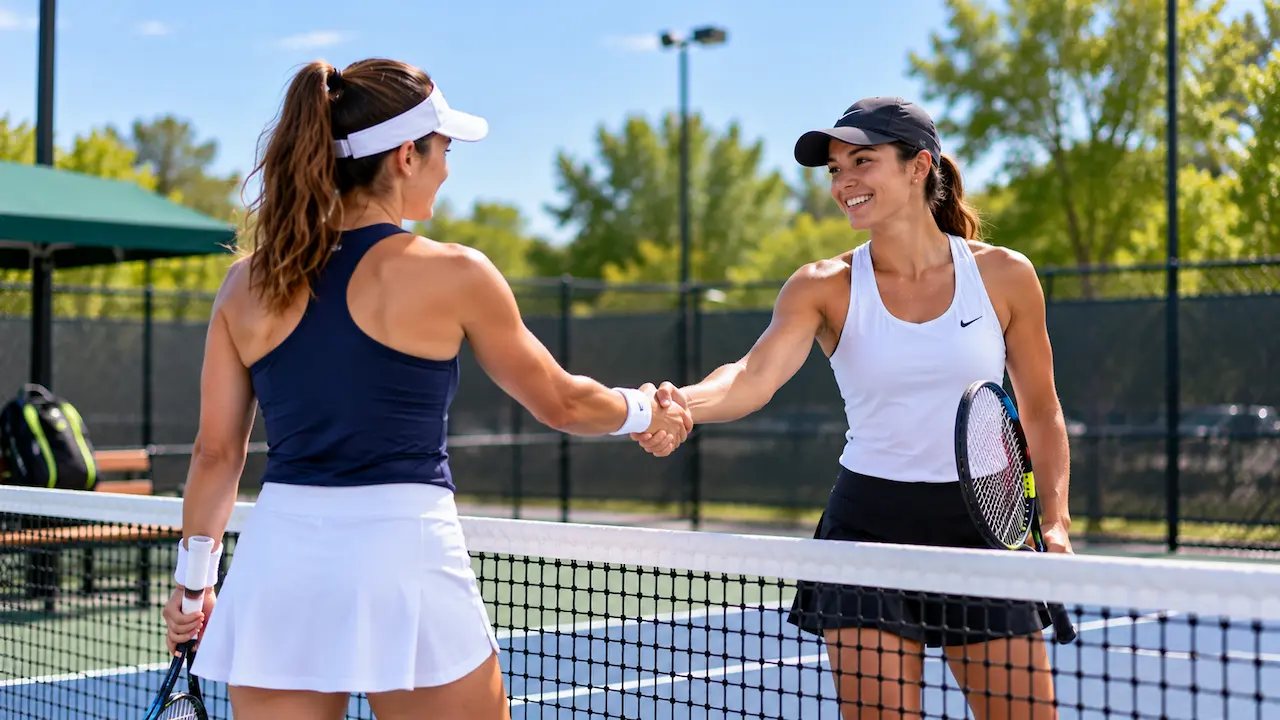
Choose someone whose pace allows you to participate. You want opportunities to serve, return, move, and make decisions. If every ball is far beyond your current ability, you learn less about your readiness.
Tell the other player that this is your first match or one of your first. Agree on the format before starting. You could play a short set or a few games rather than committing to a lengthy match.
If you lose track of the score, pause and work it out together. That is part of learning. The purpose of an early match is to understand how your skills function during points and to find a reason to keep practicing.
Doubles is another option, but it brings partner positioning and communication into the experience. Some beginners enjoy having a partner; others prefer the simpler responsibility of singles. Choose the format that gives you the best chance to learn.
Why Practice Games Feel Different From Lessons
A coach can send you balls that suit the skill you are learning. An opponent is trying to play the point. The ball may arrive at an unexpected pace or land somewhere you did not predict.
That difference is valuable. It shows which skills you can already use outside a controlled drill. It also reveals what needs more practice.
Do not expect your lesson performance to transfer perfectly into the first match. You may hit a steady forehand during practice and miss it when you are keeping score. This does not erase what you learned. It means you are practicing the next step: using a skill while making decisions.
Notice the situations that cause trouble. Do you rush your serve after a fault? Does a short ball leave you unsure whether to move forward? Do you forget to prepare while watching your own shot? These observations make future instruction more focused.
Our tennis clinics and match play provide an option for players who want guided practice and chances to apply skills in game situations. Check the current session level before joining.
Four Lessons and a First Match
Imagine an adult who has taken four tennis lessons. They can rally with a coach, understand where to serve, and get some serves into the correct box. They have not yet played a full match.
A friend invites them to play a short set. The beginner worries that four lessons cannot possibly be enough. Instead of judging the number, they look at what the match involves. Their friend plays at a similar level and is willing to pause when a scoring question comes up.
They begin. Some points end with a missed serve. Others develop into short rallies. By the second game, the beginner realizes they frequently forget to move after hitting a shot.
The match has done its job. It gave the player a chance to participate and identified a specific skill to practice next. The result of the set matters less than the information it produced.
This is a hypothetical example, not a claim that four lessons is the correct amount for everyone. Another player may need fewer or more sessions. The decision should follow the player’s skills and the match they are entering.
What If You Still Cannot Serve Consistently?
A difficult serve does not mean you should give up on playing points. It does mean you should make a plan for it.
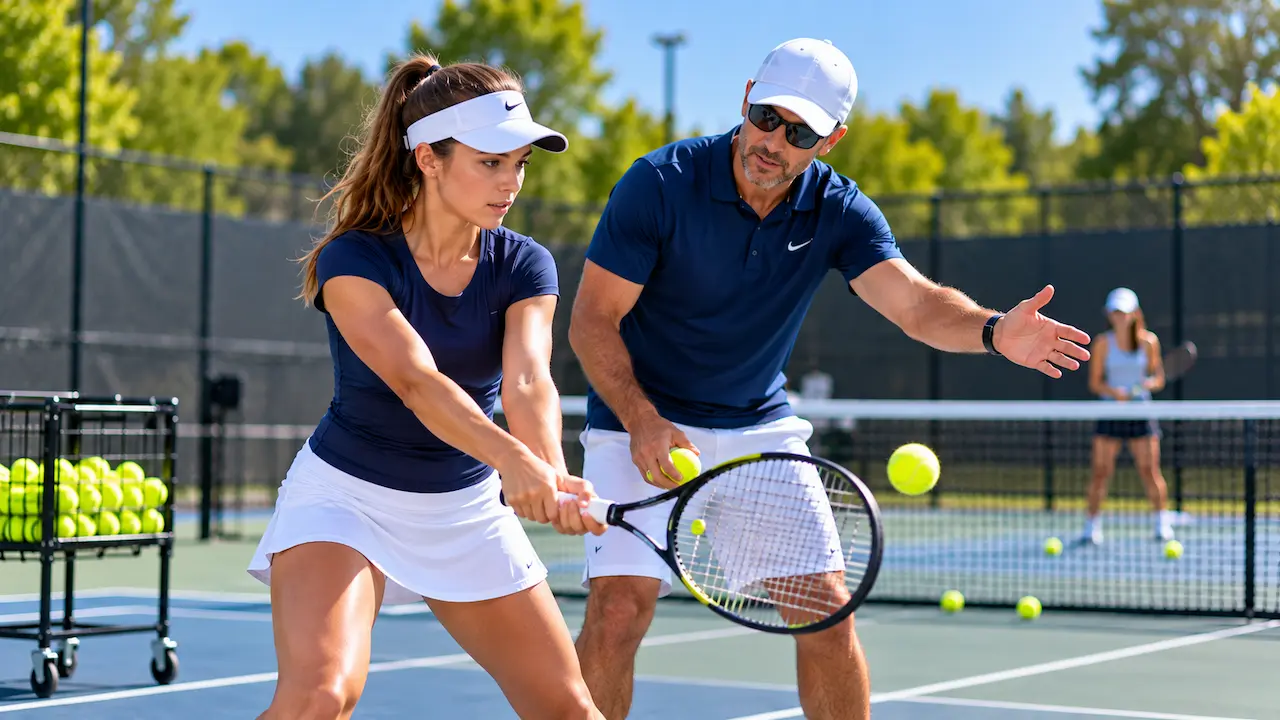
Ask a coach to watch a series of serves and identify the most useful first correction. Practice serving from both sides of the court and aim for a large area inside the service box. Include second serves in your practice rather than hitting only first attempts.
Then test your serve in a simple point setting. Serving with a score and another player waiting can feel different from serving into an empty court. That is why it helps to move gradually from repetition into play.
If the serve prevents almost every point from beginning, keep working on it and use modified practice games in the meantime. If you can start enough points to rally, try an informal match with a suitable partner. You can continue improving your serve while you gain match experience.
One skill does not need to become perfect before you work on the rest of the game.
How Often Should You Practice Between Lessons?
There is no schedule that fits every player. The important question is whether you have time to use what you learned before the next instruction session.
If a coach gives you one adjustment to your serve, practice that adjustment with attention. If you learn where to stand after a shot, try it during points. Returning to a lesson without attempting either can make progress difficult to assess.
Even a short, purposeful session can be useful when you know what you are working on. Choose one goal, notice what happens, and tell the coach at your next lesson. “My serve improved in practice but broke down after the first fault in a game” gives a clear direction.
Avoid measuring practice only by hours spent on court. Repeating a mistake without understanding it can make a habit more familiar. A small amount of practice with a clear target and feedback may be more useful.
Balance instruction with play. Lessons help you understand a skill; games show you when you can use it. Both can be part of preparing for a match.
Your First Match Is a Learning Session
A first match gives you information that lessons alone cannot provide. You learn how you respond to the score, an unfamiliar shot, and a point that does not go to plan.
Before you begin, choose one or two things to focus on. You might aim to call the score clearly and recover after each shot. Those are actions you can assess regardless of whether you win.
After the match, write down one thing that worked and one situation that confused you. Bring the question to your next coached session. This creates a useful connection between playing and learning.
Do not build your opinion of your potential around one result. Your first match is your first attempt at combining many skills at once. That task becomes easier with experience.
It helps to prepare physically too. Our guide to warming up before a tennis match covers a routine you can review before playing. A familiar start can make the new experience feel more manageable.
Why Choose Us
At Village Glen and South Towns Tennis & Pickleball, we offer ways to learn the basics and begin applying them in play.
- Tennis instruction for new players.
- Adult development options at both locations.
- Clinics for guided practice with others.
- Opportunities to build toward match play.
- Coaching that can focus on your next practical skill.
Frequently Asked Questions
Can I play a tennis match after one lesson?
You can try informal points with a suitable partner, but whether a full match makes sense depends on your serve, basic rules knowledge, and ability to participate in rallies.
Do I need to know every tennis rule before playing?
No. Learn the basic service, scoring, and point rules first. An informal beginner match can include pauses to clarify something you have not encountered before.
Should my first match be singles or doubles?
Choose the format that feels more manageable and gives you opportunities to participate. Singles has one player covering each side; doubles adds partner positioning and communication.
What if I lose every game?
That result does not decide whether you belong on court. Consider whether the opponent was a suitable match and identify one skill to practice. Early matches are also learning experiences.
Should I stop taking lessons once I start playing matches?
No. Matches can reveal questions that make future lessons more useful. You can continue combining instruction, practice, and suitable games.
Conclusion
There is no fixed number of lessons before your first match. Begin when you can take part in points with an appropriately matched player, then use what happens to guide your practice. If you need help choosing a suitable program, contact us and describe your current experience.