Booking your first pickleball lesson is a simple decision. Walking onto the court can feel less simple when you do not know what the coach will expect.
Your first pickleball lesson is a chance to learn the basics at your current level. You do not need a reliable serve, knowledge of every rule, or a person to play against before you arrive.
You Do Not Need to Prepare Like an Experienced Player
A beginner lesson starts with where you are. If you have never played, say so when you book. If you have played a few games but still feel unsure about scoring or positioning, say that instead. This information helps the coach understand what you need.
Do not spend the night before your session trying to memorize every pickleball rule. It is useful to know that the game involves a serve, a rally, and a score, but learning those details is part of the reason you are taking a lesson.
You can prepare in more practical ways. Confirm the location and time. Wear clothing that lets you move comfortably and shoes suitable for court play. Ask the club whether you need to bring a paddle or whether one is available to use. Equipment arrangements can vary, so get a direct answer before you arrive.
Most of all, think about why you booked. Perhaps you want to play with friends, join a group, or find a new activity. That goal gives the coach a useful starting point, even if you have no technical questions yet.
What Will the Coach Ask You?
At the start, a coach may ask about your experience and what you hope to learn. Your answer does not need to sound impressive.
“I have never played before” is enough. So is “I played twice, but I do not know where to stand.” If a particular part of the game worries you, mention it. A coach can give better guidance when they know which part feels unfamiliar.
You may also be asked whether you have played another racquet sport. Experience with tennis or a similar game can make some movements familiar, but pickleball has its own court positions and decisions. There is no need to assume you are ahead or behind because of your background.
A good first goal is small. You could aim to understand how to start a point and keep a short rally going. That gives you something useful to take away without expecting to learn the entire game in one session.
At Village Glen, our private pickleball lessons are described as instruction tailored to a player’s skill level and goals. Telling the coach what you have tried and what you want to do next helps make that individual approach useful.
Will You Learn the Rules Before You Hit?
A first lesson often involves both explanation and movement. You need enough information to understand an activity, but you do not need a long lecture before touching a ball.
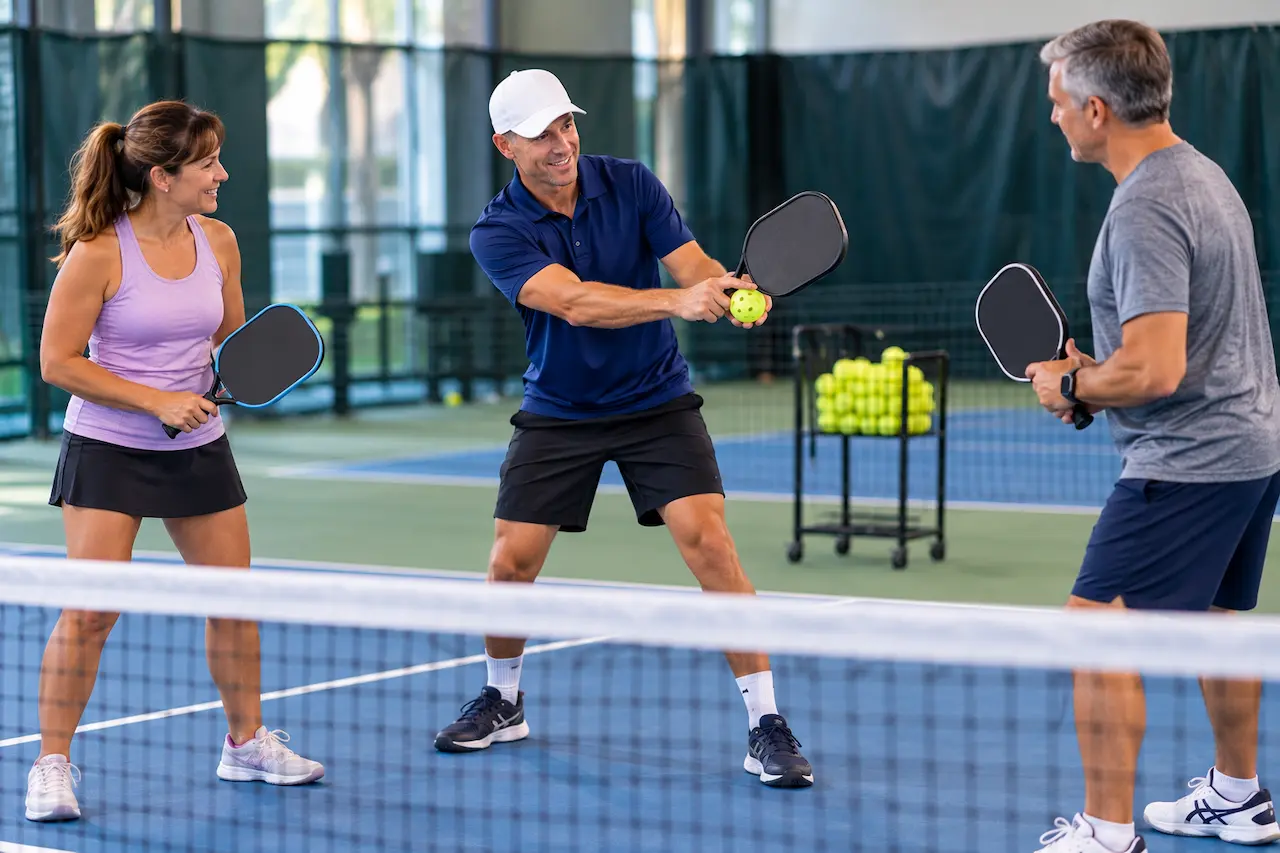
The coach may show you the court and explain its main areas. You will learn where a serve begins, where the ball should go, and how players move during a rally. The order can change according to your experience and the lesson format.
You are likely to understand the rules more clearly once you see them in action. For example, a coach can explain a serving position, demonstrate it, and then let you try. If you make a mistake, you can correct it while the situation is fresh.
Ask questions whenever a rule affects what you are doing. If you forget a detail five minutes later, ask again. That is normal in a first session. The aim is to begin recognizing how the game works, not to pass a memory test.
As you learn, focus on the rules you need for the activity in front of you. Scoring and more complex game situations become easier to understand after you have played a few points.
Your First Contact With the Ball
Before trying to win a point, you need to become comfortable sending and receiving the ball. This is where simple practice helps.
A coach may begin close to you and feed balls at a manageable pace. You might practice sending the ball gently across the net or keeping it in play with the coach. The exact exercise depends on your starting level.
The aim is usually control before power. A hard shot that goes out tells you less than a controlled shot you can repeat. Notice how the ball feels when it meets the paddle and what changes when you contact it in a different place.
You may miss several balls. That does not mean the lesson is going badly. Misses help the coach see whether you need more time to prepare, a different position, or a simpler exercise.
I always advise beginners to look for one small improvement during the session. Perhaps you begin to watch the ball longer or make more comfortable contact. That progress is more meaningful than comparing your first attempt with someone else’s established game.
Will the Coach Correct Your Grip and Movement?
A coach may look at how you hold the paddle and move toward the ball. Small adjustments early on can make later practice easier.
You should not expect a detailed correction after every shot. Too many instructions at once make it harder to move naturally. A useful lesson usually identifies the change that matters most at that moment and gives you a chance to try it.
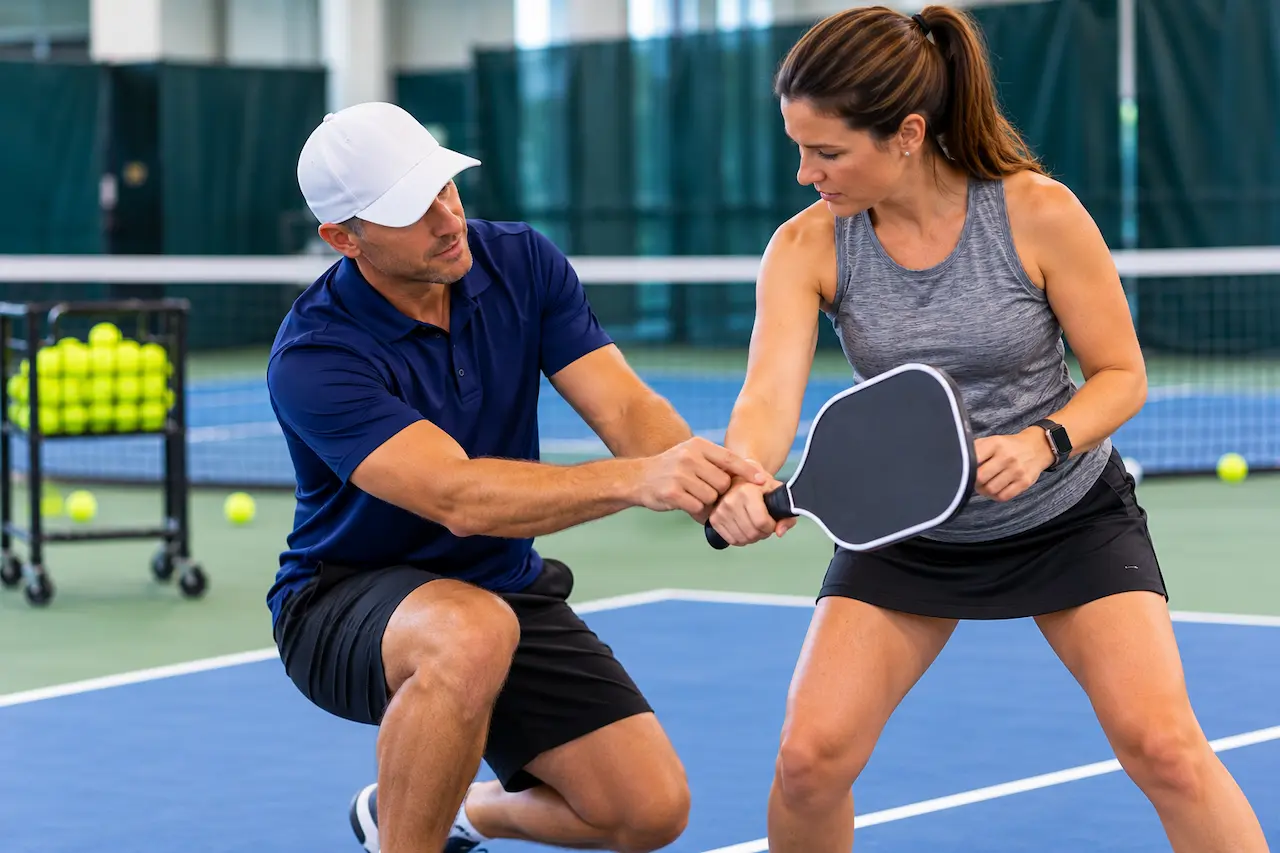
For example, if you keep reaching for balls, the coach may work on your position before discussing a more complex shot. If you are standing comfortably but cannot direct the ball, attention may shift to how the paddle meets it.
Ask what a correction is meant to help you do. “Prepare the paddle earlier” becomes easier to remember when you understand that it gives you more time to choose your shot.
Your job is to try the adjustment and describe what you notice. You do not have to make it perfect immediately. A first lesson can show you what a useful movement feels like, and later practice helps you repeat it.
Learning to Serve Without Rushing
Serving starts the point, so most beginners want to learn it quickly. It can also feel uncomfortable when other players are waiting for the ball.
In a lesson, you can learn the basic serving motion without that pressure. The coach can show you where to stand, which part of the court to aim for, and how to begin with a controlled attempt.
Do not make power your first measure of success. Getting the ball into play consistently gives you the chance to participate in a rally. A simple serve you understand is more useful to a beginner than an occasional hard serve you cannot repeat.
You may need to practice the movement in parts. Set your position, choose a target, and try the motion. If the ball does not go where you intended, pay attention to the coach’s one most useful correction.
A first lesson will not necessarily give you a match ready serve. It can give you the beginning of a routine you know how to practice.
Where Do You Stand During a Point?
Many beginners can hit a ball but feel uncertain as soon as a game begins. Where should you stand after serving? What should you do when your partner hits? When is it your turn to move forward?
These questions matter because pickleball involves court awareness, especially in doubles. You are learning to respond to the ball and to another person’s position.
A coach can demonstrate one situation at a time. You might begin by learning your position for the serve and return. Once that makes sense, you can work on what happens after the ball crosses the net.
Do not expect to remember every position immediately. Movement becomes easier to understand when you repeat the situation and see why a particular position helps you reach the next shot.
If you plan to play doubles with friends, tell the coach. You can spend some of the session learning simple ways to avoid leaving too much space or moving into your partner’s path. These early decisions can make your first games more comfortable.
Will You Play a Full Game?
You might play points or a short game, depending on your progress and lesson format. A full game is not required for the session to be worthwhile.
Practicing a serve, returning several balls, and understanding your starting position are useful results. If the coach adds points, treat them as an opportunity to apply what you have learned, not as an examination.
Some beginners enjoy playing immediately. Others need more time with guided practice before scoring makes sense. Let the coach know if you feel lost during a game. It is easier to pause and clarify one rule than to spend the rest of the lesson guessing.
A first lesson should leave you with a clearer path into play. That path could be another lesson, a beginner clinic, or time practicing with a friend. The appropriate next step depends on what you learned and how comfortable you feel.
Our existing beginner pickleball tips can help you revisit basic ideas after you leave the court. Reading them afterward may make more sense because you will have tried some of the movements yourself.
What Should You Bring?
Keep your preparation practical. Confirm any club requirements before your visit, particularly around equipment and footwear.
A simple first lesson checklist includes:
- Comfortable clothing that allows you to move.
- Appropriate court shoes.
- Water for your session.
- A paddle if the club asks you to bring one.
- One question or goal you would like to discuss.
You do not need to arrive with expensive new equipment. If you are unsure about a paddle, ask before buying one. Trying the sport and learning the basics can give you a better idea of what you need.
Arrive with enough time to find the court and meet the coach. Feeling rushed can make a new experience harder than it needs to be. A few calm minutes before the lesson help you pay attention when instruction begins.
A Real World Scenario: Your First Session After Playing With Friends
Imagine that you played pickleball with friends once. They explained the rules while the game was happening, but you spent most points worried about standing in the wrong place. You enjoyed the activity and booked a lesson.
You tell the coach exactly that. Instead of spending the entire session on difficult shots, you begin with your position on the court. You practice a simple serve, follow what happens next, and stop when a rule is unclear.
By the end, you still make mistakes. The difference is that you understand what you are trying to do. When you play with friends again, you can recognize your starting position and ask a more specific question when you become confused.
This is a hypothetical example, not a description of a particular student. It shows what a good first session can provide: clarity about your next action, rather than instant mastery.
A player with a different starting problem might have a different lesson. That is why sharing your actual experience matters.
What Should You Do After the Lesson?
Before you leave, ask the coach to name one or two things to practice. Write them down soon afterward. It is easy to remember the feeling of enjoying a lesson and forget the precise adjustment that helped.
Keep your practice simple. If you worked on contact, repeat a manageable hitting exercise. If you worked on positioning, talk through where you stand when you serve and return, then try it during a game.
You can use our pickleball drills for beginners for ideas when you want more structured practice. Select drills related to what your coach taught you instead of attempting every exercise at once.
Notice what changes when another player sends you an unfamiliar ball. A movement may feel easy in a lesson and difficult during a game. That is not lost progress. It tells you what needs more repetition.
When you book another session, tell the coach what happened during practice. “I could serve in the lesson, but I rushed when playing doubles” is useful feedback. It gives the next lesson a clear direction.
How Do You Decide on Your Next Step?
One lesson may be enough to help you join a beginner group. Another player may benefit from more individual time before they feel ready. You do not have to follow someone else’s schedule.
Ask yourself three questions. Can I start a point? Do I understand enough to take part in a beginner game? Do I know what I need to practice next? If the answers are mostly yes, look for an appropriate chance to play.
If a specific problem is still holding you back, another lesson can focus on it. Our South Towns pickleball lessons provide an option for players seeking individual guidance at that location. Confirm current scheduling and details with the club before booking.
You can also ask about beginner clinics. They let you apply basic skills around other learners and begin meeting people you might play with later. Choose a session that matches your level rather than jumping into the fastest available game.
The right next step should give you a chance to use what you learned, notice what remains difficult, and return with a better question.
Why Choose Us
At Village Glen and South Towns Tennis & Pickleball, we help new players take their first steps with clear instruction suited to their goals.
- Private lesson options at both club locations.
- Guidance based on your current experience.
- A chance to work on basic technique and court awareness.
- Beginner friendly ways to continue learning.
- Opportunities to build toward playing with others.
Frequently Asked Questions
Do I need to know the rules before my first lesson?
No. Tell the coach that you are new. You can learn the rules you need as you practice serving, rallying, and moving on the court.
Do I need to bring my own paddle?
Ask the club when you book. Equipment availability can vary, and it is better to confirm than to assume you need to buy a paddle first.
Will I have to play a full game?
Not necessarily. Your coach can use exercises, points, or games according to your experience and the lesson format.
What if I have never played a racquet sport?
That is fine. Describe your experience honestly. A first lesson can begin with simple movement, contact, and basic game situations.
How many lessons will I need?
There is no single number for every player. After the first session, use the coach’s feedback and your comfort in beginner play to decide what to practice or book next.
Conclusion
Your first lesson is a starting point, not a test. Arrive ready to describe your experience, learn a few useful skills, and ask questions. To find an appropriate lesson at either location, contact us and tell us where you are starting.