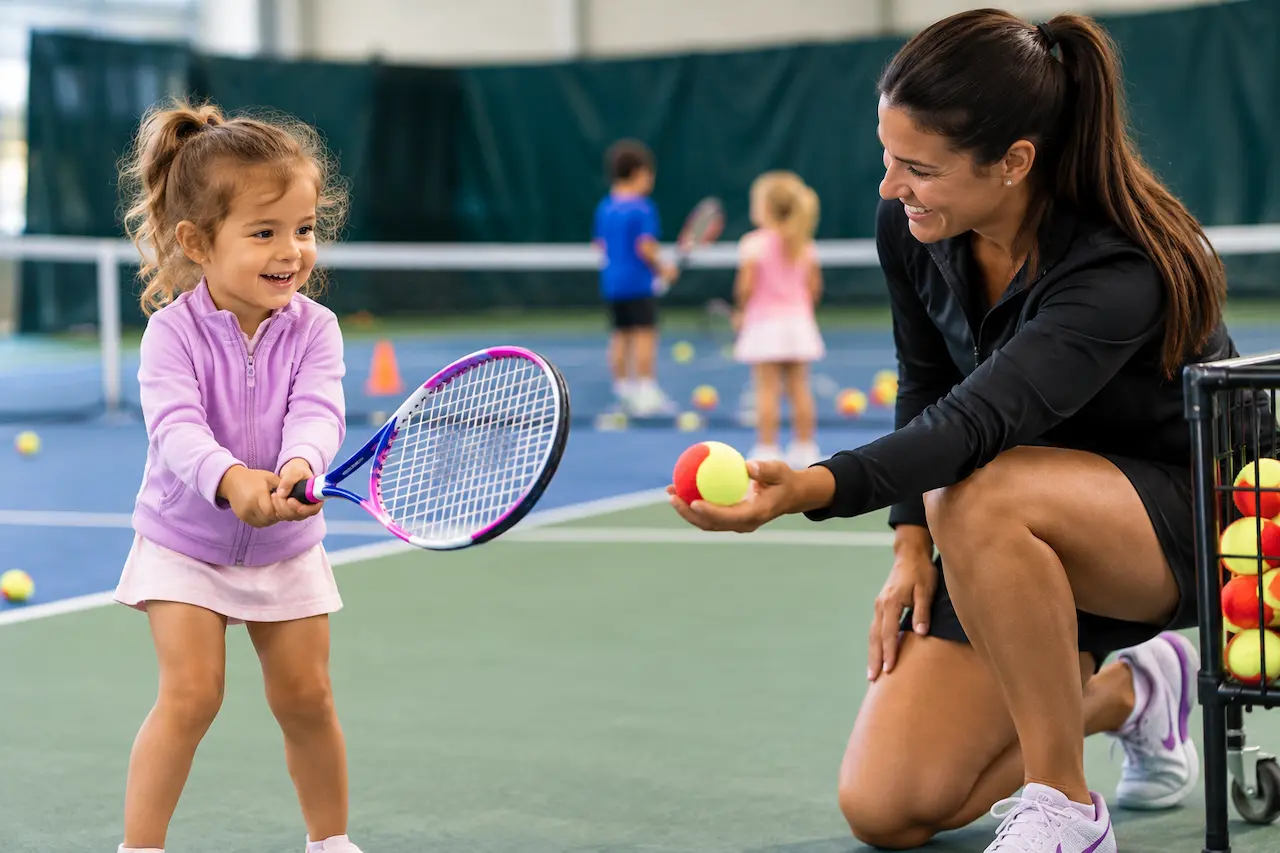
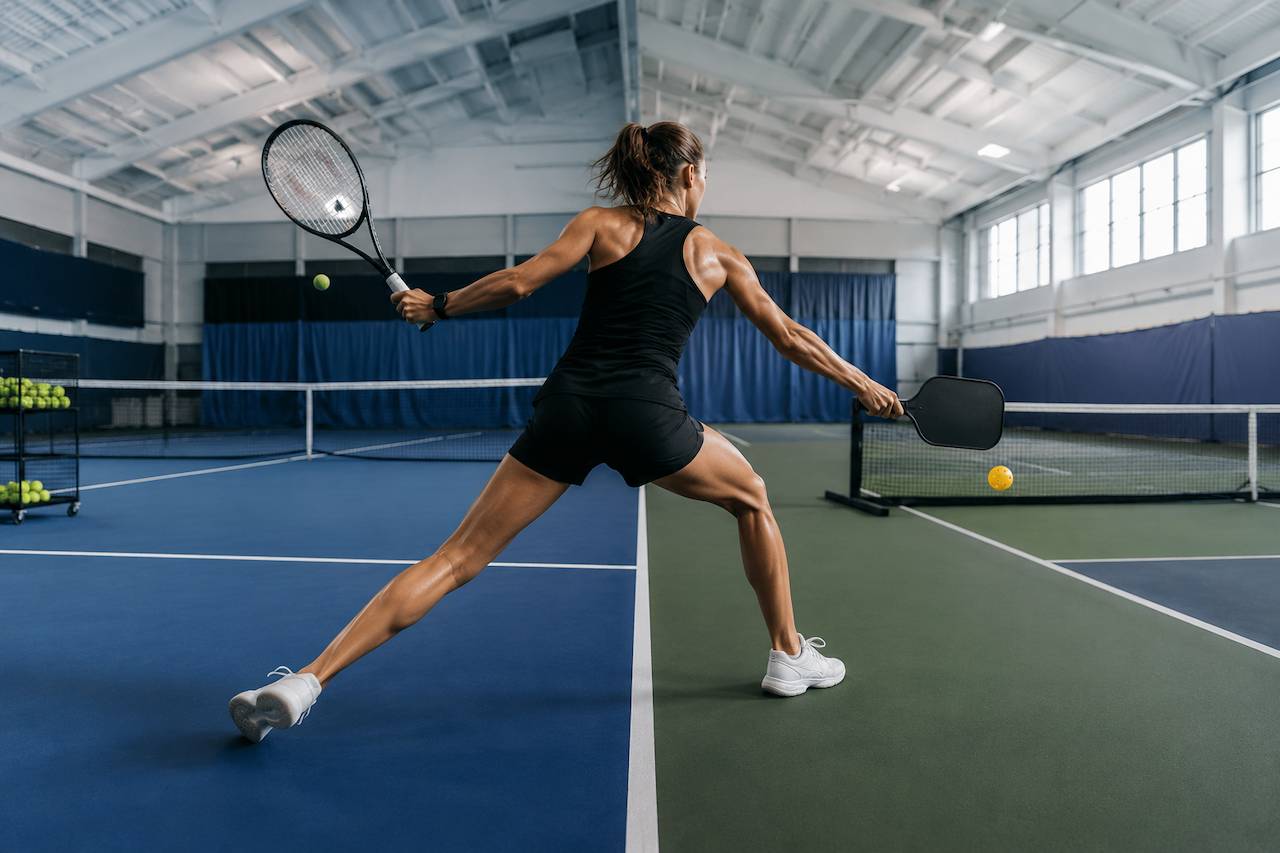
Tennis and pickleball are two distinct sports with their own rules, court dimensions, equipment, and tactical demands. Yet at the skill level, they share more common ground than most players realise and that overlap creates a genuine training opportunity that the majority of players leave completely unexplored.
We see this every week at Village Glen and South Towns Tennis and Pickleball in Western New York. Players who engage seriously in both sports improve faster in each one than players who focus exclusively on a single game. The reasons for this are not coincidental. Cross-training between tennis and pickleball builds physical attributes, tactical habits, and mental sharpness that transfer directly from one sport to the other in ways that single-sport training simply cannot replicate.
Why Cross-Training Works in Racquet Sports
Cross-training is not a new concept in athletics. Swimmers use dryland conditioning to build strength their pool sessions cannot develop alone. Runners use cycling to maintain cardiovascular fitness while reducing joint load. The same logic applies to racquet sports, where two games that share fundamental movement patterns and hand-eye coordination demands can be used to reinforce and accelerate development in each other.
The key is understanding which skills transfer directly, which ones require adjustment, and how to use each sport deliberately to strengthen the other. We always advise players who ask about picking up a second racquet sport to approach it as a training decision, not just a recreational one because the benefits extend far beyond simply having more options for court time.
How Pickleball Makes You a Better Tennis Player
This is the direction most tennis players do not expect to hear. The assumption is usually that pickleball is a simpler game and therefore has little to offer a serious tennis player. We have seen firsthand why that assumption is wrong, and the evidence shows up quickly on the tennis court.
Soft hands and touch
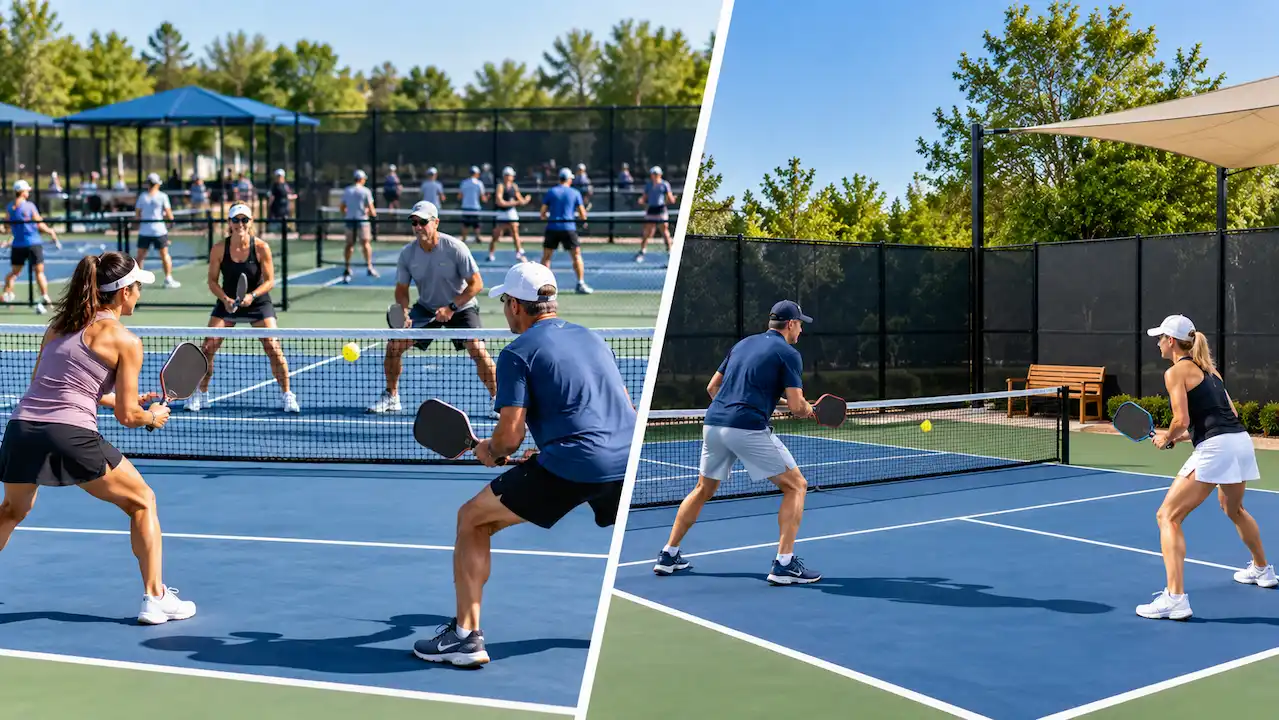
Pickleball demands a level of touch and feel at the kitchen line that tennis does not replicate in its standard rally patterns. The dink a soft, controlled shot that must clear the net by a small margin and land just beyond it trains the wrist, forearm, and paddle hand to produce precise, low-power contact repeatedly. Tennis players who spend time developing their dink game return to the tennis court with noticeably improved drop shot and volley touch because the mechanics are directly transferable.
Net play aggression and positioning
In pickleball, the kitchen line is where most points are won and lost. Players who develop a strong kitchen game learn to read opponent body language, anticipate shot direction before contact, and position themselves to intercept rather than react. These habits transfer directly into tennis doubles, where net positioning and poaching decisions require the same anticipatory skill set. Tennis players who play regular pickleball consistently become more aggressive and better positioned at the net.
Reaction speed at close range
The pickleball court is significantly smaller than a tennis court, and exchanges at the kitchen line happen at a speed that leaves almost no reaction time. Playing regular pickleball sharpens reflex speed and paddle-hand agility in a way that baseline tennis rallies do not. Tennis players who add pickleball to their training routine report faster reaction times at the net and during fast-paced doubles exchanges within a relatively short period of cross-training.
How Tennis Makes You a Better Pickleball Player
The transfer runs equally powerfully in the other direction. Tennis builds physical and tactical capacities that give pickleball beginners a significant head start and that continue to benefit experienced pickleball players who want to add depth to their game.
Before breaking each one down, here is a summary of the core advantages tennis experience brings directly into pickleball:
- A developed continental grip that transfers immediately to correct paddle grip without the learning curve most beginners face
- Superior court coverage and lateral movement built through years of chasing wide balls across a larger court
- Serve mechanics that translate into a more controlled and consistent pickleball serve from the first session
- Doubles awareness and communication habits that apply directly to pickleball doubles strategy
- Physical conditioning particularly leg strength, shoulder stability, and cardiovascular endurance that gives tennis players an immediate stamina advantage in longer pickleball sessions
Each of these advantages shortens the learning curve in pickleball significantly and gives tennis players a tactical foundation to build on rather than starting from zero.
The Physical Benefits of Playing Both Sports
Beyond skill transfer, cross-training between tennis and pickleball produces measurable physical benefits that neither sport delivers as completely on its own.
Tennis builds explosive lateral movement, serve-driven shoulder power, and the aerobic endurance that comes from playing extended rallies across a large court. Pickleball builds quick-twitch reaction speed, soft tissue resilience in the wrist and forearm, and the precise balance and weight transfer required for consistent kitchen play. Playing both consistently develops a more complete physical profile than either sport alone.
We prioritize a strategy of encouraging multi-sport participation across both clubs because we see the physical results consistently. Players who rotate between tennis and pickleball throughout the week also tend to manage injury risk better, because the different movement demands reduce the repetitive load on any single set of tendons or joints. This is one of the most practical and often overlooked benefits of cross-training in racquet sports.
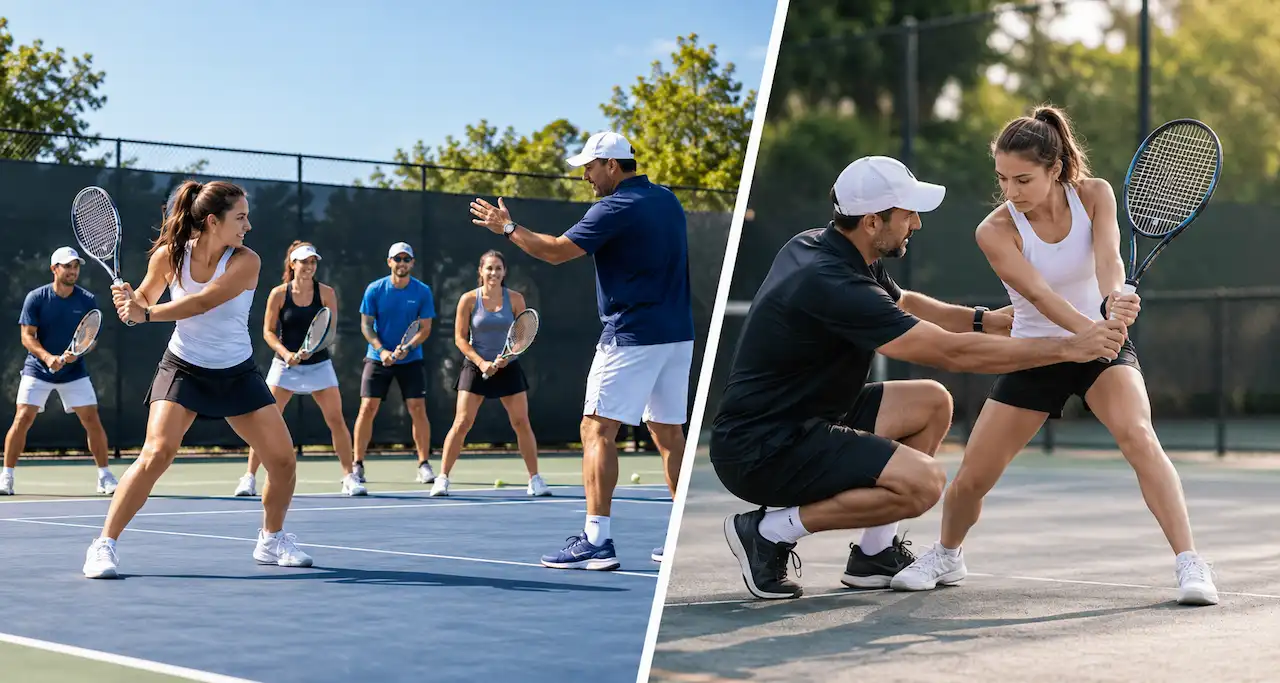
Our adult development programs at Village Glen accommodate players who are developing in both sports, with coaching staff who understand how to reinforce the transferable skills and correct the habits that need adjustment between games.
What Needs Adjustment When Switching Between Sports
Cross-training is not without its complications. Some habits that are correct in one sport create problems in the other, and being aware of them in advance prevents the frustration of feeling like your game is going backward when it is actually going through a productive adjustment phase.
The most significant adjustment tennis players need to make when moving to pickleball is swing length. Tennis rewards a full, extended follow-through that generates topspin and pace over a longer distance. Pickleball punishes that same swing at the kitchen line, where a compact, controlled paddle motion is required. Tennis players who do not consciously shorten their swing in pickleball consistently overhit and lose control of kitchen exchanges.
Pickleball players moving to tennis face the opposite challenge. The compact swing that works beautifully for dinking and controlled drives does not generate the racquet head speed needed for full tennis groundstrokes. Developing the full kinetic chain required for a tennis forehand or backhand full shoulder turn, extended backswing, complete follow-through takes conscious practice and structured coaching.
These adjustments are manageable and typically resolve within a few weeks of deliberate practice, particularly when guided by a coach who understands both sports. Booking private lessons at South Towns gives you the individual feedback needed to make these adjustments efficiently rather than reinforcing the wrong habits through unsupervised repetition.
A Real-World Example: A Tennis Player Who Transformed Their Doubles Game
We worked with an intermediate tennis player at Village Glen who had been playing competitive doubles for several years but was struggling with net play. His groundstrokes were solid and his serve was reliable, but his volleys were hesitant and his positioning at the net cost his team points consistently in close matches.
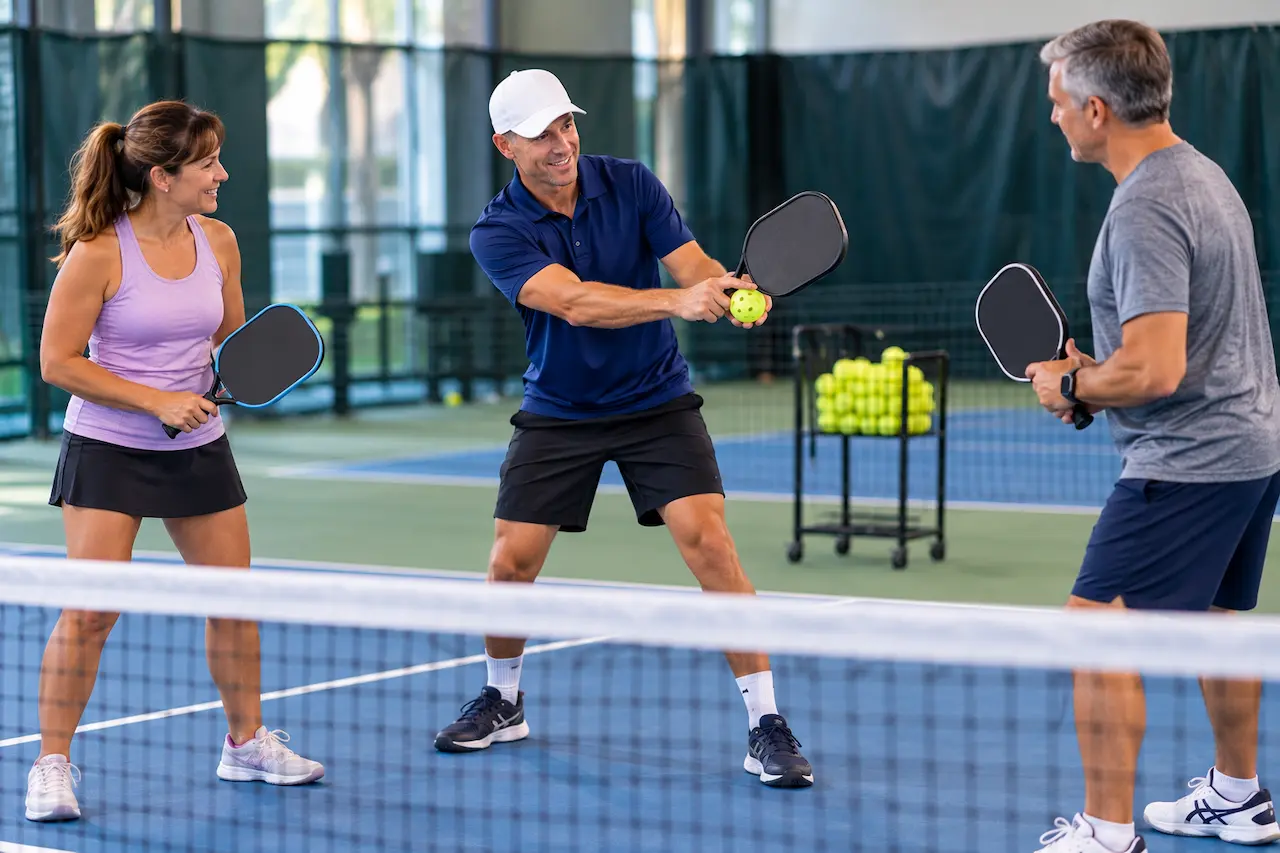
Rather than adding more tennis volley drills, we recommended he spend four weeks attending our pickleball clinics at Village Glen, focusing specifically on kitchen line play and hand speed. The compact, reactive environment of pickleball kitchen exchanges forced him to develop the quick hands and anticipatory positioning that extended tennis volleys had never demanded of him.
When he returned to focused tennis doubles practice after four weeks, the improvement at the net was immediately noticeable to both him and his partner. His volleys became more decisive, his positioning more aggressive, and his ability to read opponent shot direction before contact significantly sharper. The pickleball court had built something four years of tennis had not.
How to Structure Your Cross-Training Week
Getting the most from cross-training between tennis and pickleball requires a deliberate schedule rather than simply playing whichever sport is convenient on a given day. A structured weekly rotation ensures you are reinforcing the right skills in each sport without overloading any single movement pattern.
A practical cross-training week for a recreational player might look like two tennis sessions focused on groundstrokes, serve, and match play, combined with two pickleball sessions focused on kitchen drills, open play, and net game development. One session per week dedicated to a clinic in whichever sport needs the most structured attention at that point in your development ties the individual sessions together with expert feedback.
Our match play and clinic sessions at South Towns and Village Glen run across multiple days of the week, making it practical to build this kind of structured rotation without requiring significant schedule reorganisation.
Conclusion
Cross-training between tennis and pickleball is one of the most underused performance strategies available to recreational and competitive players in both sports. The skills, physical attributes, and tactical habits that transfer between the two games are real, measurable, and faster to develop than most players expect. The adjustment period is short, the physical benefits are broad, and the improvement in both games is consistent. At Village Glen and South Towns Tennis and Pickleball, we have the programs, the courts, and the coaching staff to help you get the most from both sports simultaneously.
Why Choose Us
At Village Glen and South Towns Tennis and Pickleball, we are one of the few clubs in Western New York that offers world-class coaching and structured programs in both tennis and pickleball under one roof making us the ideal home for cross-training players at every level.
- Two full-service club locations in Williamsville and Orchard Park, with dedicated tennis and pickleball courts, clinics, and coaching available at both
- Certified coaches across both sports who understand the transferable skills and the adjustments needed when players move between games
- Adult, junior, beginner, and competitive programs structured to support dual-sport development without conflict or confusion
- Flexible scheduling across both clubs that makes a structured cross-training weekly rotation practical for players with busy schedules
- A growing community of dual-sport players across Western New York who train, compete, and improve together throughout the year
Frequently Asked Questions
Is it confusing to play both tennis and pickleball at the same time?
There is an adjustment period, particularly around swing length and court positioning, but it is shorter than most players expect. The shared foundations grip mechanics, court awareness, net play instincts, and lateral movement outweigh the differences significantly. Most players find that any initial confusion resolves within three to four weeks of structured practice in both sports, especially when guided by a coach who understands the specific adjustments required between the two games.
Will pickleball hurt my tennis game?
Pickleball will not hurt your tennis game if you approach cross-training with awareness. The main risk is carrying a compact pickleball swing into your tennis groundstrokes without conscious adjustment. Players who are aware of this distinction and practice their tennis swing deliberately full shoulder turn, extended follow-through, complete kinetic chain experience no negative carryover. The benefits, particularly to net play and touch shots, consistently outweigh the adjustment period.
How quickly will I see improvement in my tennis game from playing pickleball?
Most tennis players notice improvement in their net game and volley instincts within four to six weeks of regular pickleball play, particularly when they focus on kitchen line drills rather than just open play. The hand speed and anticipatory positioning that pickleball develops transfers to the tennis court relatively quickly because the neural patterns are closely related. Tactical improvements in doubles positioning tend to show up fastest, followed by touch shots and drop volleys.
Do I need separate equipment for tennis and pickleball?
Yes. Tennis racquets and pickleball paddles are entirely separate pieces of equipment and are not interchangeable. Each is designed around the specific physical demands of its sport string tension, weight distribution, surface material, and handle length all differ significantly. If you are building a cross-training routine across both sports, you will need dedicated equipment for each. Our pro shop carries both and our staff can guide you toward the right specifications for your current level in each game.
Are there programs at Village Glen and South Towns designed for players who play both sports?
Yes. Both clubs run tennis and pickleball programs independently, and our coaching staff regularly works with players who are developing in both simultaneously. We help players structure their week to get maximum benefit from both sports without overtraining or creating conflicting habits. If you are new to one of the two sports and experienced in the other, we can place you into the right program level from day one based on your existing skill set and transferable foundations.