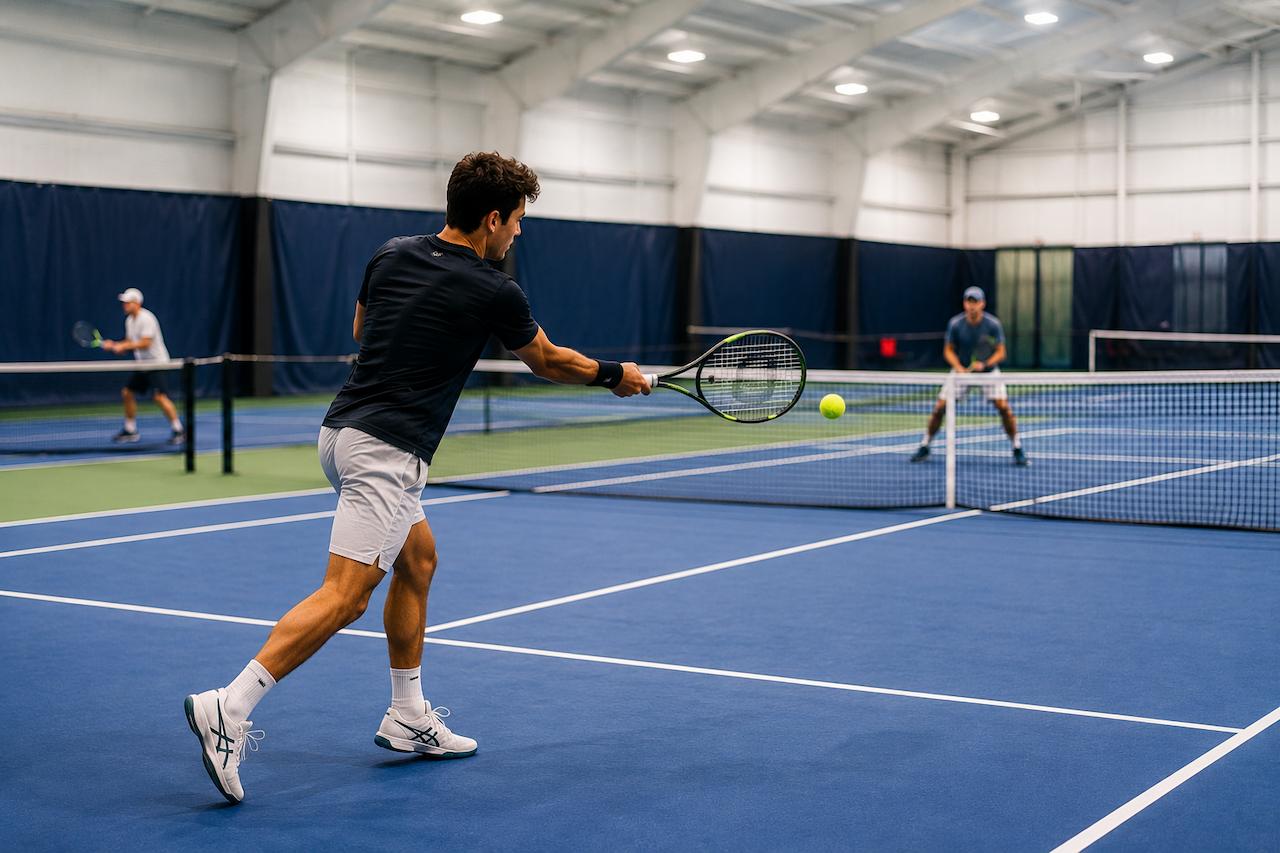
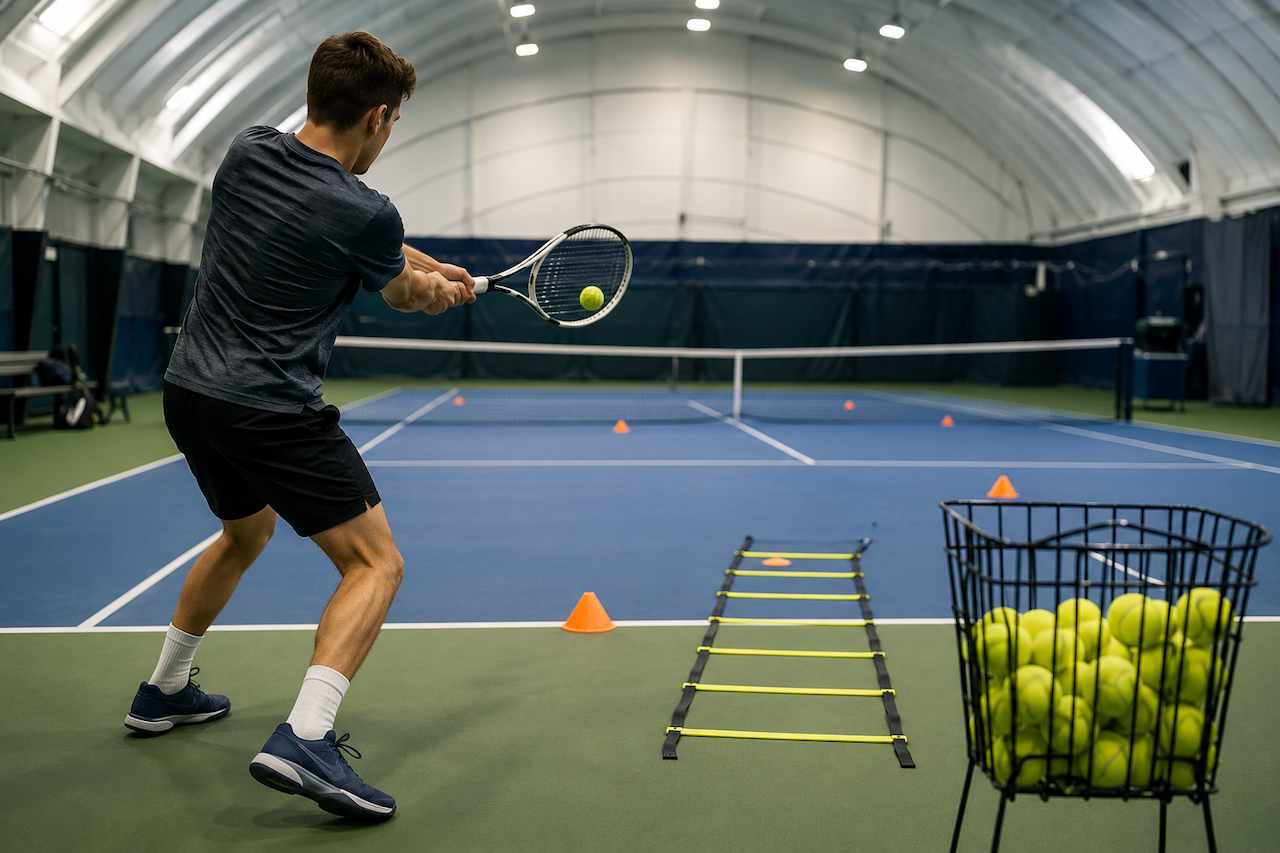
For players in Western New York, winter is not a reason to stop improving at tennis. It is an opportunity most players waste entirely. While outdoor courts sit empty under snow and ice from November through March, the players who use the indoor season deliberately with a plan, a training structure, and the right coaching support arrive at the spring season noticeably sharper, stronger, and more confident than those who simply wait for warmer weather.
We work with players across all skill levels at Village Glen and South Towns Tennis and Pickleball throughout the full indoor season, and the difference between players who use winter purposefully and those who go dormant is visible the moment they step back on an outdoor court. This guide covers everything you need to know to make your indoor tennis training this winter the most productive stretch of practice you have had in years.
Why Winter Is the Best Time to Work on Your Game
The outdoor season is not the best time to rebuild technical habits. When results matter when league matches are scheduled, tournaments are on the calendar, and every session carries competitive stakes most players default to what is familiar rather than experimenting with corrections that might temporarily disrupt their performance.
Winter removes that pressure entirely. There are no league standings to protect, no upcoming tournaments to peak for, and no expectation of immediate results from the people you are playing with. This makes the indoor season the ideal environment for making the technical and tactical changes that would feel too risky during the competitive outdoor season. Players who use this window for genuine development arrive at spring with improvements already embedded rather than still being worked on.
We always advise players to approach the indoor season with a specific goal rather than simply maintaining fitness. Maintenance keeps you where you are. A targeted indoor training plan moves you meaningfully forward.
Setting a Clear Indoor Training Goal
The first step in productive indoor tennis training is identifying exactly what you are working to improve. Without a specific goal, indoor sessions become unfocused and the winter passes without meaningful development. With one, every session has a clear purpose and a measurable outcome to work toward.
The most effective indoor training goals are specific and technical rather than general. Not simply to get better but to rebuild a more consistent second serve, to develop a reliable topspin backhand, to improve net approach patterns in doubles, or to build the physical conditioning base that supports a full outdoor season without injury. Identifying one or two specific targets before the indoor season begins shapes every training decision that follows.
We always work with players at the start of the indoor season to identify exactly what their game needs most. The answer is almost always visible in match patterns from the previous outdoor season the shots that broke down under pressure, the physical limitations that showed up late in matches, and the tactical weaknesses opponents exploited consistently. If you are unsure where to focus, our private lessons at Village Glen include a technical assessment that identifies your specific development priorities and builds an indoor training plan around them.
Structuring Your Indoor Training Week
Consistency is the foundation of effective indoor tennis training. One long session per week is significantly less effective than three shorter, focused sessions spread across the week, because the body and brain need spaced repetition to convert new habits into automatic responses.
A practical indoor training week for a recreational or intermediate player looks like this. One individual session focused entirely on technical drilling isolated groundstrokes, serve practice, or specific footwork patterns with no pressure to play points. One session of structured group training through a clinic or development program where feedback is available and live point play tests the technical work done in isolation. One session of match play or competitive hitting that applies everything in a real game context.
This three-session structure covers all three pillars of effective development technical isolation, coached feedback, and competitive application without requiring an unrealistic time commitment. Players who follow this kind of structured rotation consistently make more progress through a single indoor season than those who spend the same total number of hours hitting without a framework.
Our adult development programs at South Towns are built around exactly this progression model and run throughout the full indoor season, giving players a ready-made structure to follow rather than building one from scratch.
Technical Areas to Prioritise During Indoor Training
The indoor season is the right time to address the technical weaknesses that cost you points outdoors. Here are the four areas we most consistently identify as high-priority for players using winter training productively.
The Second Serve
The second serve is the shot most recreational players leave underdeveloped for the longest time, and it is the one that creates the most pressure across an entire outdoor season when it is unreliable. The indoor season is the ideal time to rebuild second serve mechanics specifically the grip, the toss position, and the brushing motion that creates the topspin or kick needed for reliable depth and net clearance. With no match results on the line, players can slow the process down and repeat the correct motion hundreds of times until it becomes genuinely automatic.
Backhand Consistency
For the majority of recreational players, the backhand is the weaker wing. Whether one-handed or two-handed, backhand consistency under pressure breaks down for identifiable mechanical reasons usually late contact, insufficient shoulder turn, or an incomplete follow-through. The indoor season gives players the time to address these root causes methodically rather than making patchwork adjustments during the outdoor season when immediate results are needed.
Net Approach and Volley
Most recreational players are uncomfortable at the net and avoid it as a result. Avoiding the net keeps them comfortable but caps their competitive ceiling significantly, particularly in doubles. Indoor training is the right environment to build net approach patterns and volley mechanics through repetitive drilling without the pressure of a real match outcome. Players who dedicate a meaningful portion of their indoor season to net game development consistently become more aggressive and more effective doubles players the following spring.
Footwork and Court Movement
Footwork is the most neglected technical area at the recreational level because it does not feel as immediately impactful as a new shot. The impact shows up subtly in how often you arrive at the ball late, how frequently your contact point is off-centre, and how often you feel rushed rather than ready during rallies. Indoor training provides the focused, distraction-free environment needed to drill footwork patterns systematically until split steps, recovery movements, and approach footwork become automatic.
Fitness and Conditioning for the Indoor Season
Indoor tennis training is most effective when combined with off-court conditioning that addresses the physical demands of the outdoor season ahead. Tennis requires explosive lateral speed, rotational core strength, shoulder stability, and cardiovascular endurance none of which are maintained adequately through court time alone.
Before we cover the key conditioning areas, here is a practical summary of what an effective indoor tennis fitness routine targets across the full winter season:
- Lateral speed and agility through resistance band walking, side shuffle drills, and cone patterns that mirror real court movement
- Rotational core strength through medicine ball rotations and cable woodchop exercises that build the power behind groundstrokes and serves
- Shoulder stability through rotator cuff strengthening with light resistance bands, which protects the shoulder joint through a full season of serving and overhead play
- Cardiovascular base through sustained aerobic work two to three times per week that builds the endurance needed for long outdoor matches in spring and summer
- Hip and glute activation through targeted exercises that reduce knee load during lateral movement and support powerful push-off during split steps
Players who arrive at the outdoor season with this conditioning base in place consistently outperform those of equal technical skill who skipped physical preparation during winter.
How Indoor Clinics Accelerate Winter Development
Solo practice and self-directed conditioning build a foundation, but the fastest development during the indoor season comes from structured clinic coaching where feedback is immediate, errors are corrected in real time, and live point play tests new skills under genuine competitive pressure.
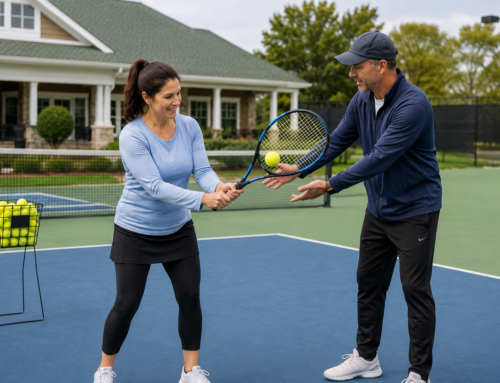
Indoor clinics provide something that individual court time cannot an outside perspective on what is actually happening during your swing, your movement, and your decision-making. We have seen firsthand how players who spend the entire indoor season hitting on their own arrive at spring with habits that feel different but are often no more correct than what they started with. A coach watching you in real time identifies the specific breakdowns that are invisible to the player and provides corrections that stick because they are applied immediately.
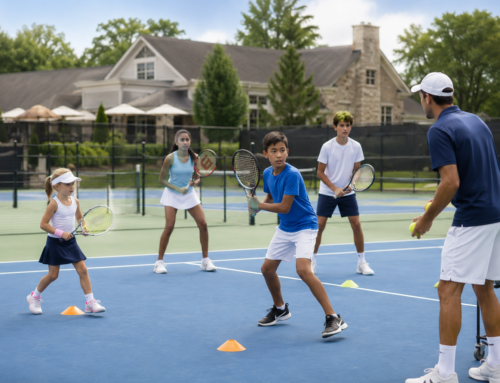
Our indoor tennis clinics at Village Glen run throughout the winter season and are grouped by skill level, ensuring every player trains at the right pace and intensity for their current ability. Combining clinic attendance with individual session work produces the most consistent and durable improvement across the full indoor season.
A Real-World Example: A Winter That Changed an Outdoor Season
We worked with an intermediate player at Village Glen who had plateaued at the same level for two consecutive outdoor seasons. His groundstrokes were solid but his second serve was a persistent liability, and his net game was almost non-existent two weaknesses that opponents at his level exploited consistently in close matches.
Rather than continuing the same pattern through a third outdoor season, we sat down with him at the start of the indoor season and built a specific three-month plan around those two areas only. He attended weekly clinics focusing on serve mechanics, booked bi-weekly private sessions specifically targeting net approach patterns, and did footwork conditioning three times per week off the court.
By the time the outdoor season began, his second serve percentage had improved from approximately 45 percent to over 65 percent and he was approaching the net confidently in doubles situations he would previously have avoided entirely. He moved up a level in his club league that spring and won more matches in the first half of the season than he had in the entire previous year.
The outdoor season improved because the indoor season was used with intention. That is the consistent pattern we see every year at both clubs. Booking your court time at South Towns early in the indoor season ensures you have consistent access throughout the winter rather than working around availability as the season fills up.
Making the Most of Indoor Court Time
Indoor court time is a limited resource during the winter season, particularly as demand increases from players who have left outdoor courts behind. Making the most of every session means arriving with a specific plan rather than deciding what to work on after you step through the door.
Every indoor session should have a defined focus one or two technical elements to drill, a specific footwork pattern to practice, or a set number of serves to hit with a particular grip and contact point. Unfocused hitting during a limited session produces far less improvement than 45 minutes of deliberate practice with a clear target.
Warm up properly before every indoor session regardless of how rushed your schedule feels. Indoor courts are typically warmer than outdoor environments in winter, but muscles and tendons still need preparation before full intensity. Five minutes of dynamic stretching and easy rallying before increasing pace protects your body and improves the quality of every subsequent minute of court time.
Conclusion
Winter is not a gap in your tennis development it is the most valuable training window of the year if you use it correctly. A specific goal, a structured weekly routine, targeted technical work, and consistent coaching feedback across the indoor season will produce more meaningful improvement than a full outdoor season of unstructured play. At Village Glen and South Towns Tennis and Pickleball, we have the indoor courts, the coaching programs, and the structured development pathways to make this winter your most productive season yet. The outdoor courts will be ready in spring. The question is whether you will be ready for them.
Why Choose Us
At Village Glen and South Towns Tennis and Pickleball, we offer a complete indoor tennis training environment with world-class courts, certified coaches, and year-round structured programs that keeps every player improving through the full Western New York winter season.
- Two full-service indoor club locations in Williamsville and Orchard Park, with consistent court availability and structured programs running throughout the full indoor season
- Certified coaching staff who build individualized indoor training plans targeting each player’s specific technical and tactical development priorities
- Adult, junior, beginner, and competitive indoor programs including clinics, private lessons, match play, and development sessions across both clubs
- Off-season conditioning guidance that builds the physical base needed for a full and injury-free outdoor season
- A welcoming and competitive indoor club community that keeps players motivated, accountable, and consistently improving through every week of winter
Frequently Asked Questions
How many times per week should I train indoors to see real improvement?
Three sessions per week one technical drilling session, one coached clinic, and one match play session produces the most consistent improvement across a full indoor season. Players with tighter schedules who can only commit to two sessions per week should prioritize the coached clinic and one individual technical session to maintain both structured feedback and personal practice time.
Is indoor tennis training suitable for complete beginners?
Absolutely. The indoor season is actually an ideal starting point for beginners because there is no competitive outdoor season pressure and the court environment is consistent, controlled, and quiet compared to a busy outdoor facility. We run beginner programs at both clubs throughout the indoor season, and starting in winter gives new players a full foundation to build on before transitioning to outdoor play in spring.
What is the difference between indoor and outdoor court play in terms of feel and adjustment?
Indoor courts typically play slightly faster than outdoor hard courts because there is no wind, no sun glare, and the controlled environment produces a more consistent, predictable bounce. The lighting is different and the sound of the ball is more immediate and enclosed. Most players adjust within one or two sessions. The main technical adjustment is learning to read the ball slightly earlier because the absence of wind and outdoor variables removes the natural delay that outdoor players often unconsciously rely on.
Should I focus on fitness or technical skills during the indoor season?
Both are important but in different proportions depending on where your game currently stands. Players with significant technical weaknesses an unreliable serve, a breaking-down backhand, a non-existent net game should weight their indoor season toward technical development with conditioning running alongside it. Players whose technique is relatively solid but who fade physically in long outdoor matches should weight the indoor season more heavily toward fitness and conditioning with technical maintenance running alongside it.
How early should I book indoor court time at Village Glen and South Towns?
Demand for indoor court time at both clubs increases significantly from November onward, and popular time slots fill quickly once the outdoor season ends. We recommend booking your regular indoor session times as early as possible ideally in October before the transition fully happens to secure consistent access to the times that suit your schedule throughout the full winter season. Consistent access to the same weekly time slots makes it significantly easier to maintain the structured training routine that produces real indoor season improvement.