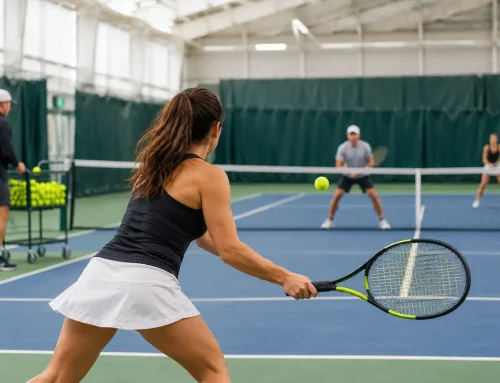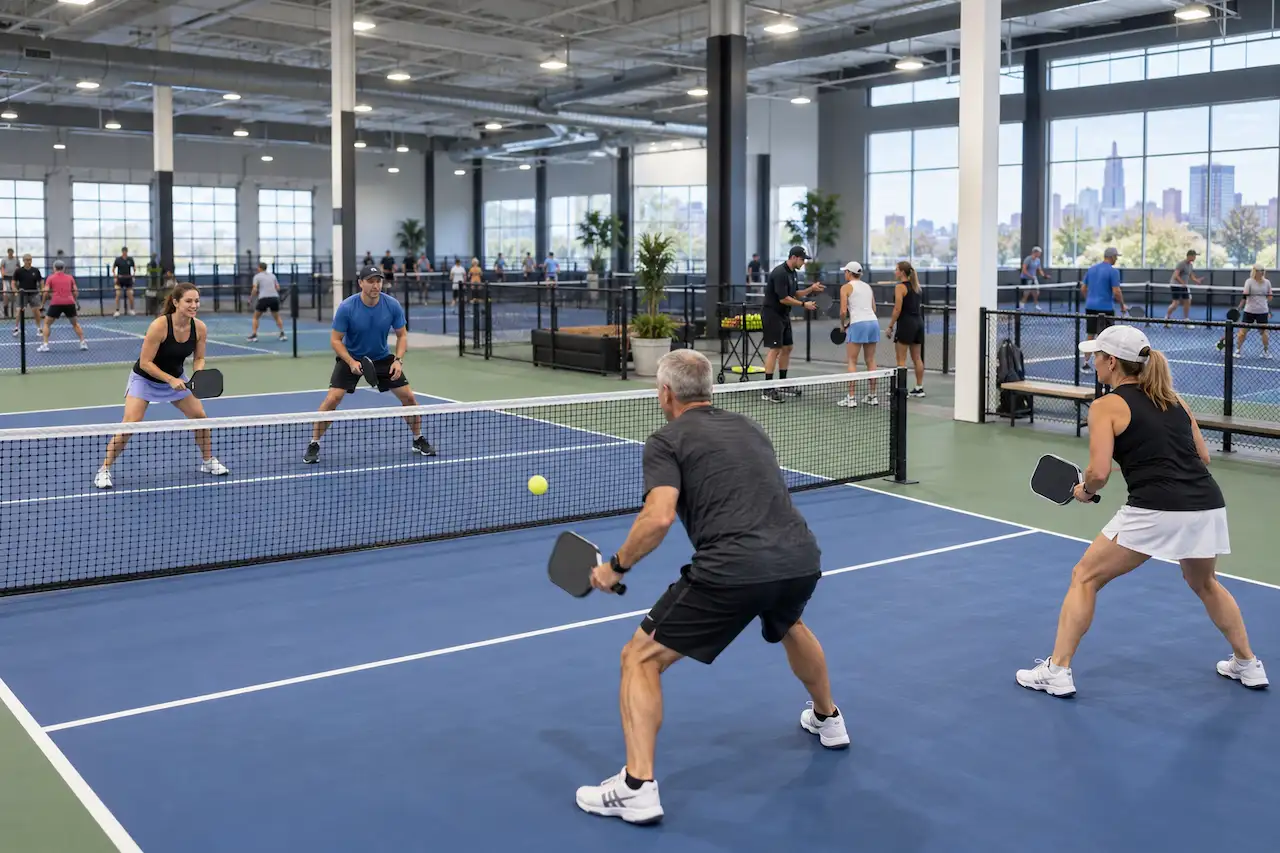
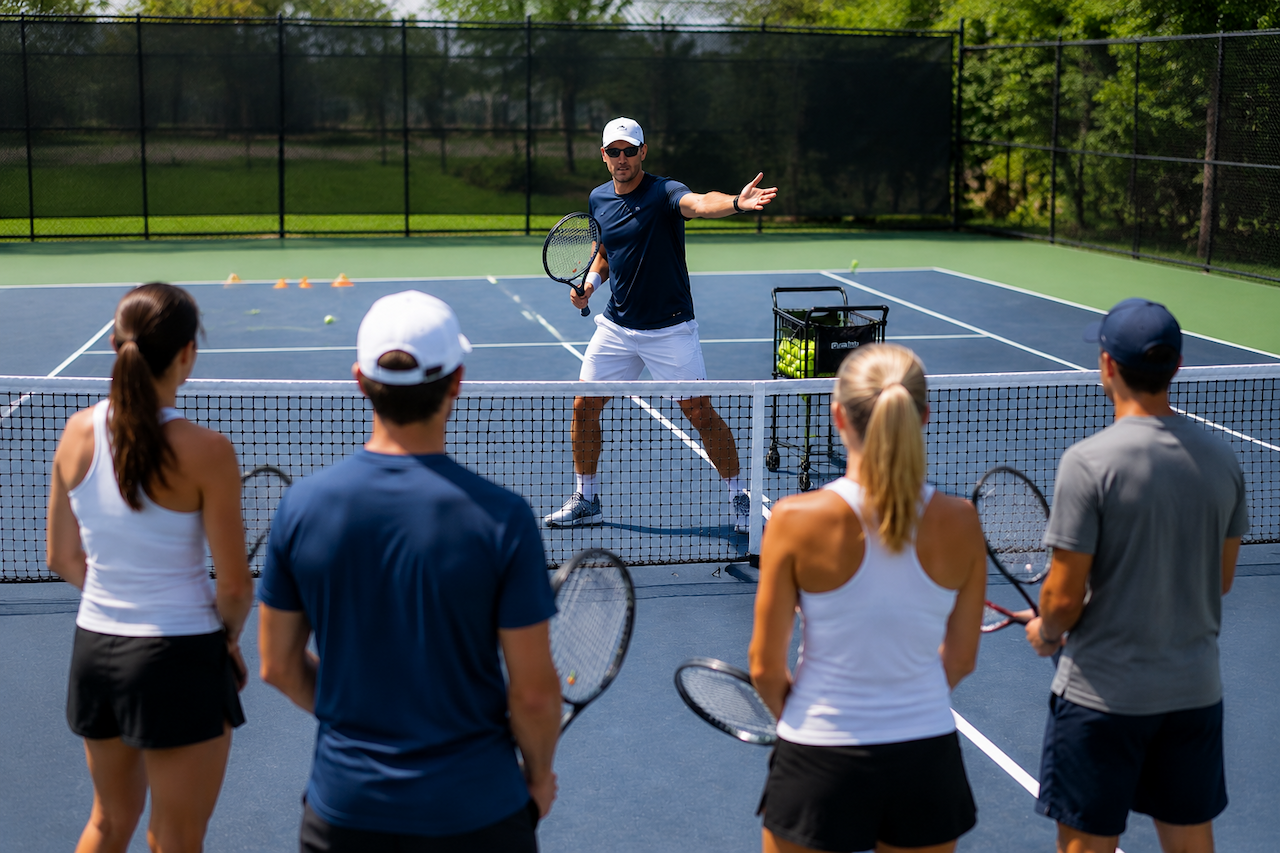
Improving at tennis or pickleball is rarely about playing more. It is about playing with structure, feedback, and a plan that targets your specific weaknesses. This is exactly where coaching clinics make the difference between a player who plateaus and a player who keeps progressing year after year.
At Village Glen in Williamsville, our coaching clinics are built around this principle. We do not run generic group sessions where players simply rally for an hour. Every clinic follows a structured format designed to produce measurable improvement, and we see that improvement consistently across players at every level. This article breaks down exactly how our clinics work and why they produce results that solo practice cannot match.
Why Structured Coaching Outperforms Solo Practice
Practicing alone has a ceiling. Without an outside perspective, players repeat the same mechanical errors because they cannot see what they are actually doing during a swing or a point. A clinic environment solves this by combining live feedback with structured drills and competitive repetition, all guided by a coach who is actively watching for technical and tactical breakdowns.
We always advise players who are serious about improvement to combine independent practice with clinic time, rather than choosing one over the other. Independent practice builds repetition. Clinic coaching builds correction. Both are necessary, but only one of them tells you what to actually fix.
What Makes a Village Glen Clinic Different
Not every coaching clinic is built the same way. Many group sessions at other facilities consist of loosely structured drills with minimal individual feedback. Our approach at Village Glen is deliberately different, and it shows in how quickly players progress.
Before we explain the structure in detail, here is what separates our clinic format from a typical group session:
- Every clinic is built around a specific skill focus for that session, rather than general open hitting
- Coaches actively rotate between players during drills to give individual, real-time correction rather than only group instruction
- Clinics are grouped by skill level, so players are always working at a pace and intensity that matches their current ability
- Each session includes live point play, so players apply new techniques under real competitive pressure before the clinic ends
This structure means a player walks away from every single clinic having worked on something specific, rather than simply having hit balls for an hour.
How Clinic Format Targets Real Skill Gaps
Our coaching staff begins every clinic cycle by identifying common patterns across the group, whether that is inconsistent serve placement, weak net coverage in doubles, or hesitant shot selection under pressure. The session is then built around correcting that specific pattern through targeted drills, not generic rallying.
This matters because most players do not know exactly what is holding their game back. A player might believe their forehand is the weak link in their game, when in reality the issue is footwork that prevents them from setting up the shot correctly in the first place. We prioritize a strategy of diagnosing the actual root cause before prescribing a fix, which is something solo practice and even casual group hitting cannot replicate.
By the end of a clinic cycle, players are not just more comfortable with isolated skills. They understand why a specific adjustment works, which means the improvement holds up in match play rather than disappearing under pressure.
Clinics for Every Level: From Beginners to Competitive Players
One of the most common misconceptions about coaching clinics is that they are only useful for beginners. In reality, structured coaching benefits players at every stage, just in different ways.
Beginner clinics focus on building correct fundamentals early, before bad habits have a chance to form. This is the most efficient time to establish proper grip, footwork, and stroke mechanics, because there is nothing to unlearn yet. Intermediate clinics shift toward consistency and shot selection, helping players reduce unforced errors and build patterns they can rely on during real matches. Competitive and advanced clinics focus on tactical execution, including doubles positioning, shot anticipation, and high-pressure decision-making during live point play.
Our adult development programs are structured around this exact progression, so players move through clearly defined stages rather than getting stuck repeating the same content at a level they have already outgrown.
A Real-World Example: From Inconsistent Player to Reliable Competitor
We worked with an intermediate player at Village Glen who had been playing recreationally for several years but kept losing to players she considered less skilled than herself. After observing her in a clinic setting, the issue became clear quickly. Her individual shots were technically solid, but her shot selection under pressure was poor. She consistently went for low-percentage winners during routine rallies instead of building the point patiently.
Over six weeks of attending our weekly intermediate clinic, our coaching staff worked specifically on shot selection through live point drills that forced decision-making under realistic match pressure. Rather than changing her technique, we changed how she thought during a point. By the end of the cycle, her unforced error rate dropped noticeably, and she began winning matches against players she had previously lost to consistently.
This example reflects something we see often. Technical skill alone does not guarantee results. Decision-making under pressure, which clinics are specifically designed to train, is frequently the missing piece.
Clinics as a Bridge to Competitive Match Play
A well-run clinic does not exist in isolation. It should connect directly to competitive opportunities where players can test what they have built under genuine pressure. Skills developed in a controlled clinic setting only become reliable once they hold up in an actual match, against an opponent who is not following a script.
This is why our clinic structure feeds directly into our match play sessions at Village Glen, giving players a natural progression from structured drilling into live competitive points. Players who follow this path consistently report faster, more durable improvement than those who only attend clinics without ever testing their skills in a real match environment.
How Often Should You Attend Clinics to See Results
Consistency is the single biggest factor in how quickly a player improves through clinic coaching. A player attending one clinic per month will see slow, inconsistent progress because there is too much time between corrections for the new habit to take hold. We typically recommend a minimum of one clinic per week for players who are serious about measurable improvement within a defined timeframe.
Most players begin noticing real change in their game within four to six weeks of consistent weekly attendance. Technical adjustments, such as grip or footwork corrections, tend to show results faster. Tactical improvements, such as shot selection and doubles positioning, generally take a full clinic cycle of six to eight weeks to become second nature under match pressure.
If your schedule allows for combining clinic attendance with private lessons at Village Glen, the individual feedback from private sessions reinforces what is being worked on in the group clinic setting, which accelerates the overall timeline significantly.
Conclusion
Coaching clinics work because they combine structure, live feedback, and competitive pressure in a way that solo practice simply cannot replicate. At Village Glen, every clinic is built around a specific skill focus, grouped by level, and connected directly to match play, so improvement is consistent and lasting rather than incidental. If you are ready to move past a plateau, structured clinic coaching is the most reliable path forward.
Why Choose Us
At Village Glen, our coaching clinics are built around real skill diagnosis, individualized feedback, and a clear progression path that produces measurable results for every player.
- A dedicated facility in Williamsville offering structured clinics for tennis and pickleball at every skill level
- Certified coaches who rotate through every player during drills for genuine, individual, real-time correction
- Clinics grouped by ability level, ensuring every player trains at the right pace and intensity for their stage
- A direct progression path from clinic coaching into competitive match play sessions
- A consistent, supportive coaching environment where players build lasting improvement rather than temporary fixes
Frequently Asked Questions
How is a clinic different from a private lesson?
A clinic provides structured group coaching with live point play and peer competition, which is excellent for tactical development and applying skills under realistic pressure. A private lesson offers individual, undivided attention from a coach, which is ideal for technical correction that requires focused repetition.
What skill level do I need to join a Village Glen clinic?
Our clinics are grouped by skill level, so there is an appropriate option whether you are a complete beginner or a competitive player preparing for tournaments. We assess new players before placing them into a clinic group to ensure the pace and content match their current ability accurately.
How quickly will I see improvement from attending clinics?
Most players notice measurable change within four to six weeks of consistent weekly attendance. Technical fixes such as grip or footwork tend to show progress faster, while tactical skills like shot selection and doubles positioning typically take a full six to eight week cycle to become reliable under match pressure.
Are clinics available for both tennis and pickleball at Village Glen?
Yes, Village Glen runs structured coaching clinics for both tennis and pickleball, covering beginners through competitive levels. Each sport follows its own progression path, with clinics designed around the specific technical and tactical demands of that game.
Do I need to attend with a partner or can I join individually?
You do not need a partner to join a clinic. Our clinics are designed to work with individual sign-ups, and players are grouped and matched with others at a similar skill level during drills and live point play. This also helps players build adaptability by working with different partners and opponents during each session.