Choosing the right racquet or paddle is one of the most practical decisions you will make as a tennis or pickleball player. The wrong equipment does not just feel uncomfortable, it actively works against your development, limits your control, and can even contribute to injury over time.
We see this regularly at Village Glen and South Towns Tennis and Pickleball in Western New York. Players arrive with equipment that does not match their game, and the moment they switch to the right racquet or paddle, the improvement is immediate and noticeable. This guide walks you through exactly what to look for based on where you are in your game right now.
Why Equipment Choice Matters More Than Most Players Realise
There is a common assumption among new players that equipment differences are minor and that skill is the only variable that counts. In practice, the weight, balance, head size, and grip of your racquet or paddle directly influence how the ball responds on contact and that response either supports or fights your natural swing.
A beginner using a heavy, head-light tennis racquet built for advanced players will struggle to generate racquet head speed and will compensate with poor mechanics. A pickleball player using a paddle that is too light will lose control on hard-driven balls at the kitchen line. We have seen firsthand how the right equipment accelerates development and how the wrong choice quietly reinforces bad habits.
Getting this decision right from the start saves time, reduces frustration, and gives your coaching and practice sessions a stronger foundation to build on. If you are unsure where to start, our pro shop at Village Glen and South Towns carries a curated range of racquets and paddles with professional guidance available before every purchase.
How to Choose the Right Tennis Racquet for Your Skill Level
Tennis racquets vary significantly in weight, head size, balance, and string pattern. Each variable serves a specific type of player. Understanding what each one does removes the guesswork from the buying process.
Head Size
Head size is measured in square inches and is one of the most important variables for beginners and intermediate players. A larger head size typically between 105 and 115 square inches produces a bigger sweet spot, which means off-centre hits still generate reasonable power and control. This is the right starting point for beginners and recreational players who are still developing consistent contact.
Intermediate and advanced players generally move toward a smaller head size in the 95 to 100 square inch range because it offers more precision and better feedback on every shot, which matters when your contact point is already reliable.
Racquet Weight
Racquet weight is measured in grams and has a direct effect on power, control, and arm comfort. Lighter racquets in the 255 to 275 gram range are easier to swing and manoeuvre, making them suitable for juniors, beginners, and players with arm sensitivity. Heavier racquets in the 295 to 315 gram range absorb more vibration and deliver more natural power at contact, but they require a stronger and more developed swing to use effectively.
We always advise players to avoid going too light in pursuit of racquet speed. A racquet that is too light for your swing weight produces a jarring, unstable feel at contact that eventually leads to elbow and wrist discomfort.
Balance Point
Balance describes where the weight of the racquet is distributed. A head-heavy racquet adds natural power and suits baseline players who take long, full swings. A head-light racquet is easier to manoeuvre at the net and suits serve-and-volley or doubles-oriented players. An evenly balanced racquet sits between both and is the most practical starting point for developing players who are still finding their style.
Grip Size
Grip size is measured numerically from 1 to 5 in most markets and directly affects your ability to control the racquet face through the swing. A grip that is too small causes the hand to over-rotate, producing inconsistent contact. A grip that is too large restricts wrist movement and reduces spin potential. The correct size allows a small gap between your fingertips and your palm when you hold the racquet in a standard forehand grip.
If you want professional guidance on racquet selection alongside structured coaching, our adult development programs at South Towns include equipment assessment as part of the onboarding process.
How to Choose the Right Pickleball Paddle for Your Skill Level
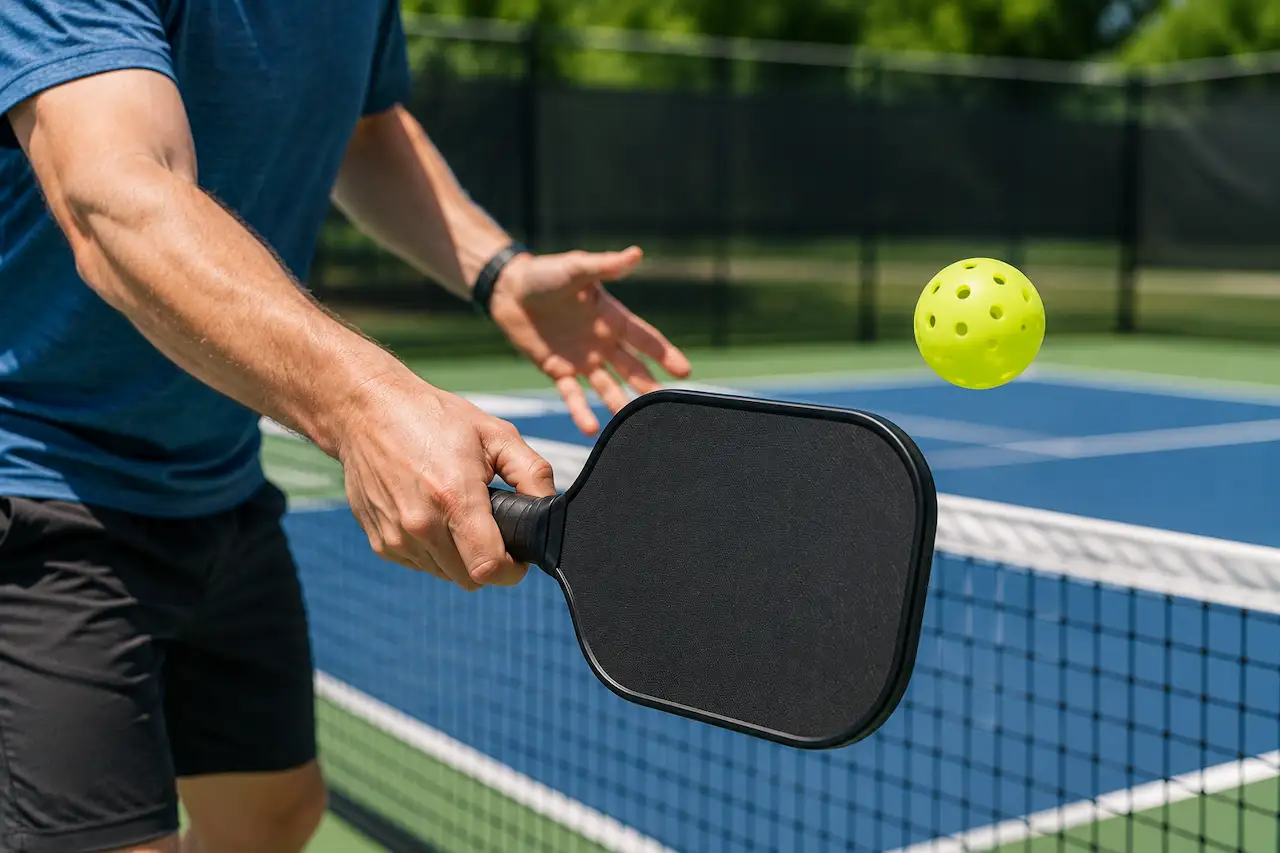
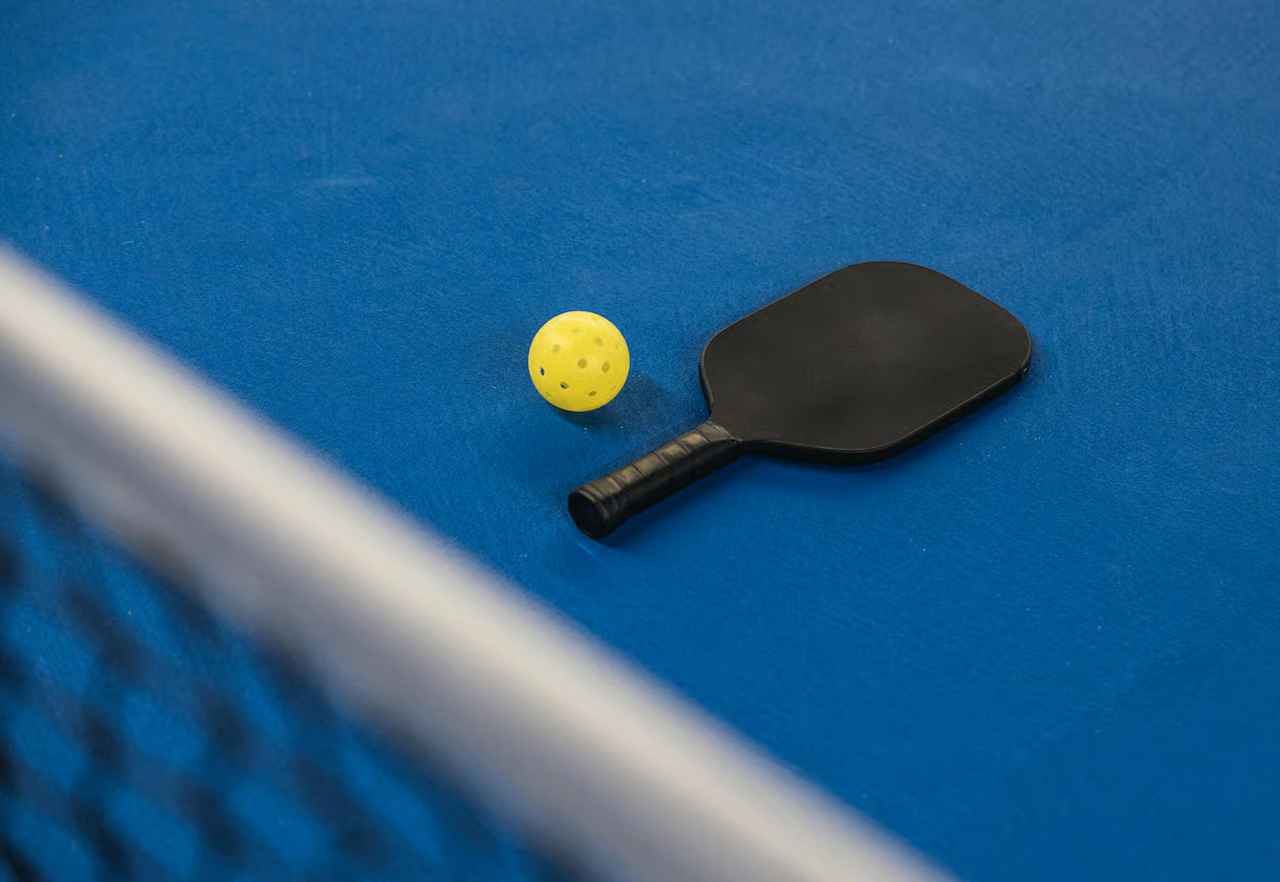
Pickleball paddle selection follows a different set of variables than tennis, but the principle is the same: the right paddle for your level supports your game rather than fighting it.
Before we go into each variable, here is a quick breakdown of what matters most at each stage of development:
- Beginners need a lightweight paddle with a larger face and a forgiving sweet spot that rewards consistent contact over power
- Intermediate players benefit from a mid-weight paddle with a longer handle for two-handed backhand options and better reach at the kitchen line
- Advanced players prioritise paddle core material and surface texture to control spin generation and ball placement with precision
Paddle Weight
Pickleball paddles generally range from 6 to 14 ounces. Lighter paddles in the 6 to 7.5 ounce range offer fast hand speed and easy manoeuvrability, making them suitable for beginners and players focused on control at the net. Heavier paddles in the 8 to 9.5 ounce range deliver more drive on groundstrokes and are preferred by power-oriented players who spend time at the baseline.
A common mistake we observe is beginners choosing heavier paddles because they associate weight with quality. A heavier paddle at the beginner stage produces arm fatigue, slower reaction time at the kitchen, and inconsistent dinking the opposite of what a developing player needs.
Paddle Core Material
The core of a pickleball paddle sits between the two surface layers and determines how the ball feels at contact. Polymer cores are the most widely used because they offer a soft, controlled feel with low vibration ideal for beginners and intermediate players who are building their touch game. Nomex cores produce a harder, louder response with more natural power but less control, suiting experienced players with already-reliable mechanics.
Paddle Surface and Grip
The paddle surface affects spin generation. A rougher, textured surface grips the ball longer at contact and produces more spin on serves and drives. A smoother surface offers a cleaner, more predictable response. For beginners, surface texture matters less than weight and core focus on those two variables first.
Grip size on a pickleball paddle follows the same logic as tennis. A grip that is too small promotes wrist instability and arm fatigue. A grip that is too large restricts natural wrist movement. Most adult players fall between a 4-inch and 4.5-inch circumference grip. Our pickleball clinics at Village Glen are a practical environment to test different paddle types under real game conditions before committing to one.
A Real-World Example: The Wrong Equipment Holding a Player Back
We worked with an adult recreational tennis player at South Towns who had been playing for two years and was consistently frustrated with her backhand. She was working hard in every session but her backhand remained unreliable and her arm was sore after every outing.
When we looked at her racquet, the issue became clear immediately. She was playing with a 310-gram head-light frame built for advanced players significantly too heavy for her current swing development. The racquet was slow through the contact zone on her backhand side, forcing her to compensate with her wrist and shoulder in ways that were both mechanically incorrect and physically straining.
We recommended a switch to a 275-gram, evenly balanced racquet with a 105 square inch head. Within three sessions, her backhand consistency improved noticeably and her arm discomfort disappeared entirely. The technique had always been there the equipment had simply been fighting it. Getting the right fit early is exactly why we incorporate equipment assessment into our private tennis lessons at Village Glen from the very first session.
Trying Before You Buy: Why It Matters
Buying a racquet or paddle based on a specification sheet alone is not enough. How a piece of equipment feels in your hand during actual play the vibration on contact, the swing weight through the air, the balance in your grip tells you more than any product description will.
We always recommend players demo equipment before committing to a purchase. Our professionals can guide you toward options that match your current game and your goals. If you are just starting out, our junior development programs at Village Glen include dedicated equipment guidance so every young player begins with the right racquet size, weight, and grip from day one before any compensations have the chance to develop.
For adult players who are returning to the sport or picking up pickleball for the first time, the same principle applies. Match your equipment to your current skill level, not the level you are working toward, and adjust as your game grows.
Conclusion
The right racquet or paddle does not make you a better player on its own, but the wrong one will actively slow your progress. Head size, weight, balance, core material, and grip size are not marketing details; they are functional variables that shape how every single shot feels and responds. Match your equipment to your current skill level, not the level you want to reach, and upgrade as your game develops. At Village Glen and South Towns Tennis and Pickleball, we are here to help you make that decision with confidence.
Why Choose Us
At Village Glen and South Towns Tennis and Pickleball, we combine expert coaching, quality facilities, and genuine player-first guidance to help every member find the right equipment and the right program for their game.
- Two full-service club locations in Williamsville and Orchard Park, offering access to both tennis and pickleball programs under one membership
- A fully stocked pro shop with racquets and paddles across all skill levels, with professional guidance available before every purchase
- Certified coaches who assess your swing mechanics and recommend equipment that matches your current development stage
- Junior, adult, beginner, and advanced programs running year-round across both clubs with indoor season availability
- A welcoming club environment where every player from first-timers to competitive members gets the support they need to improve
Frequently Asked Questions
What is the best racquet for a tennis beginner?
For most beginners, a lightweight racquet between 255 and 275 grams with a head size of 105 to 115 square inches is the right starting point. The larger head size creates a more forgiving sweet spot that rewards developing contact mechanics, while the lighter weight allows you to generate racquet head speed without straining your arm. We guide every new member through this selection process as part of our introductory lesson sessions.
How do I know if my pickleball paddle is too heavy?
If your arm feels fatigued within the first 30 minutes of play, you are losing reaction speed at the kitchen line, or your dinks are consistently landing long, your paddle is likely too heavy for your current game. Most recreational and beginner players perform best with paddles in the 7 to 7.9 ounce range. We recommend visiting our pro shop for a hands-on assessment before switching equipment.
Does grip size really make a difference in tennis or pickleball?
Grip size makes a significant and direct difference to both control and arm health. A grip that is too small causes the hand to rotate through contact, producing inconsistent racquet or paddle face angle. A grip that is too large restricts wrist movement, reducing spin and touch. Getting grip size right is one of the fastest corrections we make with new players and produces immediate improvement in feel and control.
When should I upgrade my racquet or paddle?
The right time to upgrade is when your current equipment is genuinely limiting your game rather than when you simply want something new. Signs that an upgrade makes sense include consistent discomfort during or after play, a noticeable mismatch between your mechanics and how the ball responds, or a coach recommending a specific characteristic your current equipment does not offer. We assess equipment fit as part of our private lesson and clinic programs at both clubs.
Can I use the same paddle for both tennis and pickleball?
Tennis racquets and pickleball paddles are entirely separate pieces of equipment and are not interchangeable. They differ in size, weight, surface construction, and the mechanics they are designed to support. If you play both sports which many of our members at Village Glen and South Towns do you will need dedicated equipment for each. Our pro shop carries both and our staff can help you build the right setup for both games at the same time.