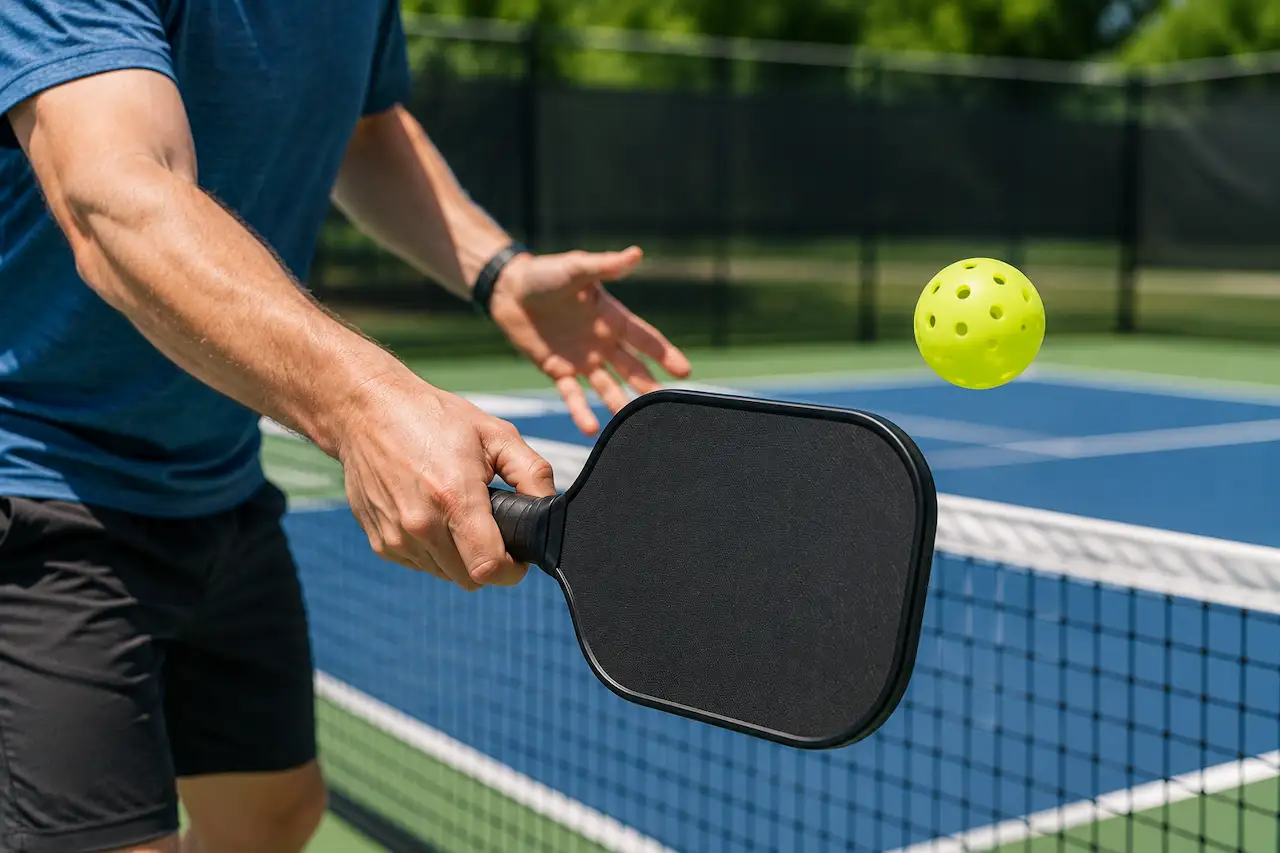
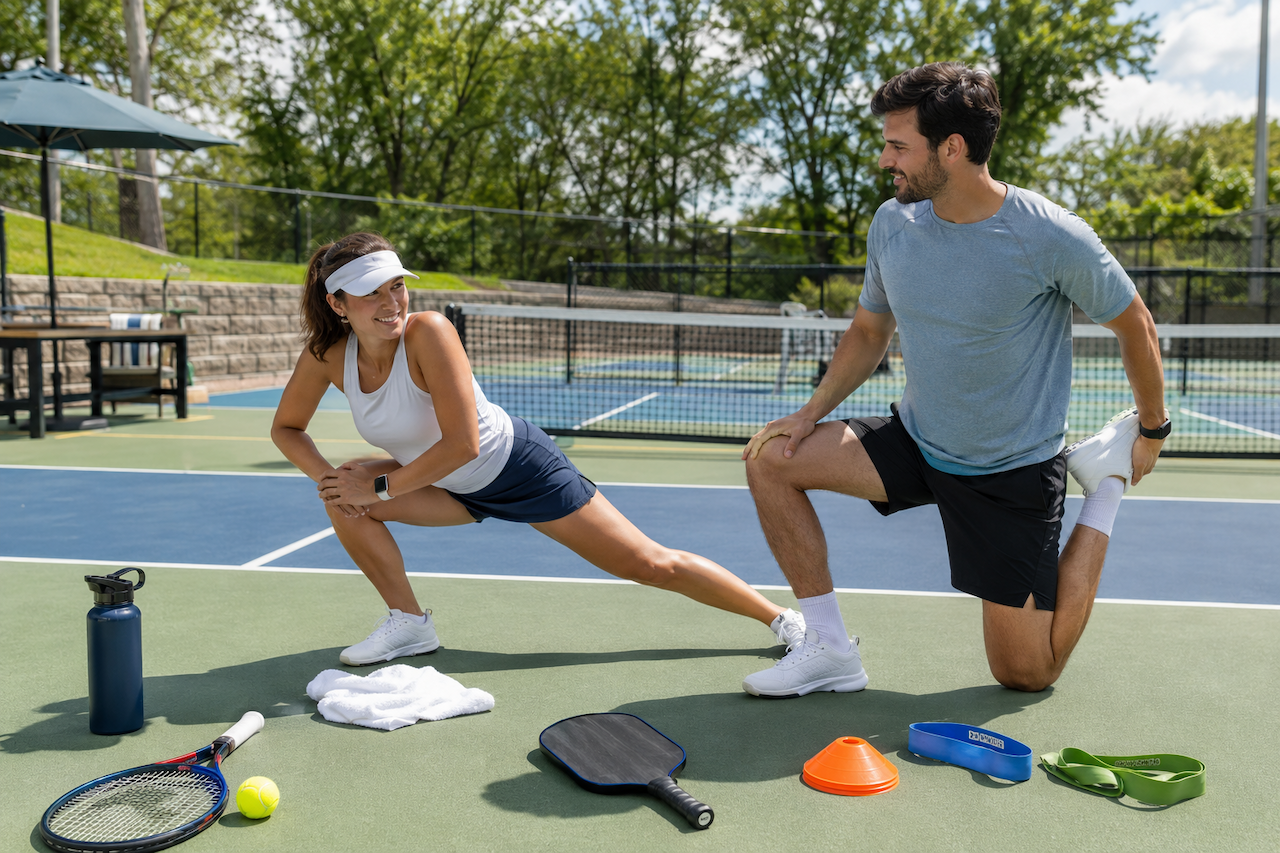
Tennis and pickleball are two of the most physically rewarding sports you can play at any age. They build cardiovascular fitness, coordination, and mental sharpness simultaneously. But like any sport that involves repetitive movement, sudden direction changes, and high-speed impacts, they also carry a real risk of injury when players skip preparation or push through discomfort without addressing it.
We work with players of all ages and levels at Village Glen and South Towns Tennis and Pickleball in Western New York, and injury prevention is a conversation we have consistently not just after someone gets hurt, but before. The strategies in this guide are the same ones we share with our players every week, and they work equally well whether you are a beginner picking up a paddle for the first time or a competitive player logging heavy court hours every season.
Why Injury Prevention Matters More Than Most Players Realise
The most common mistake we see is players treating injury prevention as something to think about after they are already hurting. By that point, a minor strain has often become a persistent problem that takes weeks or months to resolve, rather than a few days of smart management.
Injury prevention is not about playing less. It is about playing smarter preparing your body correctly before every session, using proper technique during it, and recovering effectively after it. Players who follow this approach consistently stay on the court far longer than those who rely on being physically tough and hoping for the best.
The Most Common Injuries in Tennis and Pickleball
Understanding which injuries occur most frequently in both sports gives you a clear target for prevention. The injuries we see most often across both tennis and pickleball players share a common thread they are almost always the result of overuse, poor mechanics, or inadequate preparation rather than unavoidable accidents.
- Tennis elbow: Inflammation of the tendons on the outside of the elbow caused by repetitive forearm rotation and gripping. It is the most frequently reported overuse injury in both tennis and pickleball players, particularly those using incorrect technique on the backhand or gripping the racquet or paddle too tightly
- Rotator cuff strain: Shoulder pain caused by repetitive overhead motion during serves and overheads. Most common in players who serve with incorrect mechanics or skip shoulder conditioning entirely
- Knee pain and patellar tendinitis: Caused by repeated lateral movement and sudden stops on hard courts without adequate leg conditioning or footwear support
- Wrist strain: Often the result of incorrect paddle or racquet grip size, late contact on groundstrokes, or a lack of wrist stability during fast kitchen exchanges in pickleball
- Ankle sprains: The most acute injury in both sports, typically caused by rolling the ankle during a lateral shuffle or a sudden change of direction
Knowing these five injury types gives you a clear prevention checklist. Each one has a direct, practical solution.
Warm Up Properly Before Every Session
A proper warm up is the single most effective injury prevention tool available, and it costs nothing but five to ten minutes of time. We always advise players to treat the warm up as the first part of their session, not something they rush through to get to the actual hitting.
An effective pre-court warm up for tennis and pickleball players should work through the following sequence. Start with two to three minutes of light cardio a brisk walk, a slow jog, or jumping jacks to raise your heart rate and increase blood flow to the muscles. Follow this with dynamic stretching that targets the shoulders, hips, wrists, and ankles specifically. Dynamic stretching means movement-based stretches leg swings, arm circles, hip rotations, and ankle rolls not static holds, which are better saved for after the session.
Finish the warm up with five minutes of easy rally hitting or soft dinking before increasing pace. This gives your joints and tendons time to adjust to the specific demands of the sport before full speed and power are added.
Use Correct Technique to Protect Your Body
Poor technique is the leading cause of overuse injuries in both tennis and pickleball. When a player uses incorrect mechanics gripping too tightly, making contact at the wrong point, or using their wrist instead of their whole arm the force of every shot is absorbed by the wrong structures. Over hundreds of repetitions, this creates cumulative damage that eventually becomes pain.
The most important technical habits for injury prevention are consistent across both sports. Use a relaxed grip at all times squeezing tightly is one of the primary causes of tennis elbow in both tennis and pickleball players. Make contact in front of your body rather than late beside or behind it, which overloads the shoulder and wrist. Bend your knees during lateral movement rather than reaching with your upper body, which protects your lower back and reduces ankle sprain risk significantly.
We prioritize a strategy of addressing technique early with every new player, because correcting a mechanical issue after it has caused an injury is always harder than preventing it from the beginning. Our adult development programs at Village Glen build correct mechanics from the first session and monitor them consistently throughout the program.
Choose the Right Equipment for Your Body
Equipment that does not fit your body or your game places unnecessary stress on your joints with every single shot. This is an area where small details produce large consequences over time.
Racquet and paddle grip size directly affects elbow and wrist health. A grip that is too small forces the hand to squeeze harder to maintain control, increasing forearm tension and elbow strain. A grip that is too large restricts wrist movement and shifts stress onto the shoulder. Getting grip size right is one of the fastest and most impactful injury prevention adjustments we make with players who arrive reporting chronic elbow or wrist discomfort.
String tension in tennis also plays a direct role. Strings that are too tight reduce the dwell time of the ball on the racquet face, sending more impact vibration directly into the arm. Most recreational players benefit from a lower tension that absorbs more of that energy before it reaches the elbow and shoulder.
Footwear is equally important. Court shoes are specifically designed for the lateral movement demands of tennis and pickleball. Running shoes do not provide adequate lateral stability and are a contributing factor in a significant number of ankle sprains and knee complaints we see in new players. Visiting our pro shop at Village Glen and South Towns for equipment guidance ensures your racquet, paddle, and footwear are all working with your body rather than against it.
A Real-World Example: Catching an Injury Before It Became One
We worked with an adult recreational tennis player at South Towns who came to us for a lesson complaining of mild elbow discomfort that had been building gradually over several weeks. She had been playing three times per week and attributed the discomfort to simply playing more than usual.
When we observed her technique, the issue was immediate and clear. She was using an Eastern forehand grip on her serve a common mistake that forces the wrist into an unnatural position at contact and transfers significant rotational stress directly into the elbow tendon. She had also been gripping her racquet significantly tighter than necessary throughout rallies, compounding the strain on every shot.
We corrected her serve grip, worked on relaxing her grip pressure during rallies through our private lessons program, and had her reduce intensity for two weeks while the existing inflammation settled. The discomfort resolved completely within ten days and has not returned. Had she continued with the same mechanics for another month, the mild tendinitis would almost certainly have become a more serious injury requiring significantly longer recovery.
Recovery Is Part of the Training Process
Most players treat recovery as optional. We treat it as non-negotiable. The quality of your recovery between sessions directly determines how your body performs and how resilient it remains over a long season of regular play.
After every court session, spend five to ten minutes cooling down with static stretching. Focus on the forearm flexors and extensors, the shoulder rotator cuff, the hip flexors, the calves, and the hamstrings the muscle groups that absorb the most load during tennis and pickleball. Hold each stretch for 20 to 30 seconds without bouncing.
Beyond stretching, hydration, sleep, and rest days matter more than most recreational players acknowledge. Playing every day without a rest day prevents the soft tissue repair that keeps tendons and muscles healthy under repetitive load. We recommend a minimum of one full rest day per every three days of play for recreational players, and two rest days per week for players over 50 or those managing any existing discomfort.
Joining our match play and clinic sessions at South Towns also gives you access to coaching staff who monitor movement patterns and flag early signs of compensatory movement the kind that often precedes injury before they develop into something that takes you off the court.
Conditioning Off the Court Supports Injury Prevention On It
Court time is not enough on its own to keep your body resilient through a full season of play. The muscles that stabilise your shoulder, protect your knees, and support your lower back during lateral movement need targeted conditioning work that rallying alone does not provide.
For tennis and pickleball players, the most valuable off-court conditioning targets three areas. First, rotator cuff strengthening through resistance band exercises that build the stabiliser muscles around the shoulder joint. Second, hip and glute activation work that reduces knee load during lateral movement and sudden stops. Third, forearm and grip strength training that protects the elbow tendons from the cumulative strain of repetitive racquet or paddle use.
None of this requires a gym membership or complex equipment. Fifteen minutes of targeted resistance band and bodyweight work three times per week produces meaningful results in shoulder stability and lower limb resilience within four to six weeks.
If you are a junior player, our junior development programs incorporate movement and conditioning education alongside technical coaching so young players build physical resilience from the very beginning of their development.
Conclusion
Staying injury-free in tennis and pickleball comes down to four consistent habits warming up properly, using correct technique, choosing the right equipment, and recovering with intention. None of these require significant time or expense. They require awareness and consistency. Players who build these habits into every session stay on the court longer, improve faster, and enjoy the sport far more than those who manage injuries reactively. At Village Glen and South Towns Tennis and Pickleball, we help every player build these habits from day one.
Why Choose Us
At Village Glen and South Towns Tennis and Pickleball, we combine expert coaching, proper equipment guidance, and structured programs to keep every player healthy, confident, and consistently improving on the court.
- Two full-service club locations in Williamsville and Orchard Park, with certified coaching staff across both tennis and pickleball programs
- Coaches who monitor technique and movement patterns proactively, catching injury risks before they become problems
- Adult, junior, beginner, and competitive programs that build correct mechanics and physical conditioning from the very first session
- A fully stocked pro shop with equipment guidance to ensure your racquet, paddle, grip size, and footwear all support your body correctly
- A year-round program structure that includes appropriate rest periods, structured progression, and coaching feedback to keep players on the court safely all season
Frequently Asked Questions
What is the most common injury in pickleball and how do I prevent it?
Tennis elbow is the most frequently reported injury in pickleball players, despite the name. It develops gradually from repetitive gripping and forearm rotation during dinking and driving, particularly when paddle grip size is incorrect or when players squeeze too tightly throughout play. Prevention involves using the correct grip size, relaxing grip pressure between shots, and warming up the forearm tendons before every session with gentle wrist circles and forearm stretches.
How important is footwear for injury prevention in tennis and pickleball?
Footwear is one of the most underestimated injury prevention factors in both sports. Court-specific shoes are designed with lateral stability features that running shoes do not have, and that stability directly protects the ankle and knee during the side-to-side movement that defines both games. We consistently see ankle sprains and knee complaints in players wearing running shoes on court switching to proper court footwear resolves the issue in the majority of cases.
Should I play through mild soreness or take a rest day?
Mild muscle soreness that fades within 24 hours after a session is normal and does not require a rest day. Sharp pain, joint pain, or soreness that worsens during activity or persists for more than 48 hours is a signal to rest and assess. Playing through joint pain specifically almost always extends recovery time rather than shortening it. When in doubt, one extra rest day costs far less than three weeks of forced absence from a worsening injury.
Can poor technique really cause injuries even at a recreational level?
Poor technique causes injuries at every level, and recreational players are often more vulnerable than competitive ones because they receive less coaching feedback and repeat incorrect mechanics across hundreds of sessions without correction. The repetitive nature of racquet sports means that even a small mechanical flaw a grip that is too tight, a late contact point accumulates into tendon and joint stress over time. This is why technique correction is one of the most effective injury prevention tools we use with every new player.
At what age should players start thinking seriously about injury prevention?
Injury prevention is relevant from the first time a player steps on the court, regardless of age. For junior players, correct mechanics and age-appropriate conditioning prevent the overuse injuries that cut short many promising athletic careers. For adult players, prevention habits become progressively more important with each decade because recovery time lengthens and tissue resilience decreases naturally with age. We incorporate injury prevention education into every program level across both clubs.