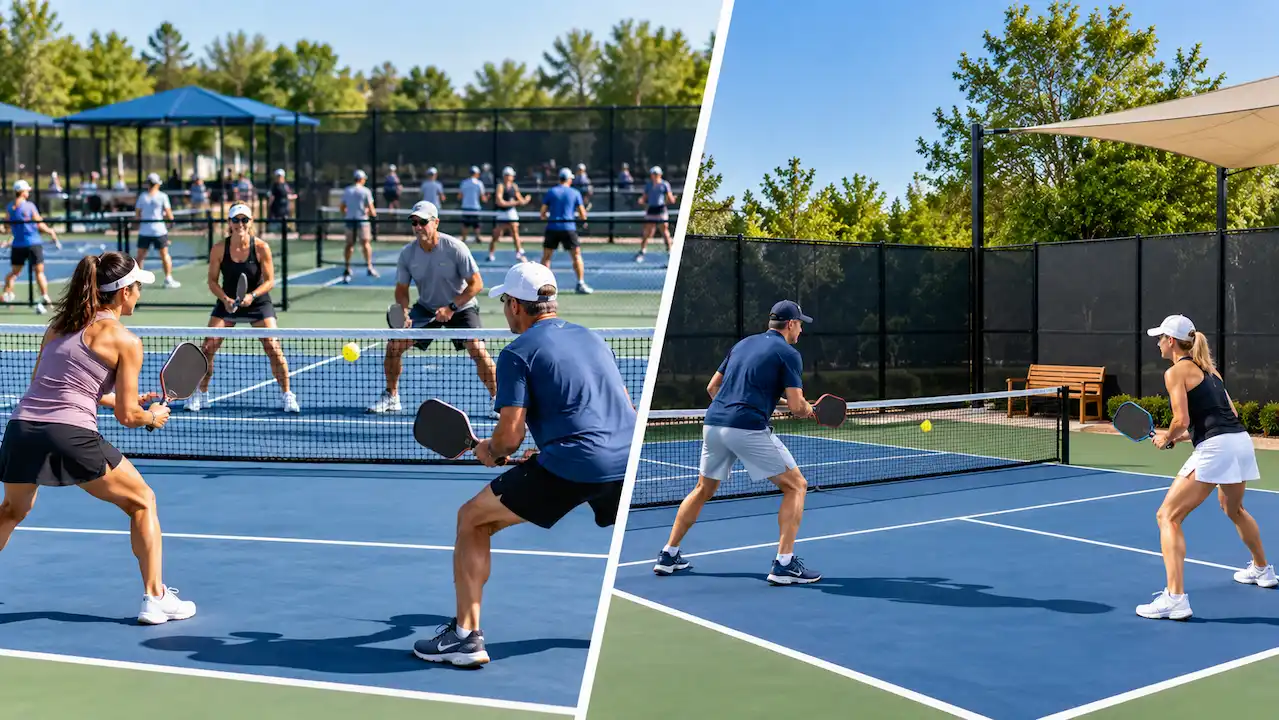
Of all the technical elements in pickleball, grip and paddle control are the two that affect every single shot you hit: the serve, the dink, the drive, the volley, and the reset. Get them right and everything else in your game becomes easier to develop. Get them wrong and every other technical improvement you make will be undermined by the inconsistency that an incorrect grip produces at the point of contact.
We work with players at every level at Village Glen in Williamsville and South Towns in Orchard Park, and grip is one of the first things we assess with every new student. The reason is simple: it is the most common source of control problems in pickleball and the most immediately correctable when addressed early. This guide covers everything you need to know about pickleball paddle grip and control so you can build the right foundation from the very first session.
Why Grip Is the Foundation of Everything in Pickleball
A correct grip does three things simultaneously. It positions the paddle face at the right angle for clean contact across all shot types. It allows the wrist and forearm to move freely through the full range of motion that different shots require. And it maintains a stable platform at contact without transmitting unnecessary tension into the arm and elbow that leads to both poor control and overuse discomfort over time.
An incorrect grip undermines all three. A player gripping the paddle like a frying pan flat in the palm with the face perpendicular to the ground produces inconsistent contact angles on dinks and volleys and removes the wrist freedom needed for touch shots at the kitchen line. A player gripping too tightly stiffens the forearm, reduces reaction speed, and forces the arm to work harder on every shot than a relaxed grip requires. These are not minor inconveniences, they are fundamental limiters that cap a player’s ceiling regardless of how much time they spend on the court.
The Two Main Grip Types and When to Use Each
There are two grip types that matter most for developing pickleball players the Continental grip and the Eastern grip. Understanding the difference between them and knowing when each is appropriate removes one of the most common sources of confusion for players in their first year of serious development.
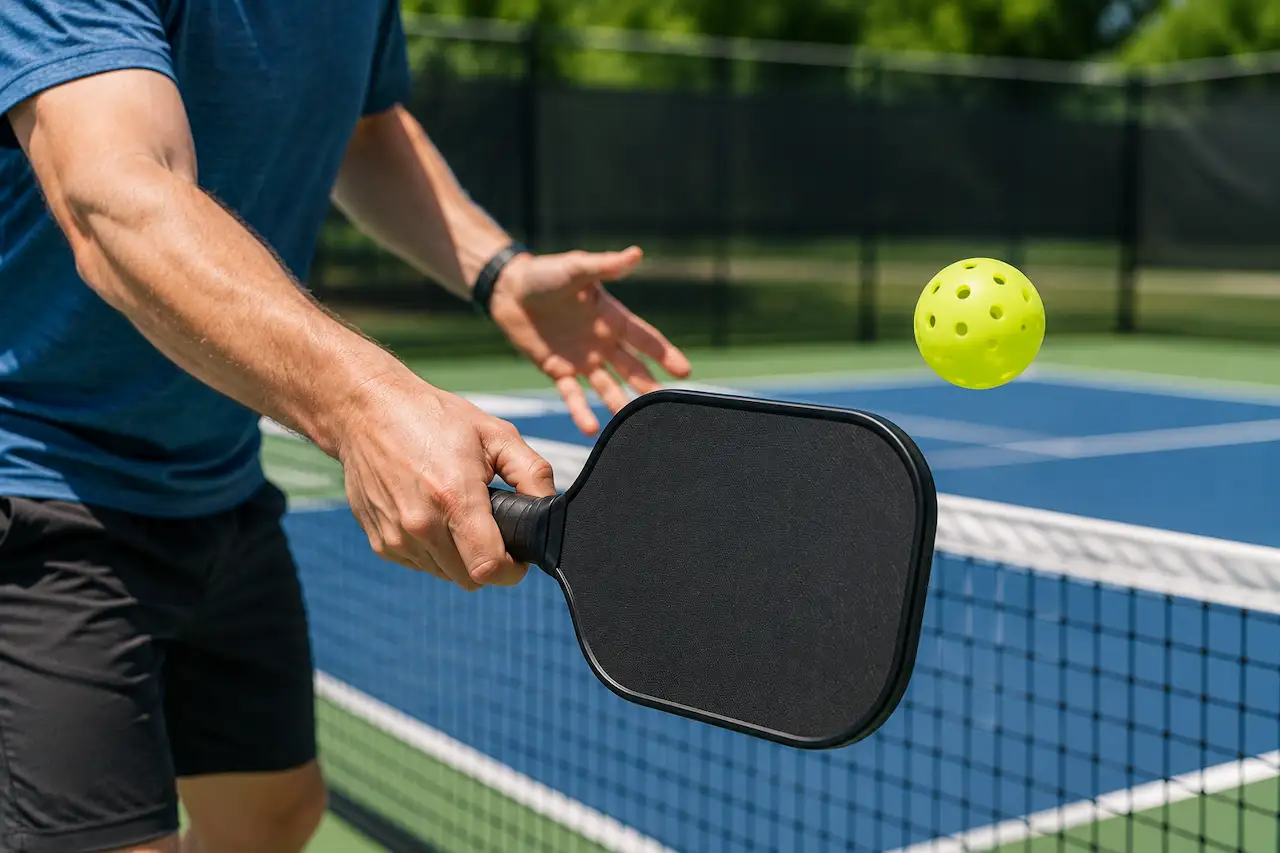
The Continental grip is the most versatile and most widely recommended grip for pickleball at all levels. To find it, hold the paddle in front of you with the face perpendicular to the ground and shake hands with the handle as if greeting someone naturally. The base knuckle of your index finger should sit on the top bevel of the handle. This grip allows clean contact on both forehand and backhand shots without changing your hand position between them, which is critical at the kitchen line where exchanges happen too quickly for grip adjustments between shots.
The Eastern grip rotates the hand slightly so the base knuckle of the index finger sits on the side bevel. It produces a more natural forehand contact angle and slightly more power on forehand drives, but it requires a grip change to execute a reliable backhand a significant disadvantage during fast kitchen exchanges where there is no time to adjust. Most intermediate and advanced players use a Continental grip as their default and only adjust toward Eastern for specific power shot situations away from the kitchen.
We always advise beginners to learn the Continental grip first and master it thoroughly before experimenting with Eastern grip variations building on a correct foundation is always faster than correcting a habit formed on an incorrect one.
Grip Pressure: The Most Overlooked Variable in Paddle Control
If grip type is the most commonly misunderstood element of pickleball technique, grip pressure is the most consistently overlooked. Players at every level from complete beginners through experienced recreational competitors tend to grip their paddle significantly more tightly than optimal control requires, and the consequences show up on every shot.
On a scale of one to ten where one is barely holding the paddle and ten is maximum possible squeeze, the optimal grip pressure for most pickleball shots sits between three and five. Dinks and touch shots at the kitchen line benefit from the lower end of that range a relaxed grip allows the paddle face to absorb the ball softly and redirect it with precision rather than deflecting it with a rigid surface that produces unpredictable contact. Drives and serves can be hit at the higher end of the range where more stability through contact is beneficial, but even then a six or seven is sufficient maximum grip pressure is never the right choice.
The practical test for whether your grip pressure is too high is simple. If your forearm feels tense during rallies, if your dinks consistently land long or float rather than dropping softly, or if your arm and elbow feel uncomfortable after a long session, grip pressure is almost certainly part of the problem. Before we cover how to correct paddle face control, here is a summary of what the right grip pressure produces across different shot types:
- Dinks and touch shots pressure three to four, paddle face absorbs and redirects the ball with soft, controlled contact
- Volleys and blocks pressure four to five, enough stability to redirect pace without adding unnecessary tension
- Drives and groundstrokes pressure five to six, firm enough for clean contact through the swing without restricting forearm rotation
- Serves pressure four to five, relaxed enough for a smooth, consistent toss and contact sequence without gripping tighter under pressure
Paddle Face Angle: The Direct Connection to Shot Control
Grip type and grip pressure determine how the paddle is held. Paddle face angle at the moment of contact determines where the ball actually goes. The two are directly connected a correct grip naturally produces a more consistent paddle face angle, and an incorrect grip makes consistent face angle extremely difficult to maintain across an entire session.
The paddle face should be slightly open tilted back a few degrees from vertical on dinks and soft shots at the kitchen line. This slight openness provides lift that clears the net and produces the downward arc on the other side that keeps the ball in the kitchen zone rather than sitting up for an easy attack. A closed paddle face on dinks tilted forward toward the ground produces net errors that feel inexplicable because the player does not see the subtle tilt happening at contact.
On drives and third-shot drops, the face angle adjusts based on the trajectory needed. Drives require a flatter, more vertical face for a lower ball flight. Third-shot drops require an open face similar to the dink to produce the high-arc trajectory that clears the net and drops into the kitchen from above.
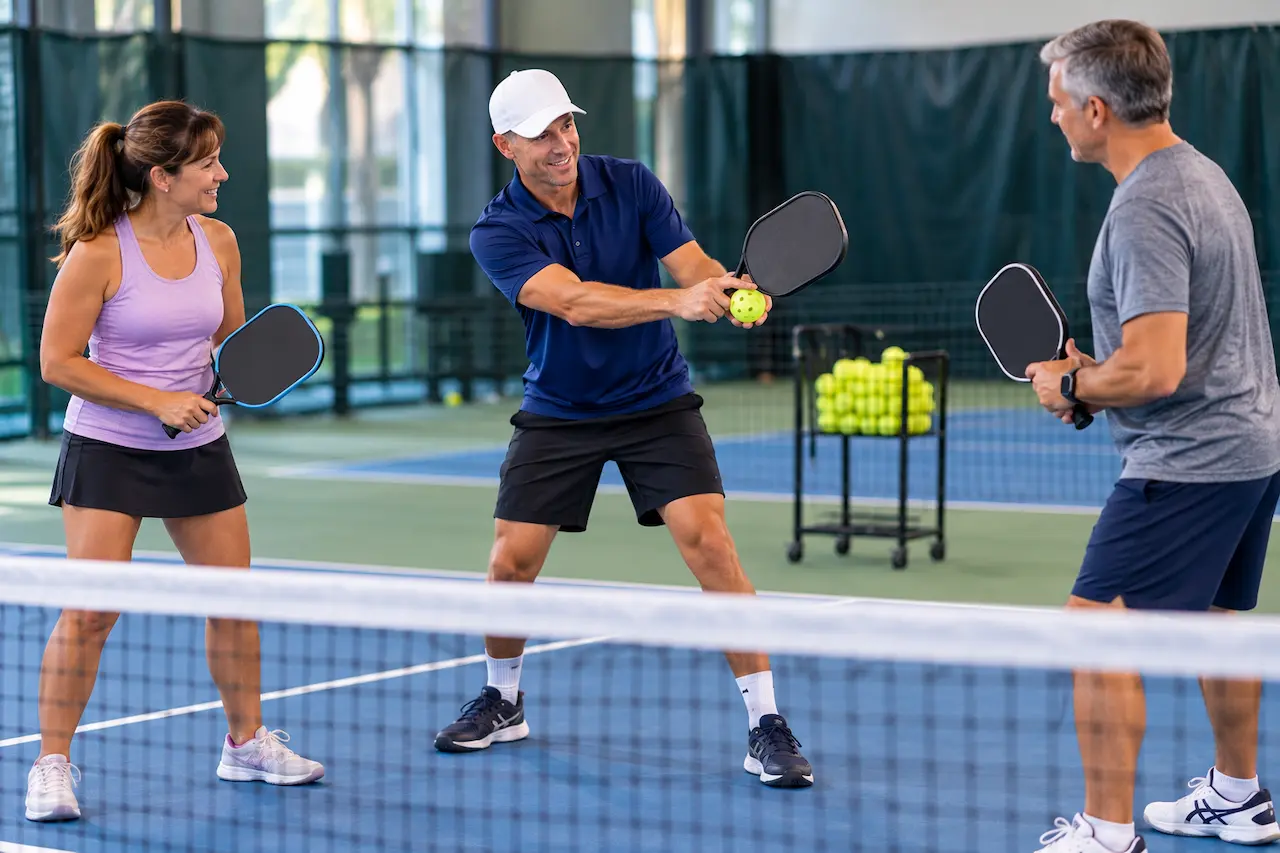
We have seen firsthand how correcting paddle face angle through targeted drilling produces immediate and visible improvement in shot consistency often within a single session when the correction is applied with clear feedback and deliberate repetition. Our pickleball clinics at Village Glen address grip, pressure, and face angle as a unified technical package rather than three separate issues, which is why the corrections hold across all shot types rather than improving one while leaving others unaddressed.
How to Practice Grip and Control at Home
Grip and control improvements do not require court time to begin. Several of the most effective practice methods for these specific skills can be done at home with nothing more than a paddle and a ball, and building these habits away from the court accelerates progress during coached and open play sessions significantly.
The wall tap drill is one of the most effective home practice methods for developing paddle face awareness and grip pressure simultaneously. Stand approximately two feet from a flat wall and tap the ball gently against it with your forehand, keeping the ball bouncing softly and consistently against the same point on the wall. Focus on maintaining the same grip pressure and face angle on every tap. When the taps feel consistent and controlled, switch to your backhand and repeat. The combination of short distance, low pace, and required precision makes every inconsistency immediately visible and immediately correctable.
The dink drop drill develops the specific touch needed for kitchen line exchanges. Hold the paddle at waist height in your normal grip, drop the ball from your non-paddle hand, and tap it gently upward with the paddle face just high enough to clear an imaginary net. The goal is a soft, consistent tap that requires no wrist flick and no grip tightening, only the correct face angle and relaxed pressure. Twenty repetitions of this drill before every court session builds the touch and face awareness that makes actual kitchen play noticeably more controlled.
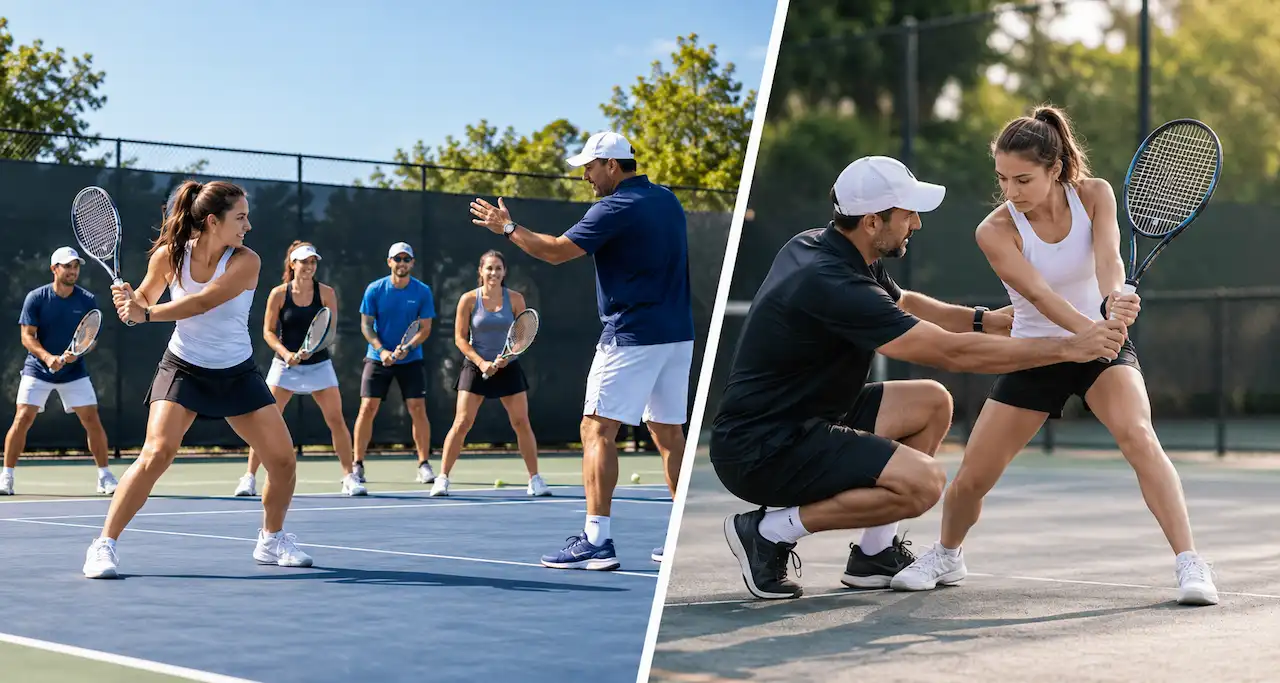
Our pickleball lessons at South Towns begin with grip and face angle assessment in the first session and include specific home drill recommendations tailored to each player’s specific starting point and the particular errors showing up in their current technique.
A Real-World Example: One Grip Change That Transformed a Player’s Game
We worked with an intermediate pickleball player at Village Glen who had been playing for 18 months and was frustrated by consistent dinking errors balls floating long, clipping the net, or sitting up at a height that invited easy attacks from opponents. She had worked on her footwork, her positioning, and her swing motion without resolving the problem.
When we assessed her grip in a private session, the issue was immediate and clear. She was using a modified Eastern grip that rotated the paddle face closed by approximately 15 degrees at her natural resting position. Every dink she hit required a compensatory wrist adjustment at contact to open the face enough to clear the net an adjustment that worked inconsistently under pressure and failed entirely on balls hit at awkward heights.
We shifted her to a Continental grip and drilled the wall tap exercise for 15 minutes within the same session. By the end of that single drill block her dink contact consistency had improved visibly and she could feel the difference in the stability of the paddle face through each tap. Within two weeks of applying the same grip to her kitchen play the floating and net errors that had plagued her game for months had reduced dramatically. One grip correction resolved a problem that 18 months of other adjustments had not touched.
When to Seek Coaching for Grip and Control Issues
Self-correcting grip and paddle face issues is possible with the right drill structure and clear self-awareness, but it has a significant limitation most players cannot feel the difference between a correct and incorrect grip precisely enough to self-diagnose which specific element is causing their control problems. A player who knows their dinks are inconsistent but cannot identify whether the root cause is grip pressure, face angle, contact point, or wrist movement will make slow and uncertain progress without an external perspective.
A single coaching session focused specifically on grip and paddle control typically produces faster correction than weeks of self-directed practice, because the coach identifies the specific error immediately and provides the correction in a form the player can feel and replicate rather than only read about or visualise abstractly.
Our adult pickleball development programs at Village Glen incorporate grip and paddle control assessment as a standard component of the program entry process, ensuring every player begins with a correct technical foundation that supports rather than limits their progress through every subsequent stage of development.
Conclusion
Pickleball paddle grip and control are the technical foundation that every other skill in the game builds on. The right grip type, the right grip pressure, and consistent paddle face angle at contact produce the shot reliability and touch that separate players who plateau from players who keep improving. Get the foundation right and every hour of court time produces more development than it would on an incorrect base. At Village Glen and South Towns Tennis and Pickleball, we are here to assess your grip, correct what needs correcting, and build the control foundation that your game deserves.
Why Choose Us
At Village Glen and South Towns Tennis and Pickleball, we provide the coaching expertise, the structured programs, and the practice environment that help every pickleball player build the grip and paddle control foundations that produce consistent, lasting improvement.
- Two full-service club locations in Williamsville and Orchard Park with certified pickleball coaches who assess grip and paddle control as a standard part of every new player evaluation
- Private lessons and clinic programs that address grip, face angle, and pressure as a unified technical package rather than isolated adjustments
- Adult and junior pickleball development programs that build correct grip foundations from the very first session so bad habits never form
- Open play and court time sessions that give players the live court environment to apply and consolidate grip corrections made in coaching sessions
- A supportive and development-focused pickleball community across Western New York where players at every level get the technical guidance and competitive exposure needed to improve consistently
Frequently Asked Questions
What grip should a beginner use for pickleball?
The Continental grip is the right starting point for every beginner. It is the most versatile grip in pickleball, allowing clean contact on both forehand and backhand shots without changing hand position between them.
How tight should I grip my pickleball paddle?
Optimal grip pressure for most pickleball shots sits between three and five on a scale of one to ten. Dinks and kitchen line touch shots benefit from the lower end of that range where a relaxed grip allows soft, precise contact.
Does paddle grip size affect control in pickleball?
Yes significantly. A paddle grip that is too small causes the hand to over-rotate through contact, producing inconsistent face angle and reduced control on every shot. A grip that is too large restricts wrist movement, which reduces the natural touch and face adjustment needed for soft kitchen shots.
Can I fix my grip issues through home practice or do I need coaching?
Home practice using drills like the wall tap and dink drop exercises can produce meaningful improvement in grip pressure and face awareness without court time. However, identifying which specific element of your grip is causing your particular control problems whether it is grip type, pressure, face angle, or contact point is significantly more difficult without an external perspective.
How long does it take to develop reliable paddle control in pickleball?
Basic paddle control consistent contact on forehands and backhands with a reliable face angle typically develops within four to eight weeks of structured weekly practice when combined with correct grip mechanics from the beginning. Kitchen line touch and dink consistency, which require finer grip pressure awareness and face angle precision, generally take a full two to three month cycle of regular play and coaching to become reliable under competitive pressure.