An inconsistent serve can make every service game feel difficult. You might serve well during practice, then miss when the score gets close. Often, the first step is to identify which part of your preparation or motion changes between attempts.
Good tennis serve techniques connect your grip, ball toss, body movement, and contact into a repeatable action. This guide explains common problems, practical drills, and ways to measure improvement without trying to change everything at once.
Start by Identifying Your Serve Pattern
Before making a technical change, notice where your serves miss and when the problem appears. A serve that regularly goes long may need a different adjustment from one that breaks down only under pressure.
If possible, record a few serves from behind and from the side, with your phone safely outside the playing area. Look for differences between comfortable serves and rushed attempts. Video can reveal changes in balance, toss placement, or rhythm that are difficult to feel while swinging.
Record a simple baseline during practice:
- How many first serves land in the correct service box
- How many second serves land in
- Whether misses mostly hit the net, go long, or go wide
- Whether you finish balanced and ready for the return
These observations help you choose one useful adjustment. A missed serve can have several causes, so avoid assuming that the same correction will work for every error.
Common Tennis Serve Techniques to Work On
A reliable serve develops through coordinated movement. Grip, toss, and timing affect one another, which is why a correction should be tested through controlled practice before adding more speed.
Mistake 1: Using a Grip That Restricts Your Swing
A forehand-style grip can encourage a pushing action when serving. The continental grip is commonly taught because it supports different serve variations, including flatter and spinning serves. USTA instruction also recommends developing this grip for serving.
If you are changing grips, begin with slow shadow swings and a shortened motion. Expect the new grip to feel unfamiliar rather than immediately comfortable. Avoid squeezing the handle tightly or forcing the racket face into position with a sharp wrist movement.
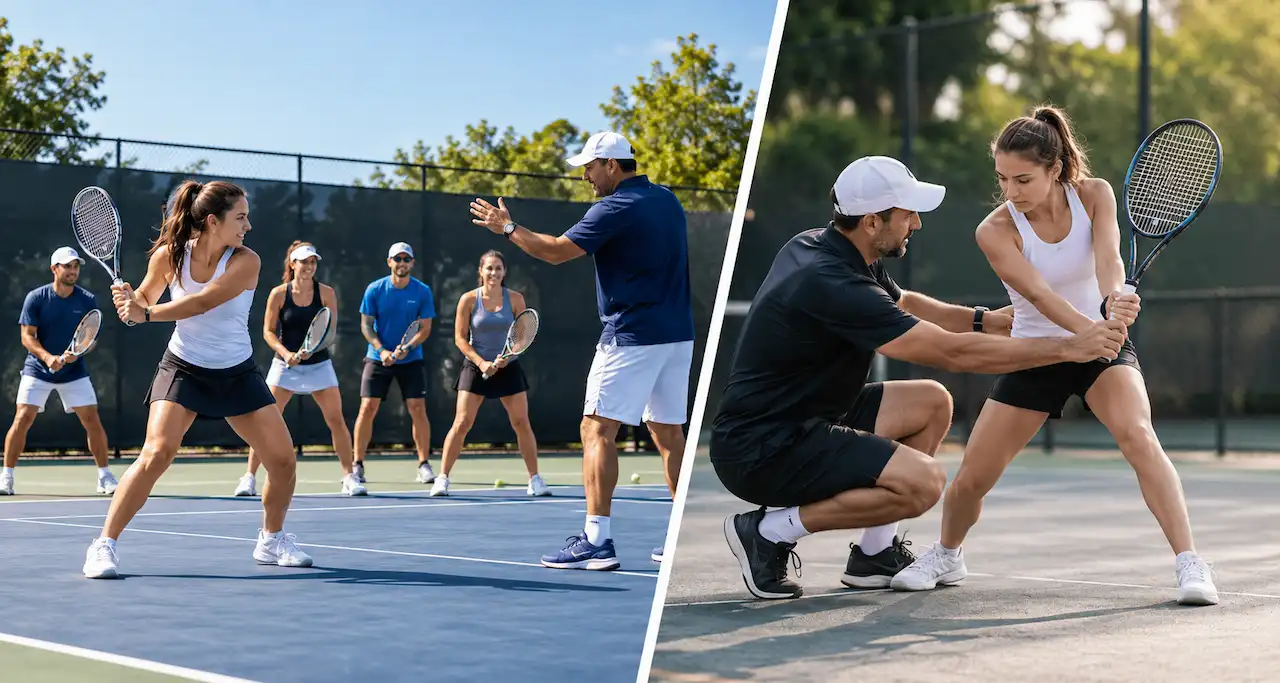
A coach can check your hand position and show how it connects to your swing. Players looking for individual feedback can explore private tennis lessons at Village Glen.
Mistake 2: Chasing an Inconsistent Toss
When your toss moves to a different place on every attempt, you have to adjust your body and swing to reach it. That makes consistent contact harder.
Practice a smooth release with your tossing arm and observe where the ball travels. The goal is a repeatable placement that suits your motion and intended serve. There is no single landing distance that every player must use.
USTA guidance emphasizes a controlled toss and relaxed release. If a toss is uncomfortable, catch it and start again during practice rather than training yourself to chase it.
Mistake 3: Trying to Add Power Before Finding Rhythm
Players sometimes bend their knees more deeply or jump higher because they want extra pace. Those changes may disrupt the serve if the toss and swing are not coordinated.
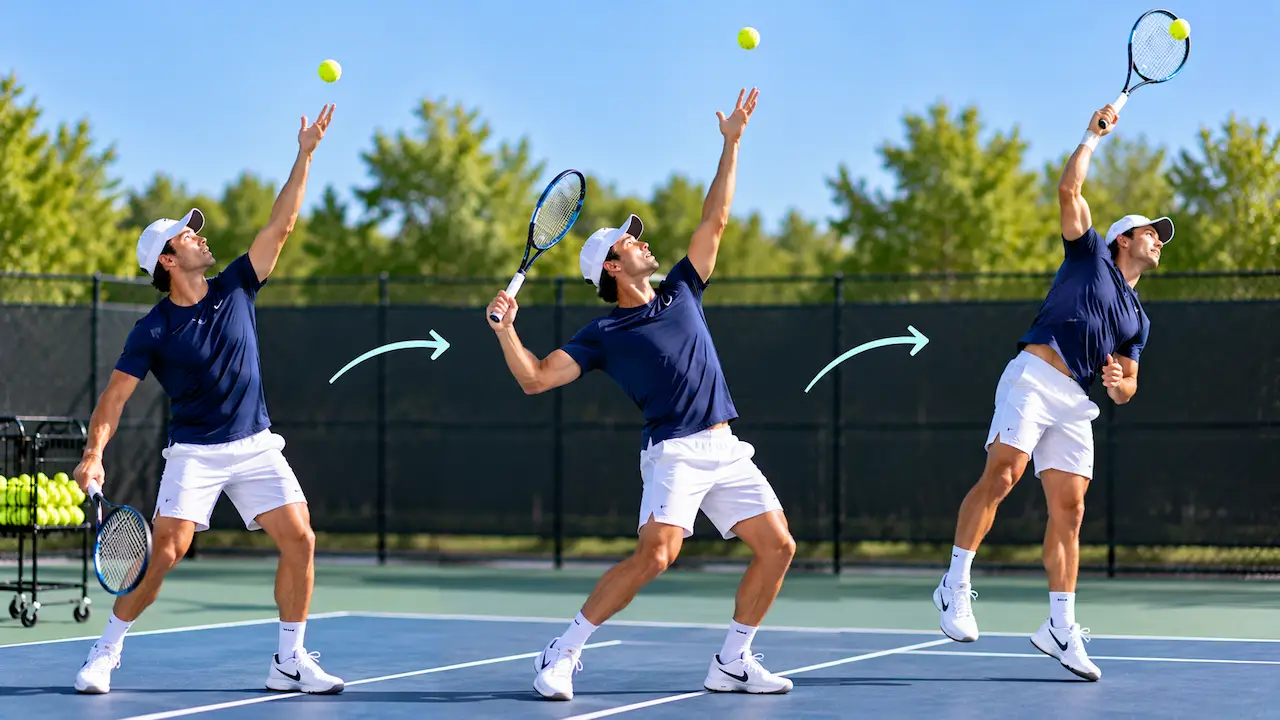
Start with a comfortable motion at a manageable speed. Notice whether you can repeat the sequence without rushing or losing balance. Add stronger body movement gradually as your timing becomes more reliable.
Your serve does not need to copy a professional player’s exact pose. A useful preparation position should fit your movement and allow a smooth swing toward contact.
Mistake 4: Forcing a Wrist Snap
Trying to create power by sharply snapping the wrist can distract from the coordinated action of the serve. Pronation refers to rotation of the forearm, rather than a separate snapping movement at the wrist.
Keep the arm action relaxed and avoid forcing a last-second correction to steer the ball. If you are unsure how the racket should move through contact, ask a coach to demonstrate it slowly.
The aim is a connected motion. Power and spin should not depend on an isolated movement that you struggle to repeat.
Mistake 5: Losing Balance After Contact
If you repeatedly fall sideways or stumble after serving, examine your toss and starting position. You may be reaching for the ball or adding more movement than you can control.
Practice at a lower intensity and finish with enough balance to prepare for the return. Follow-through is part of completing the motion, but forcing the racket to finish at a particular spot will not automatically correct an earlier problem.
Our guide to tennis footwork explains how readiness and recovery help you prepare for the next shot.
Build a Second Serve You Can Trust
A second serve should give you a dependable way to begin the point. It needs a manageable combination of pace, placement, and spin rather than simply being a hesitant version of your first serve.
Practice second serves deliberately instead of using them only after a missed first attempt. Choose a generous target and a motion you can repeat comfortably. If you have not yet learned to control spin, work on that skill progressively with appropriate instruction.
Players often rush or tighten their grip when they fear a double fault. Use the same preparation routine during practice and matches so the second serve feels familiar.
Flat, Slice, and Topspin Serves
A flatter serve uses relatively little spin and is often chosen for pace. A slice serve adds sidespin, while a topspin serve uses forward rotation to influence the ball’s flight and bounce.
You do not need to learn every variation at once. Begin with a repeatable action, then develop the spin and placement options that suit your level.
A coach can help you choose what to learn next. Avoid attempting a more demanding serve variation simply because you believe every second serve must look a particular way.
Three Practical Serve Drills
Choose one drill based on the problem you identified. Keep the number of attempts manageable and pause when you become tired enough that the movement changes.
Toss Without Swinging
Stand in your normal serving position and release the ball without hitting it. Observe whether you can place it consistently without leaning or stepping after it.
Reset fully between attempts. Concentrate on the release and rhythm rather than chasing a perfect result on every repetition.
Serve Toward a Large Target
Choose a broad section of the service box, well inside the lines. Serve a small set of balls at a comfortable speed and record how many reach that area.
Repeat from the other side of the court. Once you can control a large target, make it more challenging gradually rather than immediately aiming for the corners.
Practice a First and Second Serve Together
Treat each attempt as the start of a real point. Hit your first serve, then use your second serve if needed. Record both outcomes.
This shows whether your second serve holds up after a miss. Finish by playing points with a partner so you also practice recovering and responding to the return.
For guided group practice, review Village Glen clinics and match play and ask which session fits your experience.
Take Your Serve From Practice Into Matches
A basket of serves gives you repetition, but a match asks you to serve while thinking about the score and your opponent. Include both forms of practice.
Begin with controlled serving, then play service games using your normal routine. Keep your attention on a simple cue, such as a smooth toss or balanced finish, instead of reviewing several technical instructions before every point.
Afterward, compare what happened. If your practice serve feels comfortable but your match serve becomes rushed, work on the routine and pressure situation rather than immediately rebuilding your technique.
Measure Progress Without Setting a Fixed Deadline
Improvement depends on your starting technique, practice quality, and how regularly you work on the change. There is no reliable promise that every player will fix a serve within a set number of lessons or days.
Compare similar practice sessions over time. More second serves in play, fewer rushed attempts, and a more balanced finish can all show progress even before you add pace.
If the same issue persists, bring your observations or video to a lesson. Players nearer Orchard Park can explore tennis lessons at South Towns and ask for help with a specific serve concern.
Why Choose WNY Tennis?
WNY Tennis offers learning and playing opportunities through Village Glen in Williamsville and South Towns in Orchard Park. Players can discuss their experience and goals before choosing a suitable option.
- Private lessons provide focused time for individual concerns.
- Clinics offer opportunities to practice with other players.
- Match play helps connect practice with point situations.
- Junior programs provide development options for younger players.
Build a More Repeatable Serve
Improving tennis serve techniques starts with identifying a clear problem and practicing a manageable correction. Focus on a comfortable grip, consistent toss, coordinated movement, and a second serve you can repeat.
Contact our team with your preferred location, experience level, and the serving issue you want to address. Ask which lesson or program is a suitable starting point.
Frequently Asked Questions
What grip should I use for a tennis serve?
The continental grip is commonly taught for serving because it supports different spin options. A coach can check your hand position and help you become comfortable using it.
Why does my serve keep hitting the net?
Possible causes include changes in toss placement, contact, racket angle, or timing. Observe the pattern and review your motion rather than assuming one correction will solve every miss.
Should I practice my first or second serve more?
Include both. Give your second serve dedicated practice time, then rehearse first and second serves together so you become comfortable responding after a missed attempt.
How long does it take to improve a serve?
The timeline varies with your starting technique and practice habits. Track accuracy and repeatability over comparable sessions instead of relying on a fixed improvement deadline.
Can I improve my serve without private lessons?
Purposeful practice and video review can help you identify patterns. Coaching can be useful when you cannot explain a recurring problem or are unsure how to apply a correction.